12 Best Berlin Christmas Markets: 2026 Local Guide
Plan your trip with our guide to the 12 best Berlin christmas markets. Includes 2026 dates, local tips on what to eat, and which tourist traps to skip.
On this page
12 Best Berlin Christmas Markets
After five winters exploring the German capital, I have seen how the city transforms into a festive wonderland. The air fills with the scent of roasted almonds and spiced wine as dozens of stalls open across every neighborhood. Choosing the right spots is vital because the variety ranges from royal palaces to gritty industrial courtyards. This guide covers my twelve favorite markets along with the practical details you need to navigate them confidently.
I last refreshed this guide in November 2025 to ensure all 2026 dates and prices remain accurate. Berlin has roughly 70 Christmas markets, which sounds exciting until you realize a handful are genuinely not worth your time. You should check the visitBerlin: Official Christmas Market List for any last-minute schedule changes. This guide cuts through the noise so you leave with memories rather than regrets.
Many travelers wonder if the cold weather dampens the experience of exploring 20 Best Things to Do in Berlin: The Ultimate 2026 Travel Guide in winter. In reality, the dark afternoons make the millions of twinkling lights feel even more spectacular and cozy. Be prepared for early sunsets — it is dark by 15:30 in December — and brisk winds as you hop between festive hubs. Dress in waterproof boots, a windproof coat, and thermal layers before you head out.
Essential Tips for Visiting Berlin Christmas Markets
The most important rule for newcomers is understanding the Pfand, or deposit system, for your drinks. When you buy Glühwein or hot chocolate, you pay an extra 2–5 Euros for the decorative ceramic mug on top of the drink price. You can return the mug at any stall within that same market to get your deposit back in full. Alternatively, keep the mug as a cheap and genuinely unique souvenir — most are market-specific and dated.
The Pfand deposit is market-specific — a mug from Gendarmenmarkt cannot be returned at Charlottenburg Palace. Each market tracks its own mug batches. Stalls will only refund deposits for their own branded mugs. Keeping a mug as a souvenir costs just the €2–5 deposit and makes a lasting memory; collectors specifically seek out dated editions from popular markets.
Cash remains essential at most traditional stalls, even as the city slowly modernises its payment systems. While some larger food vendors now accept cards, small handicraft stalls and entry gates for paid markets almost always require physical Euros. Carry small bills — €5 and €10 notes — to make transactions faster during the busy evening rushes. ATMs near major markets have long queues by 18:00, so withdraw money earlier in the afternoon.
Most Berlin Christmas market ATMs charge €3–4 per withdrawal in addition to bank fees. The main U-Bahn stations (Friedrichstraße, Alexanderplatz, Zoologischer Garten) have fee-free Deutsche Telekom ATMs. Withdraw a week's worth of cash (€150–200) at the start of your trip to avoid repeated withdrawal fees and long queues during evening peak hours.
Public transport is the smartest way to hop between markets. A single U-Bahn or S-Bahn ticket costs €3.50, but a 7-day zone A+B pass runs €41.50 and pays for itself after just six return journeys. If you plan to visit three or more markets across different days, the weekly pass is the obvious choice. The BVG app handles ticket purchases without requiring cash at machines.
One practical detail most guides skip: budget for toilet fees. Most Berlin Christmas markets charge between 50 cents and €1.50 to use the facilities. The Charlottenburg Palace market charges €1.50 — the highest of any major market — while markets inside enclosed courtyards like the Kulturbrauerei typically have free indoor toilets. Have coins ready so a queue does not derail your evening plans.
Timing your visit changes the atmosphere entirely. Families should aim for weekday afternoons when the crowds are thin and the paths are easy to navigate with pushchairs. Evenings after 17:00 offer the best lighting and social energy, but expect shoulder-to-shoulder crowds on Friday and Saturday nights. Most markets open in late November and run until December 26, with a select few extending to January 1.
WeihnachtsZauber at Gendarmenmarkt
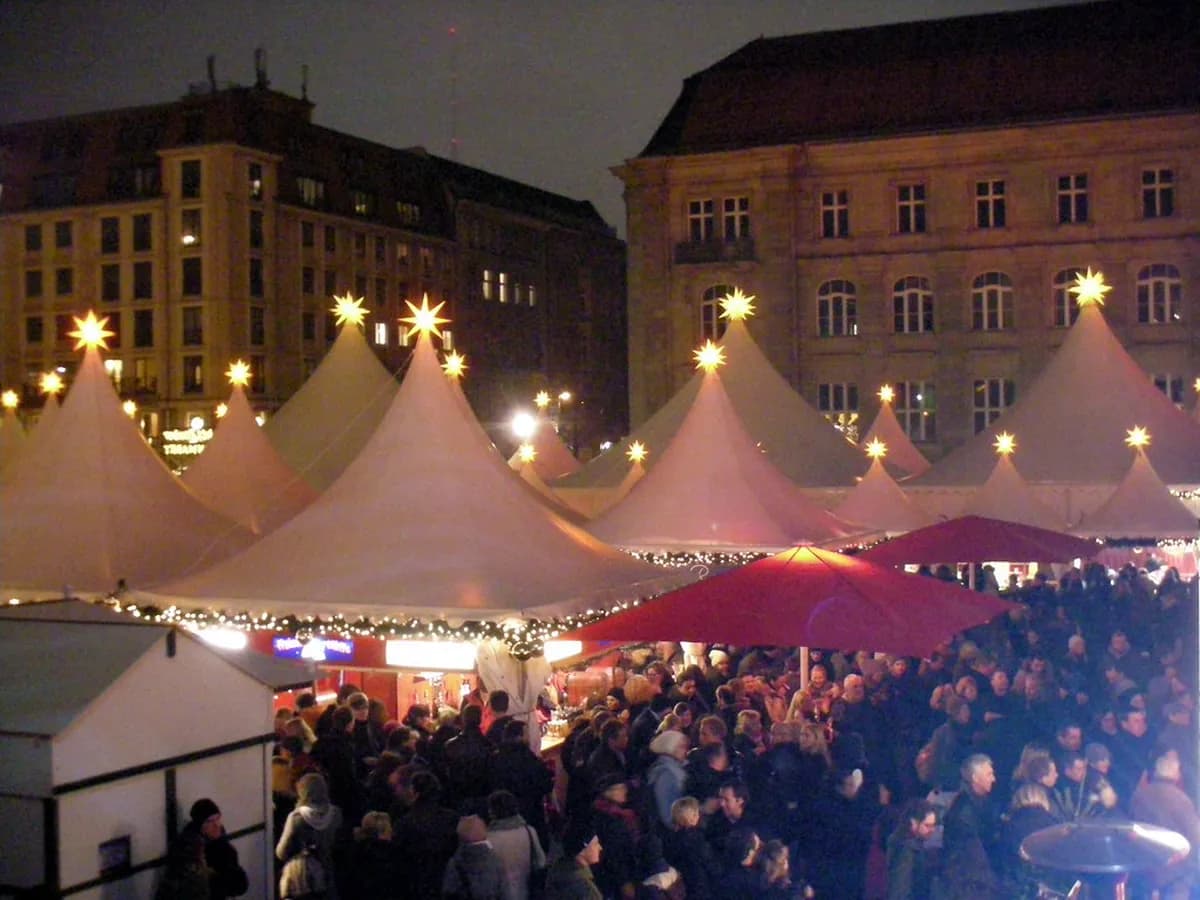
This is Berlin's most beautiful and most prestigious Christmas market, and it earns that reputation every year. After several years at nearby Bebelplatz while the square underwent restoration, the market is expected to return to its original Gendarmenmarkt location for 2026 — check the official site to confirm before you go. The white tented stalls with star-shaped rooftops look spectacular against the twin domes of the French and German cathedrals flanking the square.
Entry costs €2 on most days, with free admission on weekdays from 12:00 to 14:00 and for children under 12 at all times. The market runs from late November through December 31, including New Year's Eve, making it one of the few spots open until midnight on the 31st. Opening hours are Sunday to Thursday 12:00–22:00, Friday and Saturday 12:00–23:00. Take the U6 to Französische Straße or walk ten minutes from the Unter den Linden U-Bahn stop.
The food here is the best of any Berlin market. Ask locals and they will point you straight to the käse spaetzle stall — egg noodles baked with aged cheese and topped with crispy onions — which sits in the centre of the market and always has a queue. The market also has one of the few wine bars in the city that serves a proper Spätburgunder alongside Glühwein. Note that no dogs are permitted inside the market perimeter.
Lucia Christmas Market at the Kulturbrauerei
This Scandinavian-themed market in Prenzlauer Berg is consistently ranked among Berliners' personal favourites, and it deserves every bit of that loyalty. It occupies the courtyard of the Kulturbrauerei, a converted 19th-century red-brick brewery complex on Schönhauser Allee. The dark wooden stalls, fire pits, and open-air sauna create an atmosphere far warmer and more intimate than the central markets. Entry is free.
The market typically runs from late November until December 22, closing before Christmas. Weekday hours are 15:00–22:00; weekend hours begin at 13:00. Reach it via the U2 line to Eberswalder Straße — the brewery entrance is a five-minute walk from the station exit. The market is partially covered, which makes it more comfortable on wet evenings than fully open-air sites.
The food is genuinely different from standard German market fare. The flammkuchen stall under the large Lucia sign serves an Alsatian-style flatbread that consistently sells out by 20:00. Hot mead (Met) is available alongside Glühwein — it goes down very easily and is significantly stronger than it tastes, so pace yourself accordingly. Elk bratwurst and Finnish honey are also stocked, giving the market a distinctly Nordic identity.
Berliner Weihnachtszeit at the Rotes Rathaus
This festive hub at the base of the Berlin TV Tower is one of the largest markets in the city and serves as a natural gathering point for visitors already in Alexanderplatz. Entry is free. The market runs from November 24 to December 30, Monday to Friday from 12:00 to 22:00, Saturday and Sunday from 11:00 to 22:00. It closes on Christmas Eve and reopens from December 25 to December 30 with slightly shorter hours.
The main draw here is the combination of a giant Ferris wheel and a circular ice rink surrounded by twinkling lights. Skating hire costs around €10 including skate rental — worth every cent if the evening is clear and the lights are reflecting off the ice. There is also a strong food offering here, particularly the garlic mushroom stalls that perfume the entire eastern edge of the market. The 19th-century style wooden huts give this very central location a surprisingly nostalgic feel considering its modern surroundings.
Walk from Alexanderplatz S-Bahn or U-Bahn station and look for the Neptune Fountain — the market entrance is directly adjacent. If you have read about the "Winter Dream" market at Alexanderplatz itself, note that it is a separate, lower-quality gathering a few hundred metres away. The Rotes Rathaus version is consistently the better choice for food and atmosphere in the same neighbourhood.
Christmas Market at Charlottenburg Palace
The floodlit Baroque facade of Charlottenburg Palace provides one of the most photographed backdrops of any European Christmas market. Entry is free and the market typically runs from late November until December 28, closing on Christmas Eve. Monday to Thursday opens at 13:00; Friday to Sunday opens at 12:00, with closing at 22:00 each evening. Allow at least two hours to walk the full perimeter of stalls.
Over 250 vendors fill the palace esplanade with a noticeably higher calibre of goods than most central markets. Handmade jewellery, glass ornaments, and art prints dominate the stalls rather than the mass-produced imports you find at commercial sites. Glühwein here is served from decorated mugs specific to this market — the current year's mug is a popular keepsake and sells out in the final week. The toilet here costs €1.50, the highest fee among the major markets, so plan accordingly.
Reach the palace via the U7 to Richard-Wagner-Platz or the S-Bahn to Westend, then a fifteen-minute walk. Arriving at 14:00 on a weekday gives you the best light for photography against the illuminated palace before the evening crowds arrive. Note that this market is among the most crowded in the city on weekend evenings — Friday nights in December are essentially wall-to-wall from 18:00 onwards.
Historischer Weihnachtsmarkt at RAW-Gelände
This medieval-themed market inside a former railway repair yard in Friedrichshain is the most distinctly Berlin experience on this list. The RAW-Gelände complex is covered in street art year-round; in November it is transformed with fire pits, hand-operated wooden carousels, and staff dressed in period costumes. The market runs from November 13 to December 22, which gives it one of the earliest opening dates in the city.
Entry costs vary: weekdays from Monday to Wednesday are free, while Thursday to Sunday costs €2 for adults and €1 for children aged 6–16. Weekday opening is at 15:00; weekends open at 12:00, closing at 22:00. The market is a five-minute walk from Warschauer Straße S-Bahn station in Friedrichshain. Kids are particularly well served here — there is a small petting zoo, archery stalls, and the wooden Ferris wheel is hand-powered rather than electric.
The food takes the medieval theme seriously. Hot mead is served in clay mugs, Glühbier (mulled beer) is available alongside the standard wine, and the meat skewers are sized to share rather than eat solo. If you are visiting with a group, this market rewards a weekday evening visit when the fire-show performances feel more intimate with smaller crowds. One competitor describes it well as "the most Berlin Christmas market you could imagine."
Spandau Old Town Christmas Market
Spandau is the largest traditional Christmas market in Berlin and the one that most closely replicates the small-town Weihnachtsmarkt experience that visitors imagine before they arrive. It takes over the entire pedestrian zone of Spandau's historic Altstadt, which is a genuine medieval district rather than a tourist reconstruction. Entry is free. The market typically runs from November 24 to December 23, Sunday to Thursday from 11:00 to 20:00, Friday and Saturday until 22:00.
The central market square features a large nativity scene and a main stage with live carol performances throughout the day. The range of vendors skews toward genuine crafts — wood carvings, pottery, and hand-sewn textiles — rather than imported novelty goods. It feels noticeably more local than the markets near major tourist landmarks, and the food stalls serve regional Prussian specialities alongside the standard Bratwurst and Glühwein. Wednesdays often feature special family-oriented programming with craft activities for children.
Getting here takes about 30 minutes from central Berlin via the S5 or U7 to Spandau station. The journey is worth it, particularly if you have already ticked off the central markets and want to see how Berliners who live outside Mitte actually celebrate the season. The Spandau Citadel is a short taxi ride away if you want to combine the trip with a visit to the medieval Britz Citadel market on weekends.
Heissa Holzmarkt Winter Festival
The Holzmarkt is a creative village permanently occupying a stretch of the Spree riverbank between Ostbahnhof and Jannowitzbrücke in Mitte. In winter it hosts a festival that feels nothing like the rest of Berlin's Christmas market scene. Entry is free. It typically runs Thursday to Sunday from 16:00 onwards, closing late into the night — exact dates are announced in October each year, so check the official Holzmarkt social channels before you plan your visit.
The aesthetic is recycled industrial: shipping containers, disco balls, hammered tin walls, and strings of bare-bulb lights over the river. Electronic music from the bars inside replaces the Christmas carols you hear elsewhere. The food stalls are a genuine draw — the wood-fired pizza here has a strong local reputation, and the cocktail bars serve Glühwein alongside proper bar drinks for visitors who have had enough mulled wine. River views at night are genuinely spectacular when the lights reflect off the water.
This market appeals most to visitors who are already familiar with Berlin's creative scene or who want a break from the traditional market format after a few days in the city. It is a ten-minute walk from Ostbahnhof S-Bahn station. It is not a market for buying Christmas presents, but it is arguably the most atmospheric evening option for a drink with a view.
LGBTQIA Winterdays and Christmas Avenue
Nollendorfplatz in Schöneberg has been the heart of Berlin's LGBTQIA community for over a century, and this market reflects that history with a distinctive energy you will not find anywhere else on this list. Entry is free. The market runs through the Advent season with festivities beginning at around 15:00 daily, extending into the evening with a high-energy stage programme including drag shows and live performers.
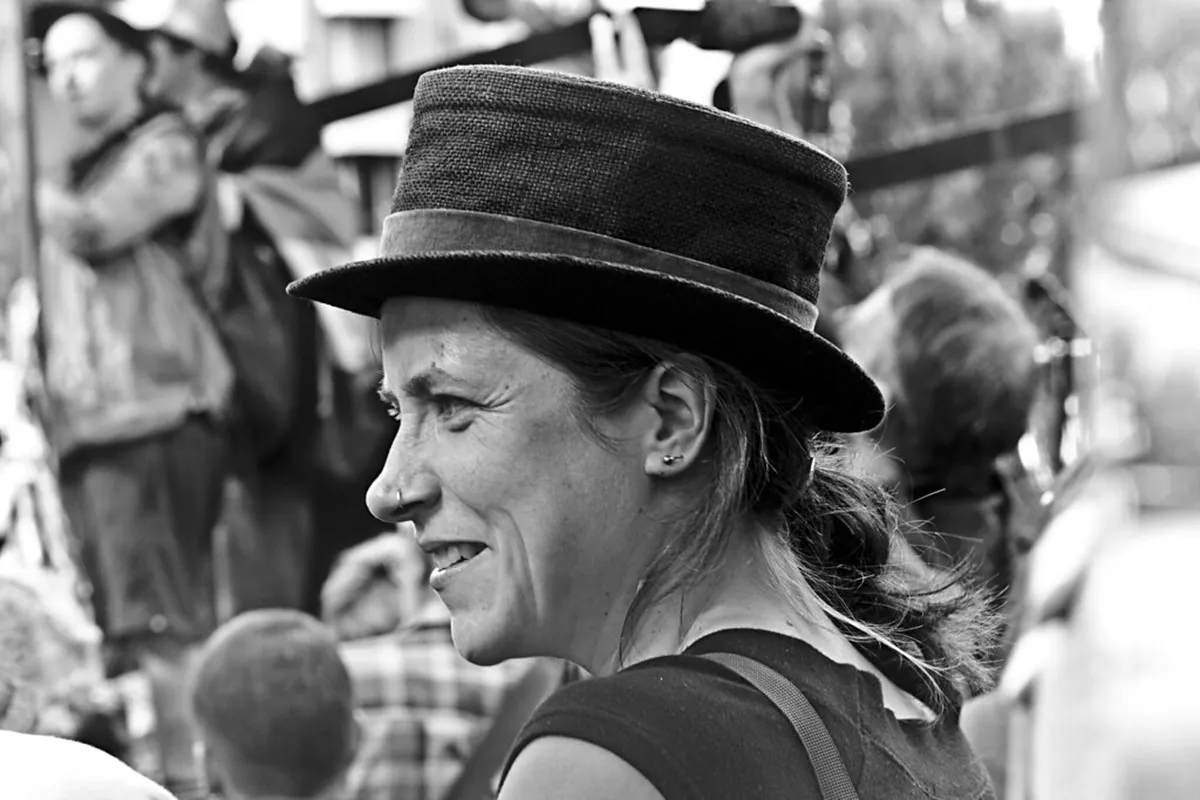
The market doubles as a community hub where local organisations have stalls alongside the food and drink vendors. Pink Glühwein is the signature drink — it is exactly what it sounds like and is served in the market's own collectable mug. The surrounding streets of Schöneberg, particularly Motzstraße and Akazienstraße, have independent boutiques and bars that complement a market visit with a full evening in the district.
Reach it on the U1, U2, U3, or U4 lines directly to Nollendorfplatz station. The market is smaller than the palace and city-centre markets but punches above its weight in atmosphere and community feel. It is welcoming to all visitors, not exclusively LGBTQIA travellers, and provides one of the most genuinely local market experiences in the city without requiring a long journey to the outer districts.
Domäne Dahlem Advent Market
Domäne Dahlem is a working organic farm that operates inside Berlin's city limits in the Steglitz-Zehlendorf district — a fact that surprises most first-time visitors. For the Advent season it hosts a weekend market on the first three Advent weekends, running from 11:00 to 19:00 each day. Entry costs approximately €3 for adults, which funds the preservation of the manor house and farm buildings.
This is the most interactive market on the list. Beyond the food and drink stalls, there are wood-carving demonstrations, live music readings, craft workshops, and organised activities for children involving the farm animals. It feels less like shopping and more like a community event built around the old farmhouse courtyard. Organic honey, handmade beeswax candles, traditional wool products, and farm-produced preserves are among the best things to buy here.
Take the U3 to Dahlem-Dorf — the farm entrance is directly across the road from the station exit. Because it only operates on Advent weekends and closes at 19:00, you need to plan this one specifically rather than slotting it into a general market-hopping day. The competitor guide Girl on a Zebra describes it as feeling like "a Brothers Grimm tale," which is accurate — it is the closest Berlin gets to a countryside Weihnachtsmarkt without leaving the city boundaries. Combine it with the nearby Christmas Garden at the Botanical Garden on the same afternoon.
Christmas Garden Berlin at the Botanical Garden
This is a light installation walk rather than a traditional stalls-based market, but it belongs on this list because it offers something no other winter attraction in Berlin can match. A timed circular trail guides visitors through millions of LED installations suspended among the trees, greenhouses, and lawns of the 43-hectare Botanical Garden. Pre-booked tickets are essential and typically range from €15 to €25 depending on the day — weekends and Saturdays cost more.
The garden opens at 16:30 and requires a pre-booked time slot for entry to prevent overcrowding on the path. The full walk takes roughly 90 minutes at a relaxed pace. Light tunnels, projected animations on the greenhouse facades, and a glowing lake section are the highlights most visitors photograph. Bring a tripod if you want sharp long-exposure shots in the darker sections. There is a Glühwein and hot chocolate station at the midpoint of the route.
Reach it via the S1 to Botanischer Garten or the U3 to Dahlem-Dorf, both a short walk from the main entrance. Because tickets sell out weeks in advance for peak December evenings, book as soon as you have confirmed your travel dates. Combining this with the Domäne Dahlem market on the same afternoon makes efficient use of the journey to southwest Berlin.
Humboldt Forum Winter Market
The reconstructed Berlin Palace on Museum Island opened to the public in 2021 and its Christmas market has quickly established itself as one of the most convenient options for visitors staying in Mitte. The market occupies the palace courtyard and the esplanade facing the Berlin Cathedral and the Spree. Entry is free. It runs from November 24 to January 1, one of the longest schedules of any Berlin market.
The stall selection leans toward high-quality design objects and regional food rather than mass-produced ornaments. The palace architecture provides a grand, partially sheltered feeling that makes it comfortable on windy days when the Charlottenburg esplanade becomes unpleasant. Dogs are welcome here, which the Gendarmenmarkt explicitly prohibits — a practical consideration for visitors travelling with pets.
Walk from the Museumsinsel U5 station in under five minutes. The market's extended hours to January 1 make it one of the best options for New Year visits when most other markets have closed. It pairs naturally with a morning at the Pergamon Museum or a walk along Museum Island before the market stalls open at 11:00.
Sophienstraße Eco Christmas Market
This award-winning market on one of the oldest streets in Mitte focuses entirely on fair-trade goods, organic produce, and work by local Berlin artists. Entry is free, and the market operates on the four weekends leading up to Christmas, typically from 12:00 to 20:00 on Saturdays and 11:00 to 19:00 on Sundays. It is located near Hackescher Markt S-Bahn station, putting it within walking distance of the Nikolaiviertel and several good neighbourhood restaurants.
The vendor selection is tightly curated — every stall must meet sustainability criteria set by the market organisers, which eliminates the cheap import goods common at commercial markets. Local artisans sell screen-printed textiles, upcycled home goods, natural cosmetics, and hand-thrown ceramics. Walking acts and street performers move through the stalls during trading hours, making the atmosphere feel lively without relying on a fixed stage. It is one of the best markets on this list for buying gifts that the recipient will not find at home.
What to Eat at Berlin Christmas Markets
Bratwurst and Glühwein are the obvious starting point, but Berlin's market food scene goes much further. Handbrot is a bread roll baked around a filling — typically cheese and herbs — that you eat like a hot pocket while walking. It is sold at the Rotes Rathaus and Gendarmenmarkt markets and is one of the most practical market foods because it does not require a plate or cutlery. Quarkbällchen are deep-fried curd-cheese doughnuts dusted in cinnamon sugar — lighter than they sound and sold at almost every traditional market from late morning.
Käse Spaetzle at Gendarmenmarkt, flammkuchen at the Lucia Market, and the garlic Champignons (mushrooms in butter and garlic sauce) at the Rotes Rathaus market are the three dishes most consistently recommended by people who visit multiple markets in one trip. The mushrooms are particularly good because they are hot, filling, and served in a bread bowl that absorbs the sauce. Reibekuchen (potato pancakes) served with apple sauce or sour cream are another underrated option — the best version at Alexanderplatz sells out by 20:00 most evenings.
For drinks beyond Glühwein, look for Feuerzangenbowle — a rum-soaked sugar cone is set alight over a bowl of wine and caramelised into it, table-side. It is more of an event than a drink and is typically only available at one or two stalls per market rather than everywhere. At the RAW market, Glühbier (mulled dark beer with spices) is the local speciality and far less sweet than standard mulled wine.
| Market | Location/Transit | Entry Fee | Best For | Signature Dish |
|---|---|---|---|---|
| WeihnachtsZauber at Gendarmenmarkt | U6 Französische Straße | €2 (weekdays 12–14 free) | Premium food, architecture | Käse Spaetzle |
| Lucia Christmas Market (Kulturbrauerei) | U2 Eberswalder Straße | Free | Scandinavian food, cosy vibe | Flammkuchen |
| Berliner Weihnachtszeit (Rotes Rathaus) | S/U-Bahn Alexanderplatz | Free | Ice skating, large selection | Garlic Champignons |
| Charlottenburg Palace Market | U7 Richard-Wagner-Platz | Free | Photography, high-quality crafts | Glühwein in souvenir mug |
| RAW-Gelände (Friedrichshain) | S-Bahn Warschauer Straße | €2 (weekdays free) | Medieval theme, fire pits | Glühbier, meat skewers |
| Spandau Old Town | S5/U7 Spandau station | Free | Authentic local experience | Regional Prussian specialities |
The Stille Nacht Moment Most Visitors Miss
Several of Berlin's traditional markets observe a brief "Stille Nacht" pause on Christmas Eve — typically at 18:00 — where all music stops, stall holders light candles, and the market observes a few minutes of silence before a single choir or accordion player performs the carol quietly. It lasts perhaps three to five minutes. If you do not know it is coming, you will likely find it confusing. If you are there intentionally, it is one of the most genuinely moving public moments the city produces.
The markets most reliably known for this tradition are Spandau and the Charlottenburg Palace market. Smaller neighbourhood markets in Wedding and Neukölln also participate, though the timing varies by a few minutes. Christmas Eve itself sees most stalls close by around 14:00–16:00, so the Stille Nacht pause happens as the day winds down rather than at the start of trading. This is the single best reason to plan at least one Christmas Eve afternoon at a traditional market rather than treating the 24th as a travel day.
Tourist Traps: Which Berlin Markets to Skip
Not every festive gathering in the city lives up to the high expectations set by travel brochures. The Alexanderplatz "Winter Dream" market often feels more like a noisy carnival than a holiday event. It is frequently overcrowded with commuters and features many mass-produced goods that lack local character. Walk five minutes further to the Rotes Rathaus market for a much better experience in the same neighbourhood — the ice rink and Ferris wheel alone make it worth the extra steps.
Potsdamer Platz "Winter World" is another location that can feel overly commercial and soulless. While the 12-metre toboggan run is fun for kids, the food and drink prices are noticeably higher than elsewhere and the modern skyscrapers surrounding the square block the cosy, traditional feeling found in older neighbourhoods. It serves better as a quick photo stop than a place to spend a whole evening. Save your time for the Holzmarkt or LGBTQIA Winterdays instead if you are looking for something with genuine character.
Avoiding these high-traffic commercial zones allows you to discover the heart of the local holiday scene. Smaller neighbourhood markets in districts like Neukölln or Wedding offer much more authentic interactions and better value. Always check the berlin street food guide for tips on finding the best local snacks beyond the market circuit.
Logistics: Getting Around and Where to Stay
Navigating the city during winter is straightforward if you rely on the extensive public transport network. The U-Bahn and S-Bahn trains run frequently and connect every major market on this list. Consider the City Sightseeing Bus Berlin for daytime sightseeing between markets in the centre, though for evening hops the subway is faster. Check my getting around Berlin guide for ticket and app recommendations specific to winter.

When choosing a hotel, look for locations near the U2 or U7 lines for the best market access across multiple districts. Mitte is the most convenient for first-timers, but Prenzlauer Berg puts you within walking distance of the Lucia Market and close to both U2 and tram connections. Charlottenburg suits visitors who prefer a quieter, more upscale environment with easier access to the palace market. Book your accommodation early — popular districts fill fast once November begins. Read our guide on where to stay in Berlin for a neighbourhood-by-neighbourhood breakdown.
Safety is generally high at Berlin's markets, but be mindful of pickpockets in the dense crowds at major market entrances. Keep your wallet in a secure front pocket and avoid hanging bags on the back of chairs in adjacent cafes. All major markets have visible security presence including bag checks and vehicle barriers. The cobblestones in historic districts like Spandau can be slippery when wet or icy, so waterproof footwear with grip is essential rather than optional.
Frequently Asked Questions
When do the Christmas markets in Berlin open in 2026?
Most Berlin Christmas markets open on November 23, 2026, and run until December 26. A few major spots, like the Rotes Rathaus, often extend their dates into early January. Always check specific market websites for early closures on Christmas Eve.
Do I need cash for the Berlin Christmas markets?
Yes, you should carry physical Euros for most market stalls in 2026. While some larger vendors now accept cards, many small handicraft and food stalls remain cash-only. Using cash also makes it easier to handle the Pfand deposit system for mugs.
What is the best Berlin Christmas market for food?
The Gendarmenmarkt (at Bebelplatz) is widely considered the best for gourmet food and high-quality regional specialties. For a more unique experience, the Lucia Market offers excellent Nordic dishes like elk sausage. Don't miss the Handbrot at the Rotes Rathaus market.
Berlin offers one of the most diverse Christmas market scenes in all of Europe. From the royal elegance of Charlottenburg to the gritty art of the RAW-Gelände, there is a spot for every traveller. By following this guide, you can avoid the tourist traps and find the most authentic holiday magic the city produces each winter. Remember to carry cash, grab a warm Glühwein mug, and stay until the lights come on at dusk — that is when Berlin's markets are at their absolute best.
I hope this local perspective helps you plan an unforgettable trip to the German capital. Whether you are visiting for the food, the crafts, or the lights, the city will not disappoint. Safe travels and enjoy your festive adventure through the streets of Berlin.
You might also like


Continue reading
More guides you'll find useful