12 Best Areas Where to Stay in Berlin: Local Guide (2026)
Discover where to stay in Berlin with our local guide to the 12 best neighborhoods. Includes hotel picks by budget, transit tips, and a 3-day itinerary.
On this page
12 Best Areas Where to Stay in Berlin: Local Guide
After living in Berlin for several years, I have seen how much the best neighborhood depends on your personal rhythm. The city is famously decentralized, meaning there is no single downtown where everything happens. Choosing where to stay in Berlin requires balancing historical sights, gritty nightlife, and quiet residential streets.
This guide was last refreshed in 2026 to reflect the latest transit changes and neighborhood shifts. Berlin is roughly divided into the former East and West, though those lines are now blurred by decades of growth. Most visitors find that staying within the S-Bahn Ring is the most efficient way to see the major landmarks.
Each neighborhood in this guide has a distinct character, price range, and noise level. Read the whole thing if you can; the right choice genuinely changes the quality of your trip. For a quick answer, jump to the final section where I give a direct recommendation based on your travel style.
Berlin Planning Cheatsheet: Transport & Layout
The single most important thing to understand before booking is the S-Bahn Ring — a circular train line (the Ringbahn) that defines central Berlin. Every neighborhood in this guide sits inside that ring. Staying inside it means you are never more than 30 minutes from any major landmark by public transit. Check out our public transport guide to master the U-Bahn and S-Bahn systems quickly.
Berlin runs on three fare zones: A, B, and C. Zones A and B cover everything inside the Ringbahn plus a buffer to the outer suburbs — this is the only ticket most tourists ever need. Zone C adds the airports and Potsdam. A 7-day AB pass costs around €36 in 2026, which is excellent value if you plan to move between Berlin neighborhoods every day. Always buy AB, not just A.
The BVG network runs U-Bahn (metro), S-Bahn (city rail), trams, and buses. Trams only operate in the former East (Mitte, Prenzlauer Berg, Friedrichshain). The U-Bahn covers the West more densely. Single tickets cost €3.20; validate them before boarding because undercover inspectors do check. Bicycles are a genuinely excellent option — Berlin is flat and has hundreds of kilometres of dedicated lanes, and bikeshare schemes like Nextbike and Tier are available citywide.
Buy your transit pass before arriving at the airport or validate immediately at the station ticket machine — BVG inspectors regularly board trains in plainclothes and fines for invalid tickets start at €60. When in doubt, ask at the BVG counter; staff are patient with tourists and can help you pick the right zones in minutes.
Mitte West: Unter den Linden & Central Convenience
Mitte literally means "middle" and it earns the name. The western half anchored by Unter den Linden boulevard puts you walking distance from the Reichstag, Brandenburg Gate, Museum Island, Memorial to the Murdered Jews of Europe, and Checkpoint Charlie. No other district concentrates this many major sights in one walkable area. For anyone on a short trip of two to three days, it is the obvious base.
The trade-off is atmosphere. Mitte is commercial and business-oriented rather than residential. The streets feel alive with tourists during the day but can become oddly quiet — or oddly loud with bar crawls — at night depending on exactly where you are. The sub-area around Hackescher Markt and Rosenthaler Platz adds a younger, trendier edge and is the sweet spot for most visitors: central, but with independent cafes and boutique hotels that have genuine character.
Budget for €120–€350 per night for most hotels in this zone. The luxury end includes the Adlon Kempinski (facing the Brandenburg Gate directly, €350–500) and the Ritz-Carlton at Potsdamer Platz (€200–450). Mid-range travelers do well at the Motel One Hackescher Markt (€100–180) or the AMANO Rosenthaler, which has a good rooftop bar and apartments from €80. Take the U5 line to Unter den Linden or the S-Bahn to Hackescher Markt.
Prenzlauer Berg: The Charming Local Experience
Prenzlauer Berg sits just north of Mitte in the former East and is widely regarded as the most liveable neighborhood in the city. The 19th-century tenement buildings were restored after reunification; today the streets are lined with independent coffee shops, organic bakeries, and well-kept parks. It is best for travelers who want a residential feel without sacrificing access to the center.
The heart of the neighborhood is Kollwitzplatz, surrounded by Rykestraße, Husemannstraße, and Kastanienallee — some of the most handsome streets in the entire city. Mauerpark hosts a massive flea market every Sunday that draws both locals and visitors. The Kulturbrauerei, a former brewery converted into a concert venue and cinema complex, is another anchor. Berlin Wall Memorial (Gedenkstätte Berliner Mauer) sits on the southern edge of the neighborhood and is free to visit.
Accommodation here tends to be pleasant boutique hotels rather than large chains. Expect €100–€200 per night. The Hotel Oderberger — set inside a gorgeous 19th-century bathing complex — is a standout choice at around €150–200. Getting around is easy: the U2, M10 tram, and multiple bus lines connect you to Mitte in under 15 minutes. One honest note: Prenzlauer Berg has very little nightlife by Berlin standards. If parties are on the agenda, stay elsewhere and commute in for the day.
Kreuzberg: Nightlife and Rapid Gentrification
Kreuzberg has two distinct personalities separated roughly by the Landwehr Canal. Western Kreuzberg (postal code SO61, around Bergmannstraße) is greener and quieter — wide tree-lined streets, canal-side walks, and a more relaxed cafe culture. Eastern Kreuzberg (SO36, centered on Kottbusser Tor) is the gritty, high-energy original: street art, late-night kebab stands, protest banners, and bars that do not close until the next morning.
This east-west distinction is the detail most neighborhood guides skip. If you need quiet sleep, book in SO61 near Gneisenaustraße or Mehringdamm — you get the local atmosphere without the thumping bass lines. If you are here specifically to experience Berlin's alternative nightlife scene, SO36 is the right choice; just bring earplugs for anything before 14:00 and accept that Thursday through Sunday nights will be loud. Oranienstraße and Dresdener Straße are the main strips; Markthalle Neun hosts a popular street food market every Thursday evening.
Eastern Kreuzberg (SO36) around Kottbusser Tor is genuinely loud between Thursday and Sunday evenings — some bars and clubs operate until sunrise. If you have an early flight or need solid rest, the western side (SO61) is sharply quieter, or consider Prenzlauer Berg or Charlottenburg instead.
Gentrification has been accelerating since 2020 and rents have risen sharply, but accommodation remains more affordable than Mitte. Budget to mid-range hotels and apartment rentals run €80–€190 per night. The U1 and U8 lines serve the eastern part; the U6 and U7 reach the west. Cycling along the Landwehr Canal is one of the best free experiences Berlin offers.
Friedrichshain: Gritty Edge and Club Culture
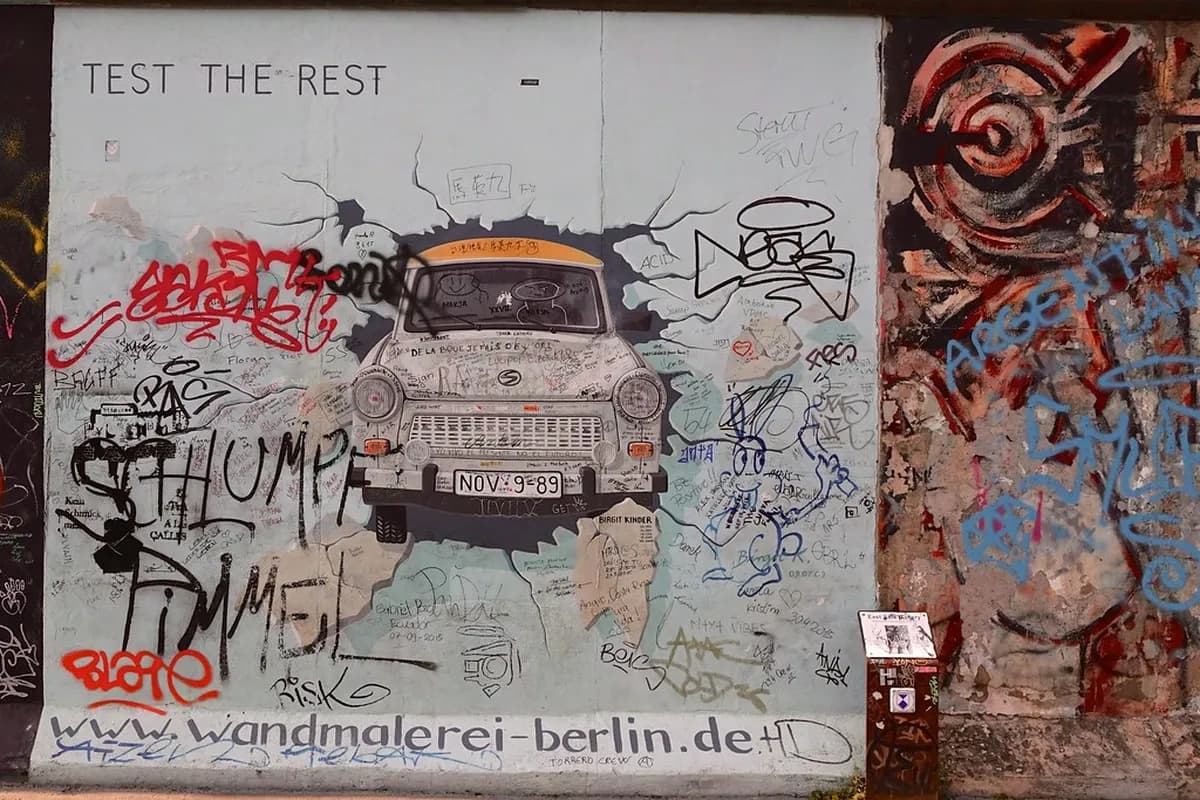
Friedrichshain is the default neighborhood for clubbers. Berghain — arguably the most famous techno club in the world — sits at the southern end on an old power station near Warschauer Straße. RAW-Gelände, an open-air complex in a former rail maintenance yard, hosts bars, an outdoor cinema, and a climbing wall, and is a reliable night-out starting point when Berghain's queue is too daunting. The East Side Gallery, the longest remaining stretch of the Berlin Wall, runs along the Spree for 1.3 kilometres and is a short walk from the S-Bahn stop.
The neighborhood around Boxhagener Platz is more day-friendly, with independent record shops, brunch cafes, and weekend markets. Karl-Marx-Allee — the grand Communist-era boulevard lined with Stalinist architecture — is genuinely impressive to walk and largely undiscovered by mainstream tourism. Hotel prices are moderate: €90–€180 per night is typical. The STAYERY Berlin Friedrichshain is a solid apartment-style option in the €110–160 range.
Take the S-Bahn to Warschauer Straße for the best central location in the neighborhood. The U5 and U1 lines also serve the area. Note that noise from clubs carries several blocks, especially near Revaler Straße. If you need to be up at 07:00 for an early flight, book toward the northern end of the neighborhood around Frankfurter Tor rather than near the club district.
Neukölln: Multicultural and Alternative Vibes
Neukölln is Berlin's most politically charged and genuinely diverse neighborhood. The northern part (Rixdorf and the streets around Weserstraße) has undergone the fastest gentrification in the city since around 2015 — wine bars, indie galleries, and natural food shops sit next to Arabic supermarkets, Turkish social clubs, and left-wing community centres. The contrast is precisely the appeal. Tempelhofer Feld, a decommissioned Cold War-era airport converted into a public park, is one of the best outdoor spaces in Europe: a flat, open expanse used for kite flying, cycling, barbecues, and community farming on a massive scale.
The Weserstraße bar scene (between Hermannplatz and Reuterplatz) typically peaks between 21:00 and 03:00 on weekends. It is considerably cheaper than Kreuzberg for drinking and eating out. The Markthalle on Maybachufer hosts the Turkish market on Tuesdays and Fridays — far less touristy than Kreuzberg's markets and excellent for cheap fresh produce. Budget about €80–€160 per night for accommodation.
Access is via the U7 or U8 to Hermannplatz or Rathaus Neukölln. The honest caveat: parts of Neukölln, particularly deep southern Neukölln, have higher petty crime than other neighborhoods on this list. Stick to the northern quarter (above Karl-Marx-Straße) and you will have no issues. Neukölln is not for everyone — if you prefer order and quiet, it is not your neighborhood. If you want something that feels authentically Berlin rather than polished for tourists, it is hard to beat.
Charlottenburg: Wealthy, Pleasant, and Practical
Charlottenburg was an independent city until 1920 and retains a sense of civic grandeur. The Kurfürstendamm (Ku'damm) is Berlin's answer to the Champs-Élysées: wide, tree-lined, and packed with international brands. The Kaiser Wilhelm Memorial Church, bombed during World War II and deliberately left in its ruined state, anchors the eastern end of the boulevard and is one of Berlin's most moving sights. Charlottenburg Palace, with its formal Baroque gardens, is a full half-day visit on its own.
The vibe here is unmistakably West Berlin — ordered, prosperous, and a little conventional compared to the edgier East. That is not a criticism. For travelers who want good restaurants, reliable hotels, safe streets, and easy access to shopping without the noise and chaos of Kreuzberg or Neukölln, Charlottenburg delivers. It is also the best base if you plan to do day trips to Potsdam, since the S-Bahn lines toward Potsdam depart from Zoologischer Garten.
Accommodation ranges from €130–€400 per night. The Pullman Schweizerhof and Roomers Berlin Steinplatz sit at the upper end; the B&B Hotel Kurfürstendamm provides a reliable mid-range option around €100–€150. Use the U2 or U7 lines, or the S-Bahn at Zoologischer Garten (a major interchange). One practical note: the Ku'damm area can feel touristy and generic in the way that similar shopping districts do worldwide. Stay one or two streets back from the main boulevard and the neighborhood becomes much more charming.
More Berlin Neighborhoods: Schöneberg & Wedding
Schöneberg sits south of Charlottenburg and is best known internationally as the neighborhood where David Bowie lived during his Berlin years (1976–1978) on Hauptstraße. It is also the historic heart of Berlin's LGBTQ+ community, centred on Nollendorfplatz and Motzstraße. The atmosphere is inclusive, relaxed, and residential. The Winterfeldtplatz market on Wednesdays and Saturdays is excellent for fresh produce and street food. Average hotel costs run €110–€210 per night. Use the U4 or U7 lines to reach the area.
Wedding sits north of Mitte and remains one of the few central areas that has not fully gentrified. That means lower prices — rooms for €70–€140 per night — and a rougher but genuinely local atmosphere. The Panke river walk and the Wedding lake district offer green space that most tourists overlook entirely. It is within 15 minutes of Mitte by U-Bahn (U6 or U9), making it a smart base for budget travelers who still want central access. The art scene has been quietly growing here since around 2018 as galleries and studios priced out of Kreuzberg and Neukölln have moved north.
Both Schöneberg and Wedding suit travelers on return visits who already know the main landmarks and want something different. Neither is wrong for a first trip either — they are just less obvious choices that reward a bit of research. If you want a local feel at a lower price than Prenzlauer Berg, Wedding is the move. If you want safety, inclusivity, and a residential pace closer to the West Berlin vibe, Schöneberg wins.
Our Top 10 Berlin Hotels Sorted by Price
The following picks span the full range from budget hostel to grand luxury, spread across the neighborhoods covered above. Prices reflect average nightly rates for a standard double room in 2026 and will vary by season — expect a 30–40% premium during July, August, and the Christmas market period (late November to December).
- Hotel Adlon Kempinski (Mitte West) — Berlin's most storied luxury property, directly facing the Brandenburg Gate. Expect €350–500 per night. Worth it for a special occasion.
- Ritz-Carlton Potsdamer Platz (Mitte) — Art Deco building, spa, and excellent restaurant. €200–450. Good value for a five-star in this city.
- Roomers Berlin Steinplatz (Charlottenburg) — Stylish boutique hotel on a quiet square. €180–280. Excellent for the West Berlin experience without the Ku'damm crowds.
- The Mandala Suites (Mitte) — Large-windowed contemporary suites near Gendarmenmarkt. €175–225. Among the best mid-luxury value in the city.
- Hotel Oderberger (Prenzlauer Berg) — Converted 19th-century public bath; genuinely beautiful common areas. €150–200. The most characterful mid-range option in the East.
- Bob W Apts (Kreuzberg) — Serviced apartments with a local feel in the heart of SO61. €140–225. Ideal for stays of a week or more.
- Indigo East Side Gallery (Friedrichshain) — Design hotel walking distance from the East Side Gallery. €140–200. Solid choice for the nightlife crowd.
- Motel One Hackescher Markt (Mitte) — Reliable German chain, great location near Museum Island. €100–180. The best consistent mid-range bet in central Berlin.
- NH Berlin Alexanderplatz (Mitte) — Large, comfortable rooms with metro and tram connections at the door. €90–160. Good for families and transit-focused travelers.
- Fjord Hotel Berlin (Wedding) — Budget-friendly property on the edge of central Wedding. €70–120. Best pure value for travelers on tighter budgets.
Book at least two to three months ahead for summer stays. Most of these hotels have flexible cancellation policies if you book directly rather than via an OTA — worth checking before assuming the cheapest platform is the best deal.
Beyond the Bed: Best Coffee Shops & Cold War Sites
Berlin's coffee culture is serious and neighborhood-specific. In Prenzlauer Berg, The Barn Roastery on Schönhauser Allee is one of the best specialty roasters in Germany and has fast WiFi — reliable for remote work. Bonanza Coffee in the same neighborhood is equally strong and slightly less hipster-coded. In Neukölln, Five Elephant on Reichenbachstraße has some of the best filter coffee in the city and is popular with freelancers during the week. In Kreuzberg, Kaffeerösterei Schwarze Heidi near Bergmannstraße is a local institution with a laid-back courtyard. None of these are chains; all close by 18:00–19:00.
For Cold War history, the key sites map neatly onto the neighborhoods in this guide. The East Side Gallery runs along the Spree in Friedrichshain and is free to visit at any hour. The Berlin Wall Memorial (Gedenkstätte Berliner Mauer) on Bernauer Straße straddles Mitte and Prenzlauer Berg — plan two hours minimum because the outdoor museum is larger than it looks. Checkpoint Charlie is in Mitte West and is worth visiting despite being very touristy; skip the overpriced paid museum next to it and read the free information boards outside instead. The DDR Museum on Museum Island is excellent and interactive; book tickets online to avoid queuing. Stasi Museum in the former East (Lichtenberg, short U5 ride) is fascinating and almost entirely overlooked by mainstream visitors.
The Ultimate 3-Day Berlin Itinerary
Staying in Mitte or Prenzlauer Berg gives the most logical flow for a 3-day visit. On Day 1, walk Unter den Linden from the Brandenburg Gate east to Museum Island — the Pergamon Museum alone can occupy a half-day, so pre-book timed entry online (€19 standard adult in 2026). Stop at the Memorial to the Murdered Jews and Bebelplatz. End the evening in the Rosenthaler Vorstadt area around Hackescher Markt for dinner and drinks. Check out our full 3-day itinerary for hour-by-hour suggestions.
Day 2 is for the East. Take the M10 tram or U2 to Prenzlauer Berg in the morning, walk the Berlin Wall Memorial on Bernauer Straße, and continue to Mauerpark for the Sunday flea market if your timing allows. Afternoon: head south to Friedrichshain via the S-Bahn at Warschauer Straße to walk the East Side Gallery and Karl-Marx-Allee. Dinner in Kreuzberg, specifically around Oranienstraße or Bergmannstraße. Day 3 covers the West: Tiergarten park (the Siegessäule column and Soviet War Memorial are both free), Charlottenburg Palace in the afternoon, and the Kaiser Wilhelm Memorial Church at sunset. If you want to experience Berlin nightlife, Wednesday through Saturday nights in Kreuzberg or Friedrichshain are the right choices.
The one transit mistake most first-timers make is trying to walk between neighborhoods rather than taking the S-Bahn. Prenzlauer Berg to Charlottenburg on foot is 8 kilometres. The S-Bahn journey takes 20 minutes. Use the public transport guide to identify which lines connect your base to your daily destinations before you arrive.
So, Which is the BEST Berlin Neighborhood?
The honest answer depends on exactly two things: how long you are staying and what you actually want from your trip. For a first visit of two to three days, stay in Mitte. The sightseeing density is unmatched and you will not waste time commuting. For a stay of five days or more, seriously consider Prenzlauer Berg or the western part of Kreuzberg — both put you in a genuine residential neighborhood while keeping you inside the Ringbahn.

If nightlife is a priority, Friedrichshain and eastern Kreuzberg (SO36) are the only real choices. If budget is the primary constraint, Wedding and northern Neukölln offer the best value inside the Ringbahn. Families consistently rate Charlottenburg and Prenzlauer Berg highest for safety, green space, and child-friendly infrastructure. Solo travelers who want maximum cultural immersion typically end up happiest in Neukölln, with the caveat that it is not a quiet neighborhood.
Whatever you choose, stay inside the S-Bahn Ring. This single rule eliminates more bad accommodation decisions than any other piece of advice in this guide. A hotel 10 minutes outside the Ring might be €20 cheaper per night, but the cumulative time and transit cost of commuting in will exceed that saving by the end of a week. Berlin rewards people who position themselves well — and the Ring is the dividing line between a trip where everything feels effortless and one where you are always catching up.
See our guide to the best things to do in Berlin for the full picture.
Frequently Asked Questions
Which is the safest neighborhood to stay in Berlin?
Prenzlauer Berg and Charlottenburg are widely considered the safest areas for tourists. They are well-lit, residential, and have low crime rates according to local police data. For more details, see our safety guide.
What is the best area for first-time visitors?
Mitte is the best choice for first-timers because it houses the majority of iconic landmarks. Staying here minimizes travel time to the Brandenburg Gate and Museum Island. It provides the most convenient base for a short trip.
Is it better to stay in East or West Berlin?
East Berlin neighborhoods like Friedrichshain offer more nightlife and alternative culture. West Berlin districts like Charlottenburg provide a more polished, upscale experience. Your choice should depend on whether you prefer grit or elegance.
Choosing where to stay in Berlin is the most important decision you will make for your trip. Whether you choose the historical center of Mitte or the leafy streets of Prenzlauer Berg, you are in for a treat. Berlin is a city that rewards those who take the time to explore its diverse corners.
I hope this guide helps you find the perfect neighborhood for your 2026 visit. Once you have booked your room, be sure to check our hotel recommendations for specific property ideas. Safe travels and enjoy the unique energy of the German capital!
You might also like

Continue reading
More guides you'll find useful