10 Best Things to Do in Frankfurt: The Ultimate Local Guide (2026)
Discover the best things to do in Frankfurt, from the historic Römerberg to the modern Main Tower. Includes a 2-day itinerary, local food tips, and safety advice.
On this page
10 Best Things to Do in Frankfurt
Having spent several weeks navigating the contrast between Frankfurt's glass skyscrapers and its reconstructed medieval timber houses, I've seen how easily travelers miss the city's soul. Many visitors treat this financial hub as a mere transit point, yet the 'Mainhattan' skyline hides a deep well of Hessian culture and history. Our editors have reviewed every neighborhood to bring you a guide that balances iconic landmarks with the gritty, authentic corners locals love.
This guide was last refreshed in May 2024 after my most recent spring visit to the bustling Main riverbanks. Whether you are here for a quick layover or a long weekend, knowing the best time to visit Frankfurt is crucial for avoiding the heavy trade fair crowds. We have updated all pricing and hours for 2026 to ensure your planning remains seamless and accurate.
Frankfurt is a city of layers where 14th-century cathedrals sit in the shadow of the European Central Bank. You will find that the best experiences often happen in the quiet taverns of Sachsenhausen rather than the sterile airport terminals. Let's dive into the essential experiences that make this German metropolis a destination in its own right.
Key Takeaways
- Quick picks: Römerberg for history, Main Tower for views, and Städel for art lovers.
- Best free activity: Walking the Eiserner Steg bridge at sunset for the skyline reflections.
- Local tip: Use the 'Sauergespritzter' order if you find the local apple wine too tart to drink straight.
- Safety reminder: Be alert in the Bahnhofsviertel at night, but don't miss its excellent international food scene.
10 Best Things to Do in Frankfurt
The following list represents the absolute essentials for any first-time visitor looking to capture the essence of the city. We have selected these items based on their historical importance, cultural impact, and the sheer quality of the visitor experience. Each entry includes practical logistics to help you build a realistic daily schedule without feeling rushed.
While the city is compact, the variety of attractions spans from natural history to high-altitude observation decks. If you plan on visiting several of these spots, consider checking out our Frankfurt Card guide for potential transport savings. Most of these locations are easily reachable via the efficient S-Bahn and U-Bahn networks.
According to the official tourism board, the city center is best explored on foot to appreciate the architectural transitions. Wear comfortable shoes as the cobblestones in the Altstadt can be unforgiving after a few hours of walking. Keep an eye out for the small details, like the iron bridge locks and the hidden courtyard cafes.
- Römerberg and the Historic Altstadt
- This iconic central square features the Römer city hall and beautifully reconstructed half-timbered houses that date back to medieval times.
- Located in the heart of the Altstadt, the square is free to visit and remains open to the public 24 hours a day.
- Arrive before 9:00 AM to photograph the fountain without the heavy crowds that typically arrive via river cruise ships.
- The nearby Cathedral Tower offers a historic alternative to the modern skyscraper views found elsewhere in the city.
- Main Tower Observation Deck
- Standing as the only skyscraper with a public viewing platform, this tower provides a 200-meter-high panoramic view of the skyline.
- The deck is located in the Innenstadt and typically costs €9 per adult, with hours extending from 10:00 AM to 9:00 PM.
- Take the high-speed elevator just before sunset to watch the city lights flicker on across the financial district.
- Check the weather forecast beforehand as the outdoor deck often closes during high winds or heavy thunderstorms.
- Städel Museum Art Collection
- This world-renowned gallery houses over 700 years of European art history, featuring masters like Rembrandt, Monet, and Picasso.
- Situated on the Museumsufer, it opens Tuesday through Sunday from 10:00 AM to 6:00 PM with tickets priced around €16.
- According to the Städel Museum Official Site, the underground contemporary wing is a must-see for its unique architectural lighting.
- Allow at least three hours to explore the massive collection without feeling overwhelmed by the sheer volume of masterpieces.
- Palmengarten Botanical Gardens
- This 54-acre botanical paradise features exotic plants from around the world housed in stunning 19th-century glass pavilions.
- Find this green oasis in the Westend district, where entry is €7 and the gates stay open daily from 9:00 AM to 6:00 PM.
- The Tropicarium is particularly impressive during the winter months when the humid warmth provides a welcome escape from the German cold.
- Pack a small picnic to enjoy by the lake, as the on-site cafe prices can be quite steep for families.
- Kleinmarkthalle Indoor Food Market
- This bustling municipal market is the best place to sample local delicacies like Green Sauce and regional cheeses from 150 stalls.
- Entry is free at this central location near the Zeil, which operates from 8:00 AM to 6:00 PM but remains closed on Sundays.
- Head to the upstairs terrace at the Rollanderhof stall for a glass of local wine and a view of the market floor.
- Be prepared to pay with cash at many of the smaller traditional stalls, as card acceptance is still inconsistent here.
- Goethe House and Museum
- The birthplace of Germany's most famous writer offers a glimpse into 18th-century bourgeois life through meticulously restored period rooms.
- Located near the Hauptwache station, the museum charges €10 for entry and is open daily from 10:00 AM to 6:00 PM.
- The adjacent museum houses a significant collection of Romantic-era art that provides context to Goethe's literary works.
- Look for the original astronomical clock on the top floor, which still functions as it did during the poet's childhood.
- Eiserner Steg Iron Bridge
- This 19th-century pedestrian bridge connects the city center with Sachsenhausen and is famous for its thousands of love locks.
- Crossing the Main river is entirely free and the bridge provides one of the best vantage points for the skyline at night.
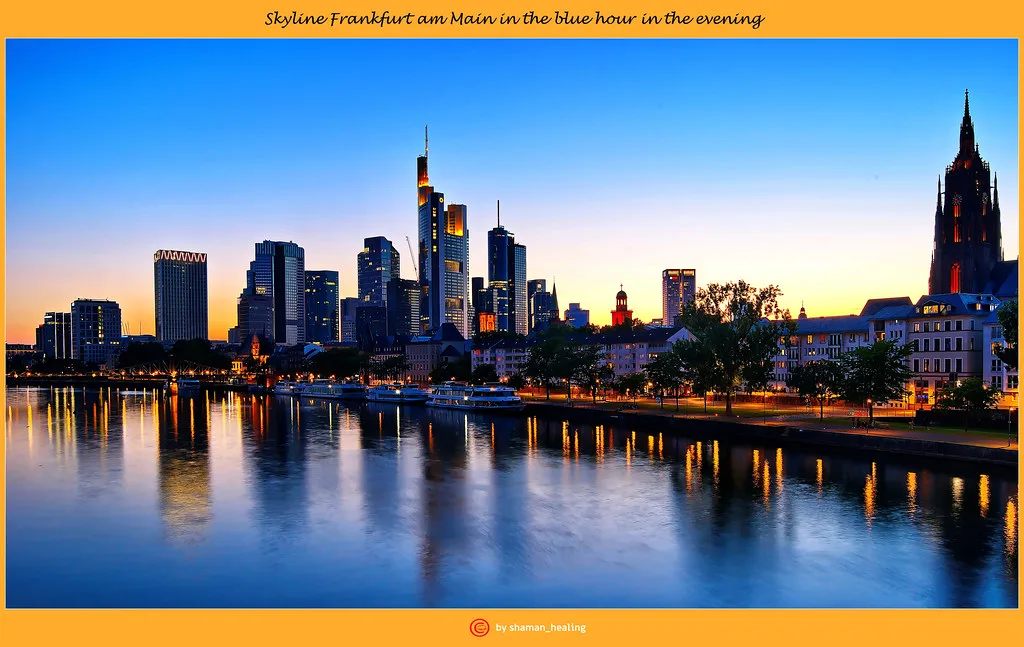
- Walk across during the blue hour to capture the reflection of the illuminated skyscrapers in the dark river water.
- The bridge can become extremely windy in winter, so ensure you have a scarf and hat before making the crossing.
- Senckenberg Nature Museum
- As one of Europe's largest natural history museums, this facility features massive dinosaur skeletons and a vast biodiversity exhibit.
- The museum is located in the Bockenheim area, costs €12 for adults, and is open daily from 9:00 AM to 5:00 PM.
- This is a top choice for families, though you should budget at least half a day to see the entire collection properly.
- Visit on a weekday afternoon to avoid the large school groups that frequently occupy the dinosaur halls during the mornings.
- Sachsenhausen Apple Wine Taverns
- The narrow alleys of Old Sachsenhausen are filled with traditional taverns serving the city's signature tart Apfelwein.
- Most taverns open around 5:00 PM and offer free entry, though you should budget €15–€25 for a full traditional meal.
- Look for the pine wreath hanging above the door, which traditionally signals that the establishment serves its own home-pressed wine.
- Check out our apple wine guide to learn the proper way to order a 'Sauergespritzter'.
- Alte Oper Opera House
- Originally destroyed in WWII and rebuilt by public demand, this grand concert hall is a masterpiece of Renaissance-style architecture.
- Located at Opernplatz, the exterior is free to admire, while guided tours are occasionally offered for approximately €10.
- The surrounding plaza is a popular spot for locals to enjoy a coffee while people-watching near the large fountain.
- Check the evening schedule for classical performances, as the acoustics in the Great Hall are among the best in Germany.
| Attraction | Adult price | Opening hours |
|---|---|---|
| Römerberg / Altstadt | Free | Open 24 hours |
| Main Tower Observation Deck | €9 | 10:00 AM – 9:00 PM |
| Städel Museum | €16 | Tue–Sun, 10:00 AM – 6:00 PM |
| Palmengarten | €7 | Daily, 9:00 AM – 6:00 PM |
| Kleinmarkthalle | Free | 8:00 AM – 6:00 PM (closed Sun) |
| Goethe House | €10 | Daily, 10:00 AM – 6:00 PM |
| Senckenberg Nature Museum | €12 | Daily, 9:00 AM – 5:00 PM |
Explore the Museumsufer: Art and History on the River
The Museumsufer is a unique cultural project that clustered over a dozen museums along both banks of the Main river. This arrangement makes it incredibly easy to hop between world-class institutions without ever leaving the scenic riverfront path. Our Museumsufer guide details how you can use a two-day pass to access 38 different collections.
While the Städel is the heavy hitter, the Museum of Applied Arts and the German Film Museum offer equally fascinating specialized exhibits. The architecture of the museums themselves is often as impressive as the art inside, ranging from historic villas to modern geometric structures. Walking the embankment at night is a local favorite activity, as the buildings are beautifully lit and reflect off the water.
If you visit during the last weekend of August, you will encounter the Museumsuferfest, one of Europe's largest cultural festivals. During this time, the riverbanks transform into a massive fairground with live music, food stalls, and dragon boat races. According to the Frankfurt Tourism Official Site, the festival attracts over two million visitors annually.
Taste the City: Apple Wine and Local Etiquette
Eating in Frankfurt is an exercise in tradition, centered largely around the 'Ebbelwoi' or apple wine culture. Unlike the sweet ciders found in the UK or US, Frankfurt's version is tart, still, and often an acquired taste for first-timers. It is traditionally served in a 'Bembel', a grey stoneware jug decorated with blue floral patterns, and poured into a ribbed glass.
Local etiquette is strict: never ask for a beer in a traditional apple wine tavern, as it is considered a minor social faux pas. If the wine is too sour for you, order it 'Sauergespritzter', which means it is mixed with sparkling mineral water. Sharing tables with strangers is expected in busy taverns like Adolf Wagner, fostering a lively and communal atmosphere.
If the local apple wine (Apfelwein) is too tart to drink straight, order it 'Sauergespritzter' — mixed with sparkling mineral water to soften the sourness.
For a true taste of the region, order the 'Frankfurter Grüne Soße', a cold sauce made from seven specific herbs served with boiled eggs and potatoes. This dish is so culturally significant that it has its own protected status and an annual festival dedicated to it. Avoid the generic 'Schnitzel' houses in the city center and head to Bornheim or Sachsenhausen for the most authentic recipes.
What to Skip and How to Stay Safe
While most of the city is perfectly safe, the area directly surrounding the Hauptbahnhof (Main Station) requires some street smarts. The Bahnhofsviertel is home to a visible drug scene that can be jarring for travelers arriving late at night. Check our safety guide for specific streets to avoid if you are feeling uncomfortable.
Ironically, this same district also hosts some of the city's best international restaurants and trendy cocktail bars. Stick to the main thoroughfares like Kaiserstraße and you will likely find the area more vibrant than dangerous. Keep your belongings close in the station itself, as pickpocketing remains the most common crime affecting tourists here.
The Bahnhofsviertel around the main station has a visible drug scene that can be jarring late at night. Stick to well-lit main streets like Kaiserstraße and watch for pickpockets inside the station.
Regarding tourist traps, we recommend skipping the Zeil shopping street on Saturday afternoons. The crowds are overwhelming and the shops are mostly the same international chains you can find in any major European city. Instead, explore the boutiques on Berger Straße in Bornheim for a more relaxed and local shopping experience.
Follow a Proven 2-Day Frankfurt Itinerary
If you only have 48 hours, the most efficient strategy is to split the city by the Main river. Spend your first day on the north side, focusing on the Altstadt, the Main Tower, and the high-end shopping districts. Our itinerary guide suggests starting at Römerberg before the tour buses arrive.
On your second day, cross the Eiserner Steg to the south bank to explore the Museumsufer and the taverns of Sachsenhausen. This geographic split minimizes your time on public transport and allows for a more leisurely pace. You can easily walk between most major sites, but the RMV public transport system is excellent if your legs get tired.
End your trip with a sunset walk along the Mainkai, where the locals gather to drink wine and watch the sunset over the skyline. This simple evening ritual provides a better sense of the city's rhythm than any guided tour ever could. Make sure to book your museum tickets in advance if your visit falls on a holiday weekend.
Escape the City: Top Day Trips from Frankfurt
Frankfurt's position as a major rail hub makes it the perfect base for exploring the surrounding German countryside. Heidelberg is the most popular choice, offering romantic castle ruins and a stunning old town just an hour away by train. We have a full list of day trips from Frankfurt that cover everything from thermal spas to medieval villages.
For wine lovers, the Rheingau region is easily accessible for a day of Riesling tasting and hiking through vineyards. The town of Rüdesheim am Rhein is a classic stop, famous for its narrow Drosselgasse alley and cable car views. These trips are best taken on regional trains using a 'Hessenticket', which allows up to five people to travel for one flat price.
If you prefer a shorter excursion, the town of Kronberg in the Taunus mountains offers fresh air and a beautiful castle hotel. It is only a 20-minute S-Bahn ride from the city center but feels worlds away from the urban hustle. Always check the return train schedule, as regional services can become less frequent after 9:00 PM.
Step Inside Frankfurt Cathedral (Kaiserdom)
Just steps from Römerberg, the Imperial Cathedral of St. Bartholomew — known locally as the Kaiserdom — is the most important historic church in the city and a landmark almost every major Frankfurt guide highlights. Between 1562 and 1792 it served as the coronation site for ten Holy Roman Emperors, giving it national significance far beyond its quiet appearance. The red-sandstone Gothic structure dates largely to the 14th and 15th centuries and survived (and was rebuilt after) the devastation of WWII. Entry to the nave is free, and it is typically open to visitors daily outside of services. The real reward is climbing the roughly 330 steps of the cathedral tower for a close-up view over the reconstructed Old Town and Römerberg rooftops — a more historic counterpoint to the modern skyscraper decks. Visit mid-morning on a weekday to climb the narrow spiral staircase before tour groups arrive.
See the Skyline From a Main River Cruise
One of the most relaxing ways to take in Frankfurt is from the water, and a short sightseeing cruise on the Main is a staple of nearly every local itinerary. Boats depart from the docks near the Eiserner Steg and the Mainkai, with operators such as Primus-Linie running both quick loops of roughly 50 minutes and longer 100-minute trips upriver. Expect to pay somewhere in the region of €11–€15 for a standard sightseeing loop, with the exact route and price varying by season. Gliding past the Museumsufer, the banking towers, and Sachsenhausen gives you a perspective on the Mainhattan skyline that you simply cannot get from street level. For the best photos, choose a late-afternoon departure so you catch the towers turning gold and, in summer, the lively crowds gathering along the riverbanks.
Explore the Banking District and the Euro Sculpture
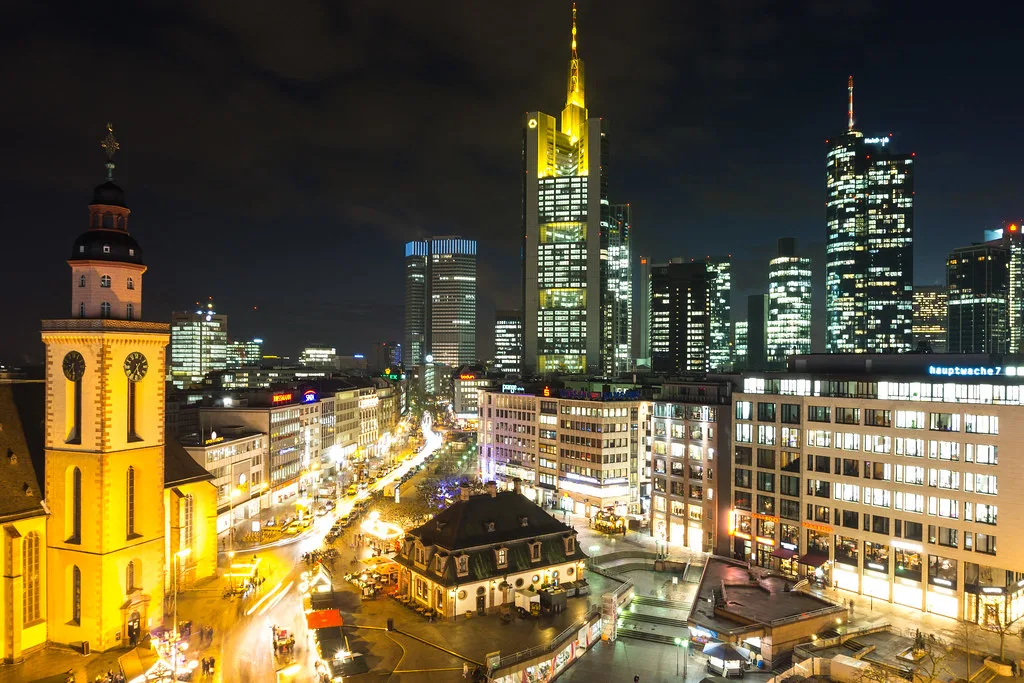
No visit captures Frankfurt's nickname 'Mainhattan' quite like a walk through the Bankenviertel, the cluster of glass towers that gives the city Continental Europe's most dramatic skyline. Frankfurt is the financial capital of the eurozone and home to major institutions, and the area around the former European Central Bank headquarters on Willy-Brandt-Platz is where most visitors stop for photos. The undeniable highlight is the giant illuminated Euro sculpture — a blue '€' ringed by golden stars — which is free to visit and lit up beautifully after dark. From here it is a short stroll to the Main Tower for the city's only public observation deck. For a deeper dive into the institutions behind the skyline, the Money Museum of the Deutsche Bundesbank offers free admission and an engaging look at the history of currency, making it a worthwhile rainy-day stop.
Visit Frankfurt Zoo With the Family
Founded in 1858, Frankfurt Zoo is one of the oldest zoos in Germany and a reliable highlight for anyone travelling with children. Located in the Ostend district and easily reached by U-Bahn to the Zoo station, it houses around 4,500 animals across roughly 450 species in the heart of the city. Standout exhibits include the Grzimek House for nocturnal animals and the Exotarium, with its reptiles and aquarium tanks. Adult tickets are usually in the region of €13, with reduced rates for children, and the grounds stay open year-round. Plan on at least half a day to see it properly without rushing. If the zoo is on your list, our guide to Frankfurt with kids rounds up more family-friendly stops, from the Senckenberg dinosaurs to the city's playgrounds and the hands-on Experiminta science centre.
Join a Free Walking Tour to Find Your Feet
If you only have limited time or want to orient yourself quickly, a free walking tour is one of the smartest first activities in Frankfurt. Several operators run daily English-language tours that depart from central meeting points near Römerberg or the Hauptwache, typically lasting two to three hours and led by knowledgeable local guides. These tours are 'free' in the tip-based sense, so budget around €10–€15 per person to thank your guide at the end. A good walk will stitch together the Altstadt, the Kaiserdom, the river, and the banking district while sharing the stories you would otherwise miss. It is an ideal companion to our first-timer's guide, and many of the same sights are completely free to revisit on your own afterward — see our roundup of free things to do in Frankfurt to keep costs down.
Explore More Frankfurt Guides
Plan every part of your Frankfurt trip with our complete guide collection — where to stay, how to get around, the best things to do, food, day trips, and seasonal tips.
- 16 Best Restaurants in Frankfurt
- 17 Best Things to Do in Frankfurt for First-Timers
- Best Time to Visit Frankfurt
- 15 Best Day Trips and Travel Tips from Frankfurt
- Frankfurt Christmas Market Guide
- Frankfurt Museums Guide Museumsufer Travel Guide
- Frankfurt Neighborhoods Guide
- Frankfurt Nightlife Guide
- Getting Around Frankfurt
- How Many Days In Frankfurt? The Complete Itinerary Guide
- Is Frankfurt Safe? 11 Essential Safety Tips & Guide for 2026
- 9 Best Neighborhoods for Where to Stay in Frankfurt
- 10 Best Art Museums in Frankfurt
- 12 Best Bars and Clubs in Frankfurt (2026 Guide)
- 16 Best Hotels in Frankfurt City Centre
- Affordable Stays
- 13 Best Cheap Eats and Budget Dining Tips in Frankfurt
- Frankfurt Airport to City Centre Guide
- 10 Frankfurt Areas to Avoid
- 9 Things to Know
- Frankfurt Main Tower and Skyline Views
- Frankfurt Old Town and Römerberg Guide
- Frankfurt to Heidelberg Day Trip
- Frankfurt Traditional Food and Apple Wine Guide
- Frankfurt Weather By Month
- Frankfurt Weekend Itinerary
- 12 Best Free Things to Do in Frankfurt
- 15 Best Things to Do and Family Tips for Frankfurt (2026 Guide)
- One Day in Frankfurt Itinerary
- 10 Essential Stops for a Palmengarten and Frankfurt Gardens Guide
- Shopping in Frankfurt Zeil Guide
- 10 Best Things to Do at Frankfurt Airport on a Layover
- 13 Unusual and Hidden Things to Do in Frankfurt
Frequently Asked Questions
Is Frankfurt worth visiting for a day?
Yes, Frankfurt is perfect for a one-day visit because the major historic sites and the skyline are concentrated in a walkable center. You can easily see the Römerberg, the Main Tower, and the Iron Bridge within a few hours.
Is Frankfurt safe for tourists at night?
Frankfurt is generally very safe, though the area around the central train station (Bahnhofsviertel) can be gritty and uncomfortable for some. Stick to well-lit main streets and use standard urban awareness to avoid petty theft.
What is the most famous thing in Frankfurt?
The city is most famous for its 'Mainhattan' skyline and the historic Römerberg square. It is also globally recognized as the birthplace of the writer Johann Wolfgang von Goethe and the home of the European Central Bank.
Is there anything worth seeing in Frankfurt?
Absolutely. Beyond its business reputation, Frankfurt packs the reconstructed medieval Römerberg, the Kaiserdom cathedral, the Goethe House, and a dozen museums along the Museumsufer into a compact, walkable centre. Add the Main Tower observation deck, the apple-wine taverns of Sachsenhausen, and the Palmengarten botanical garden, and there is easily enough to fill one to three days.
Is 3 days enough in Frankfurt?
Three days is plenty to see Frankfurt comfortably and still leave room for a day trip. Spend day one in the Altstadt and banking district, day two on the Museumsufer and in Sachsenhausen, and use day three for an excursion such as Heidelberg or the Rheingau wine region. With only one or two days you can still cover the highlights, but three lets you slow down and explore the city's quieter neighbourhoods.
What is the #1 tourist attraction in Germany?
Germany's single most famous attraction is Neuschwanstein Castle in Bavaria, the fairy-tale palace that inspired Disney's castle. In Frankfurt itself, the most visited sights are the historic Römerberg square and the Main Tower observation deck. Frankfurt also makes an excellent base for reaching other top German destinations, including the romantic Rhine Valley, by fast regional trains.
What is Frankfurt, Germany best known for?
Frankfurt is best known as the financial capital of the eurozone, home to the European Central Bank and a skyline of skyscrapers that earned it the nickname 'Mainhattan'. It is also famous for its tart apple wine (Apfelwein), the reconstructed Römerberg old town, being the birthplace of the writer Goethe, and hosting major international trade fairs and one of Europe's busiest airports.
Frankfurt is a city that rewards those who look past its corporate exterior and seek out its traditional Hessian roots. From the heights of the Main Tower to the cozy corners of a Sachsenhausen tavern, the contrast here is what makes the experience unique. By following this guide, you will avoid the common tourist traps and discover why locals are so fiercely proud of their city.
Whether you are here for the art, the food, or the history, the 'Mainhattan' spirit is sure to leave a lasting impression. Don't forget to grab a bottle of apple wine to take home as a tart reminder of your time in Germany's financial heart.
You might also like


Continue reading
More guides you'll find useful