10 Best Munich Christmas Markets to Visit (2026)
Discover the 10 best Munich Christmas markets with our 2026 guide. Find local tips on food, glühwein, and hidden gems for the perfect holiday trip.
On this page
10 Best Munich Christmas Markets for a Winter Trip (2026)
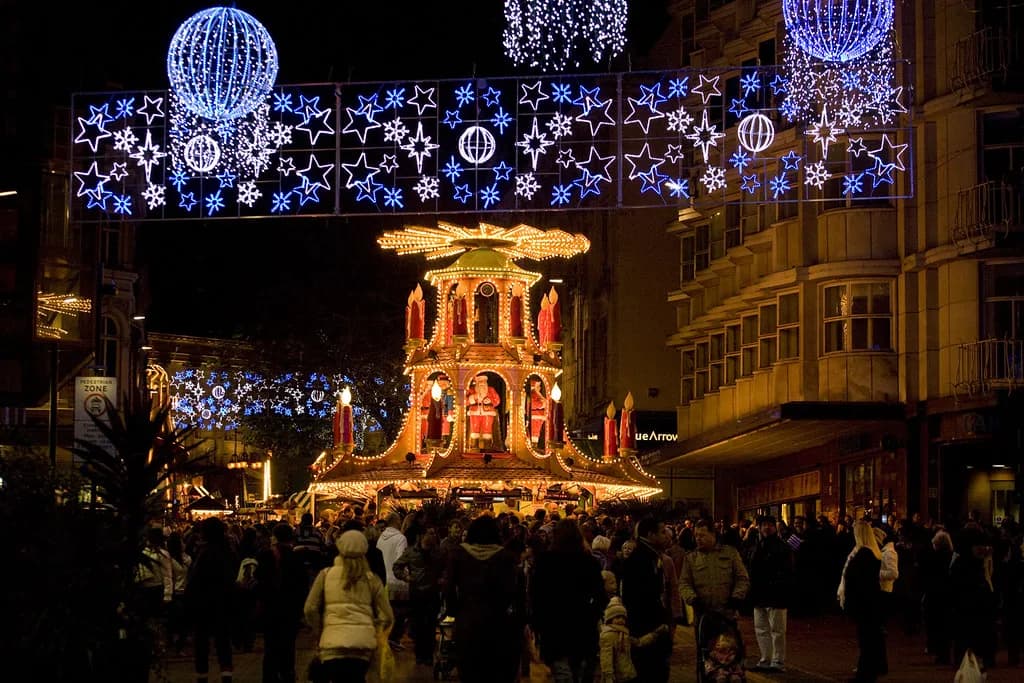
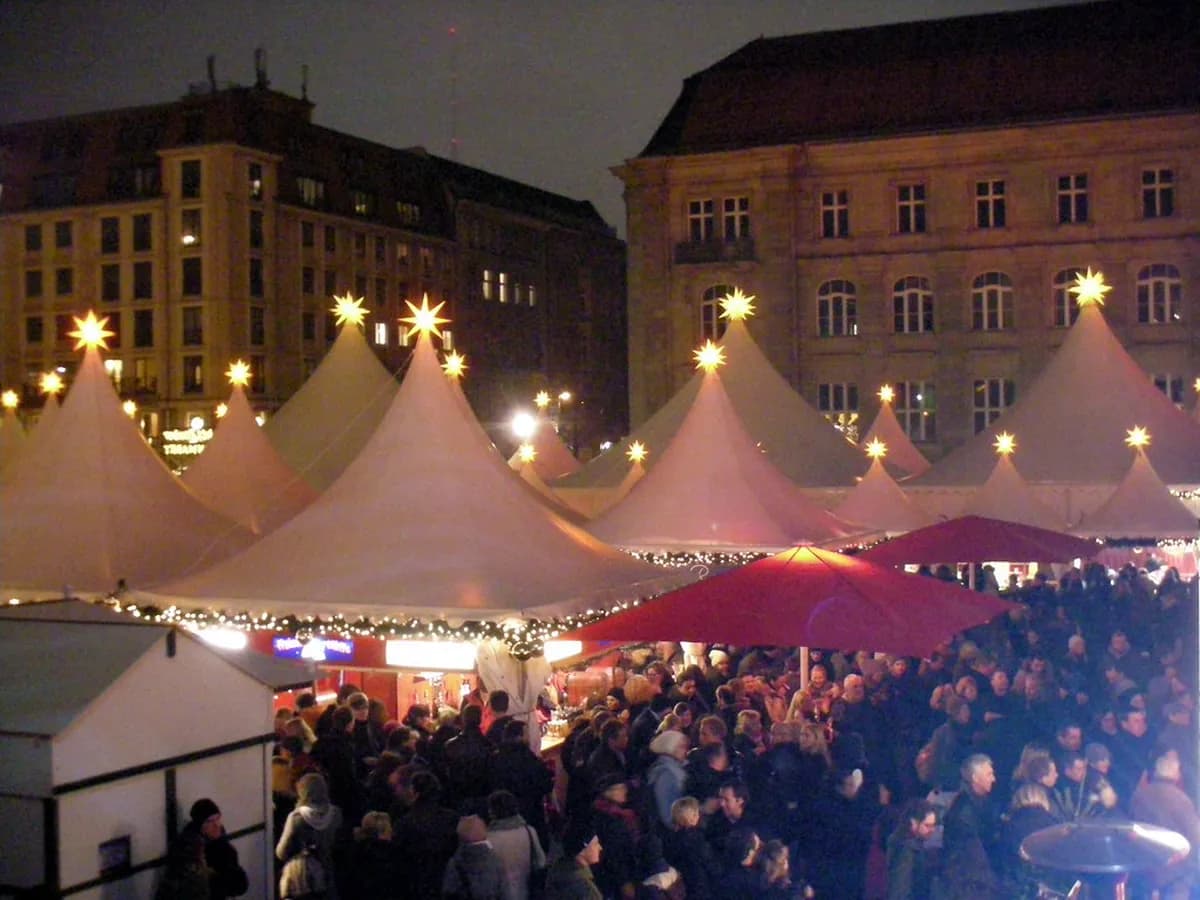
Munich genuinely transforms once the advent season begins. The scent of roasted almonds drifts across cobblestoned squares, Glühwein steam rises from hundreds of wooden stalls, and locals who spent October in beer halls are suddenly lingering outdoors until 9:00 PM. The city runs more than twenty Christmas markets from late November through Christmas Eve, each with its own personality. This guide focuses on the ten best for the 2026 season, including practical tips on timing, the glühwein mug deposit system, and which markets you can walk between in a single evening.
Before diving into the list, check our when to visit Munich guide for notes on late-November weather versus peak-December crowds. If you want to see the Marienplatz and Old Town alongside the markets, plan to arrive at the square by 10:30 AM to catch the Glockenspiel before the biggest crowds form. For a full day structure linking the markets with the city's attractions, the our complete Munich guide pillar has you covered.
About the Munich Christmas Markets
The main Christkindlmarkt at Marienplatz traces its roots to the seventeenth century, making it one of the oldest continuously running Christmas markets in Germany. It has always served a social function as much as a commercial one: the market was where ordinary residents met, gossiped, and marked the start of the religious advent season together. That social DNA still runs through every market in the city today.
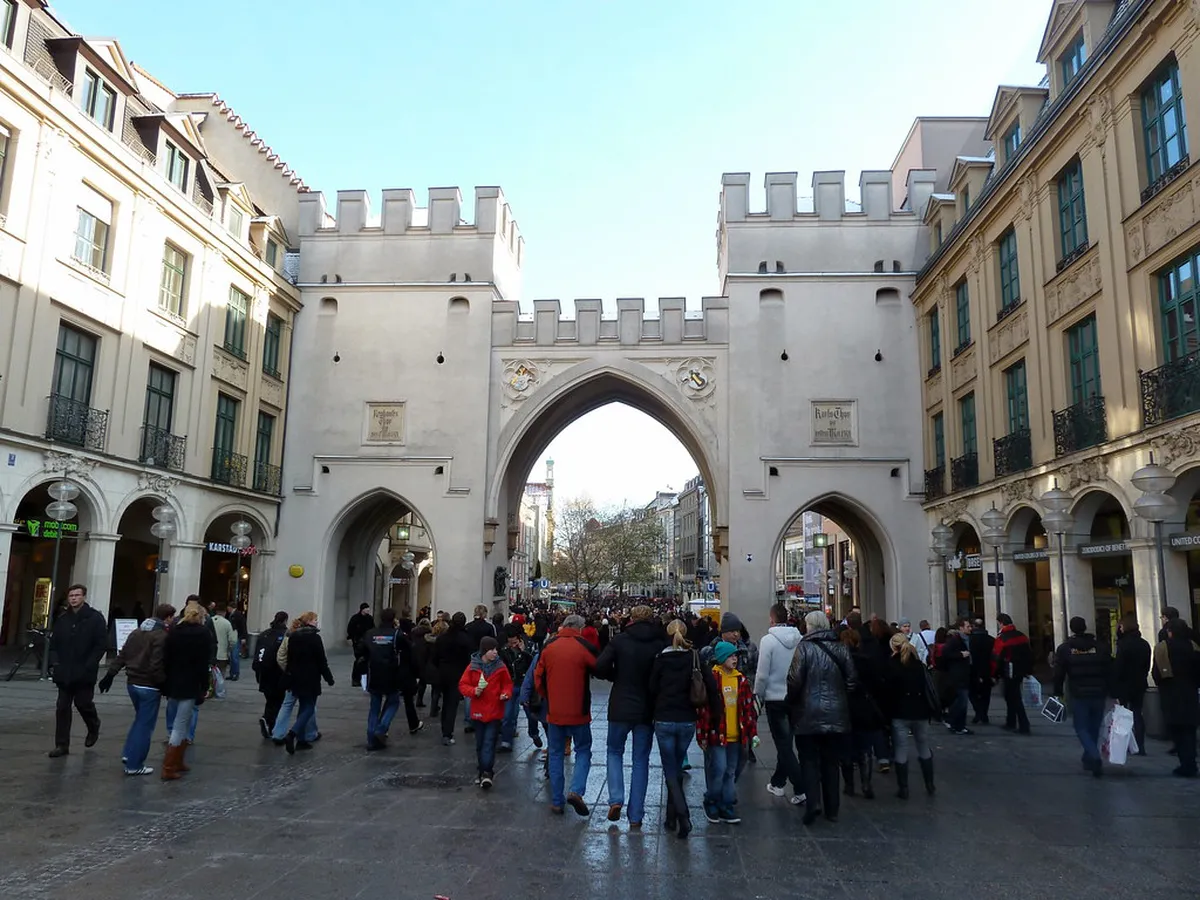
Depending on how broadly you draw your boundaries, Munich hosts somewhere between twenty and thirty distinct markets in the 2026 season. They range from the religious and traditional (nativity figurines, carved wooden toys, handmade woolens) to the deliberately irreverent. You can spend an entire four-day trip doing nothing but visiting markets and still leave with a long list of ones you missed. The season officially begins in the last week of November and the majority of markets close on December 24. Tollwood is the notable exception, continuing its performances through New Year's Eve.
Common threads connect all of them: live music ranging from brass bands to children's choirs, food stalls heavy with sausage smoke, and the glühwein mug you carry from stand to stand. Almost every market is free to enter. You only spend money on what you choose to eat, drink, or buy.
Tips for Visiting the Munich Christmas Markets
The best time to visit is the final week of November or the first week of December. Most markets are already open, hotel prices are lower than in peak December, and the crowds at Marienplatz are thin enough to move around freely. Mid-December weekends are the hardest to navigate: the central square can feel more like a slow-moving traffic jam than a festive outing.
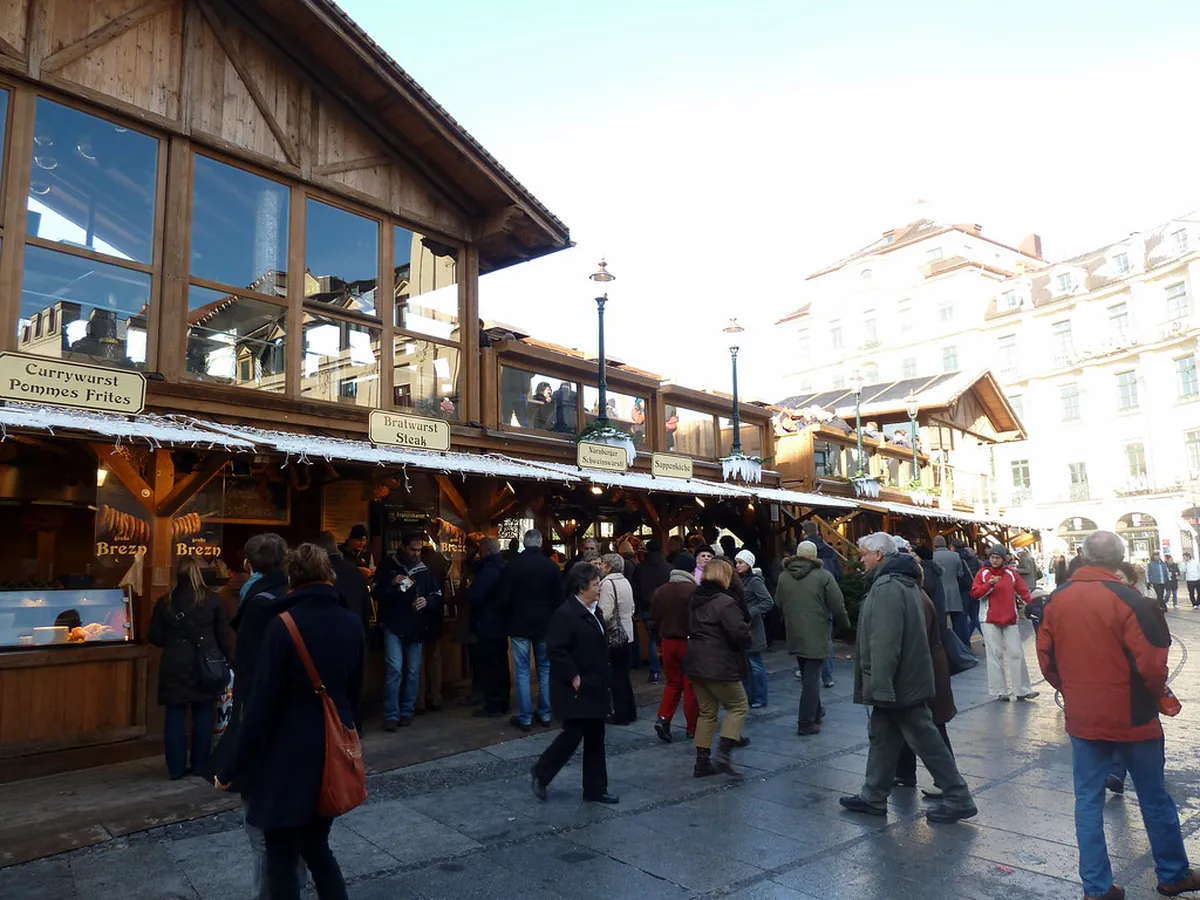
Cash is genuinely useful even though many stalls now take cards. Not every vendor has a card reader, and the queues move faster when you can hand over exact change. Withdraw cash before you head out rather than relying on ATMs near the markets, which often run out of small notes. Expect to pay €6–€10 for a mug of Glühwein, €6–€12 for most food items, and a Pfand (deposit) of €3–€5 on every mug you order.
The Pfand system works across all stalls within the same market: order your drink, pay the deposit upfront, drink it, and return the mug to any stall at that market to get your coins back. Many stands now have a dedicated Pfand machine — a small terminal separate from the ordering counter — where you return the mug and receive the deposit in cash. This is useful because regular ATMs often dispense only €50 notes, which are awkward to break, while the Pfand machine reliably returns €2 and €1 coins. If you love the mug design, keep it. Marienplatz and Pink Christmas both produce collectible mugs each year that sell for €10–€20 on resale sites. The deposit is a fair price for a genuine souvenir.
The Pfand (mug deposit) is €3–€5 and works within each market. Every drink includes this upfront cost, but you recover it when you return the mug to any stall. Pfand machines dispense coins (€1, €2) more reliably than ATMs, so it's a practical way to get cash for small purchases.
Dress in layers: wool or silk base layer, a warm mid-layer, waterproof coat, and boots with thick soles for cold cobblestones. The damp Bavarian cold cuts sharper than the thermometer suggests. Rain during the market season is more common than snow, especially in November. Weekday afternoons offer the best combination of light for photography and manageable crowd levels.
The Best Munich Christmas Markets for 2026
Munich hosts more than a dozen distinct markets, each with a different atmosphere. The central cluster around the Old Town is easy to navigate on foot but can feel repetitive after a few hours. The themed and neighbourhood markets further out offer a more local atmosphere and noticeably smaller crowds. Below are ten worth planning your time around.
| Market | Location | Vibe |
|---|---|---|
| Christkindlmarkt at Marienplatz | Marienplatz (Old Town) | Iconic, historic, busiest central market |
| Tollwood Winter Festival | Theresienwiese | International, large festival, family-friendly |
| Pink Christmas | Stephansplatz (Glockenbachviertel) | LGBTQ+-friendly, artsy, collectible mugs |
| Medieval Market | Wittelsbacherplatz | Themed, medieval atmosphere, Feuerzangenbowle |
| Bahnwärter Thiel | Tumblingerstraße (south) | Alternative, artistic, local vendors |
| Gans Woanders | Obergiesing (south) | Quietest, most local, non-touristy |
| Chinese Tower Market | English Garden | Peaceful woodland setting, relaxing |
| Residenz Christmas Village | Former royal palace | Quiet, quality crafts, family-friendly |
| Schwabing Christmas Market | Münchner Freiheit | Handmade only, artists' vetting, upscale food |
| Haidhausen Market | Weißenburger Platz (east) | Local favourite, small crowds, puppet shows |
1. Christkindlmarkt at Marienplatz
This is the city's oldest and most iconic market, set against the backdrop of the New Town Hall. It is the right place to start any market tour, ideally before 11:00 AM or after 20:00 when the after-work crowd thins. The market runs daily from 10:00–21:00 (closing at 20:00 on Sundays). Look for the central Christmas tree lit by 2,500 lights — it doubles as the most reliable meeting point in the city during December.
2. Tollwood Winter Festival at Theresienwiese
Held on the same grounds as Oktoberfest, Tollwood amplifies every element of a traditional market into a full festival. Admission is free and the grounds include multiple large circus-style tents filled with international craft vendors, organic food stalls, live theatre, and music. Most food here skews global, with strong vegetarian and vegan options that are harder to find at traditional markets. Tollwood stays open through New Year's Eve, making it the right destination if you are visiting Munich in the last week of December after most other markets have closed. Check the calendar in advance because some evening performances require a separate ticket.
Address: Wirtsbudenstraße 1, 80336 München.
3. Pink Christmas at Stephansplatz
Munich's LGBTQ+ Christmas market in Glockenbachviertel is smaller than the central markets but among the warmest in atmosphere. The square is bathed in pink light, local makers fill the stalls, and the DJ sets run into the evening. It is free to enter and the atmosphere is consistently upbeat. The mug here is arguably the most collectible in the city — do not return it. Visit the official Pink Christmas site for the 2026 DJ and performance schedule before you go.
Address: Stephanspl., 80337 München.
4. Mittelalterlicher Weihnachtsmarkt (Medieval Market)
Located at Wittelsbacherplatz, this market recreates a medieval atmosphere with wooden huts, open fire pits, and performers in period costume. The signature drink is Feuerzangenbowle — a rum-soaked sugar loaf set alight over a pot of red wine, served in a clay goblet for around €7. Hand-forged metalwork and hand-thrown ceramics dominate the craft stalls. Weekend afternoons include live medieval music, making it a genuine alternative for anyone tired of the same brass-band repertoire at other markets.
Address: Wittelsbacherpl., 80333 München.
5. Bahnwärter Thiel
This is Munich's most alternative Christmas market, held on a compound of old train carriages and repurposed shipping containers near Tumblingerstraße. You may arrive wondering if Google Maps has taken you somewhere wrong — walk through the graffiti-covered archway and you will find one of the liveliest spots in the city. Live music, inventive food stalls, and genuinely independent vendors make this the best market for people who find the central options too commercial. It is a 15-minute tram ride south of Marienplatz.
Address: Tumblingerstraße 45, 80337 München.
6. Gans Woanders
Tucked under a railway bridge in the Obergiesing neighbourhood, Gans Woanders is the market locals mention when you ask them where they actually go. The compound has a fairytale quality at night, with handmade goods, cozy food and drinks, live music, and a small disco. It is far enough from the centre to feel genuinely non-touristy, but straightforward to reach on the S-Bahn. Worth the extra twenty minutes of travel time.
Address: Pilgersheimer Str. 13, 81543 München.
7. Chinese Tower Market in the English Garden
Set beneath a 25-metre wooden pagoda inside the city's largest park, this market offers a peaceful woodland setting most visitors miss entirely. Reach it by bus or a 20-minute walk through the park. The market features a traditional carousel and several Eisstockschießen lanes — the Bavarian form of curling — available to rent by the hour. Twilight is the best time to visit, when the illuminated pagoda glows against the dark tree line.
8. Residenz Christmas Village
Held in the courtyard of the former royal palace, this market feels contained and quiet compared to Marienplatz. The stone walls provide real shelter from wind and the craft stalls focus on quality wood carvings and traditional Bavarian ornaments rather than generic seasonal gifts. Animated puppet displays make it one of the better options for families with younger children. Entry is free.
9. Schwabing Christmas Market at Münchner Freiheit
The local artists' association vets every stall here, so everything sold is handmade and original — jewelry, paintings, prints, and small sculptures rather than the ornaments you see everywhere else. It is open daily from noon until 20:30 and sits in the middle of one of Munich's most livable neighbourhoods. The food leans slightly more refined than the central markets, with gourmet crepes and regional liqueurs alongside the standard sausage options.
10. Haidhausen Christmas Market at Weißenburger Platz
This circular market across the Isar river is a consistent local favourite. The neighbourhood atmosphere is the main draw: far fewer tourist groups, a beautiful central fountain, and mulled wine that regulars rate among the best in the city. Open 11:00–21:00 daily. Weekly puppet shows in the central pavilion make it a strong option for families.
How to Group Markets for a Single Evening
Most visitors make the mistake of treating the markets as a list to tick off across multiple separate trips. A smarter approach is to group geographically close markets into one 3–4 hour walk, then add a second pairing the next evening. The Old Town cluster — Marienplatz Christkindlmarkt, the Kripperlmarkt at Rindermarkt, and the Residenz Christmas Village — can be walked in under 15 minutes end to end. Add the Medieval Market at Wittelsbacherplatz for another 10-minute walk north.
The second grouping covers the alternative side of the city. Tollwood at Theresienwiese is a U4/U5 stop from the centre. From there, Bahnwärter Thiel is a 20-minute tram ride on the 18. If you are staying an extra night, add Gans Woanders in Obergiesing for the most local market experience of the trip. The Chinese Tower Market in the English Garden works as a standalone afternoon because the park walk is part of the experience.
Pink Christmas and the Schwabing market pair naturally for a third evening, both in the inner west of the city and connected by the U3/U6 line. This pairing avoids the most tourist-heavy areas and ends in a neighbourhood full of good restaurants if you want to finish the evening sitting down. See our our complete Munich guide guide for how to fill the daytime hours between evening market sessions.
Most Munich Christmas markets open November 23, 2026, and close December 24. Tollwood is the exception, staying open through New Year's Eve. The best crowds are late November or early December weekdays; avoid mid-December weekends when central squares become overwhelming.
What to Eat and Drink at the Markets
Glühwein is the default, but many locals switch to Heißer Aperol for a citrusy, bitter alternative. Non-alcoholic Kinderpunsch is available at almost every stall and is flavourful enough to be worth ordering on its own. Come hungry rather than eating dinner before you go: the markets are best treated as a progressive food tour rather than a drinking session with occasional snacks.
The must-try savory items are Käsespätzle (a Bavarian mac-and-cheese that will ruin the supermarket version for you), Flammkuchen (thin-crust flatbread with crème fraîche and lardons), and a standard Bratwurstsemmel for a quick, cheap, satisfying snack. For dessert, Dampfnudel — a steamed dumpling served with warm vanilla custard — is the most distinctly Bavarian option. Gebrannte Mandeln (roasted cinnamon almonds) and Stollen are the best things to carry away with you, as both travel well in a bag.
Ordering moves faster if you scope the menu from a distance before you step up. Most vendors speak English but appreciate it when you have your order ready. Have your payment out before reaching the counter and ask about the Pfand upfront so the total does not surprise you. Return your mug to any stall within the same market to collect your deposit.
Add-On Experiences Beyond the Stalls
Several markets offer activities that go beyond browsing and eating. Eisstockschießen — Bavarian curling — is available at the Chinese Tower Market and a handful of others. Lanes can be rented by the hour for small groups and the learning curve is gentle enough to make for a fun 45-minute detour. Ice skating rinks appear at a few of the larger markets, and smaller children's carnival-style rides operate at Marienplatz and Tollwood.
If the cold becomes too much mid-day, use the gap between market sessions to duck into one of the city's indoor attractions. The Residenz palace museum is warm, genuinely impressive, and directly adjacent to one of the best market clusters. The BMW Museum provides a modern contrast for anyone who has had enough Bavarian tradition for the afternoon. For a full indoor-outdoor balance across your trip, the Marienplatz and Old Town guide maps the main sights within walking distance of the central markets.
Frequently Asked Questions
When do the Munich Christmas markets open in 2026?
Most Munich Christmas markets are scheduled to open on November 23, 2026, and run through December 24. Some larger festivals like Tollwood stay open until New Year's Eve. Always check specific market dates as smaller neighborhood spots may only open for one or two weekends.
Are the Christmas markets in Munich free to enter?
Yes, almost all traditional Christmas markets in Munich offer free admission to the public. The only exceptions are specialized events or indoor performances at the Tollwood Festival. You only need to pay for the food, drinks, and crafts you choose to purchase.
What is the best food to try at a Munich Christmas market?
You must try the 'Schweinshaxe' (pork knuckle) or a classic 'Bratwurstsemmel' for a savory meal. For dessert, 'Gebrannte Mandeln' (roasted almonds) and 'Stollen' are the most traditional choices. Pair these with a hot mug of Glühwein to complete the experience.
You might also like
Continue reading
More guides you'll find useful