
One Day In Munich Travel Guide
Plan one day in munich with top picks, neighborhood context, timing tips, and practical booking advice for a smoother trip.
On this page
One Day In Munich
Munich blends centuries of royal history with a vibrant, modern lifestyle that captivates every visitor. Spending just one day in Munich requires a focused plan to see the iconic spires and lush gardens. You can experience the best of Bavarian culture by starting early in the historic city center.
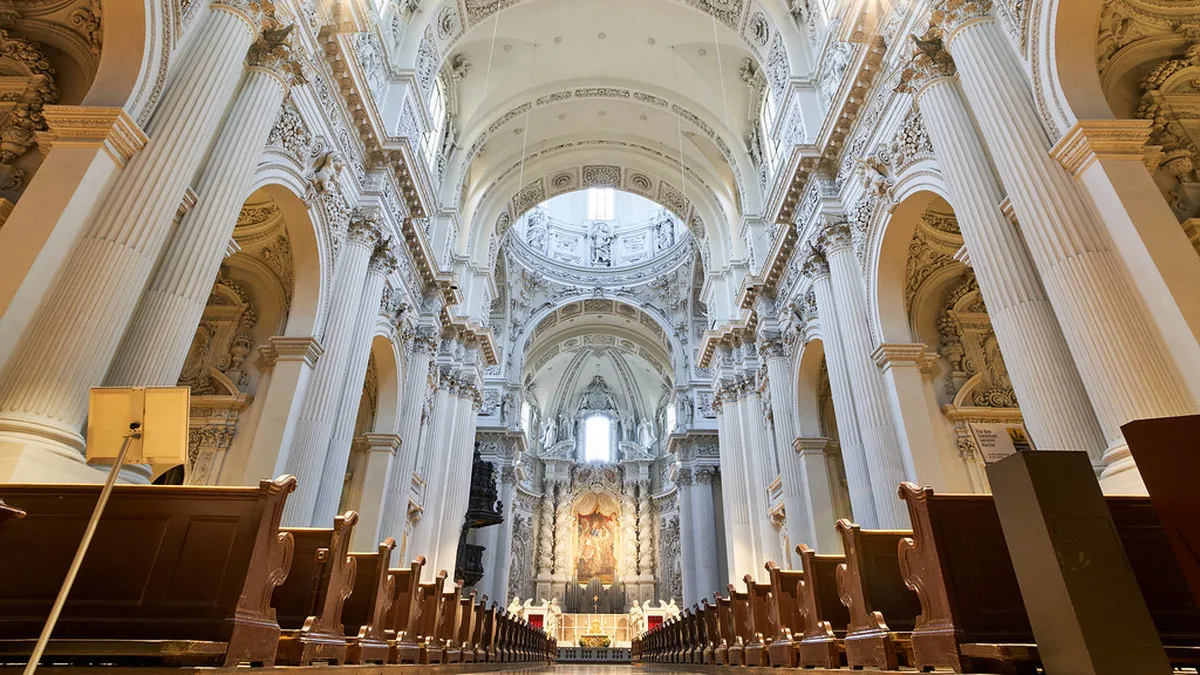
The city is remarkably walkable, making it easy to move between Gothic cathedrals, open-air markets, and one of Europe's largest urban parks on foot. This guide provides a strategic path to ensure you do not miss the famous Glockenspiel, a traditional white sausage breakfast, and a refreshing liter of local beer. Efficiency is your best friend when time is limited to twenty-four hours.
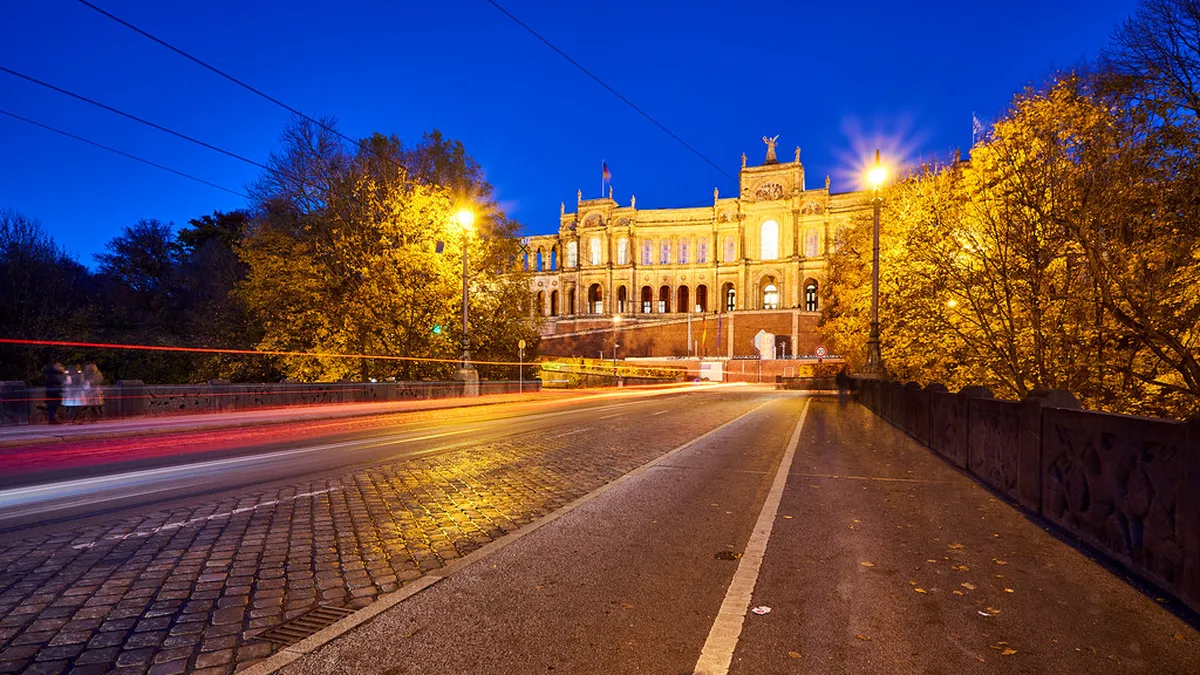
Whether you want to watch surfers ride a standing river wave or explore a royal palace in the middle of the city, Munich delivers an extraordinary range of experiences. Use this itinerary to navigate the streets like a local while hitting every major landmark. Prepare for a fast-paced but deeply rewarding journey through Germany's southern gem.
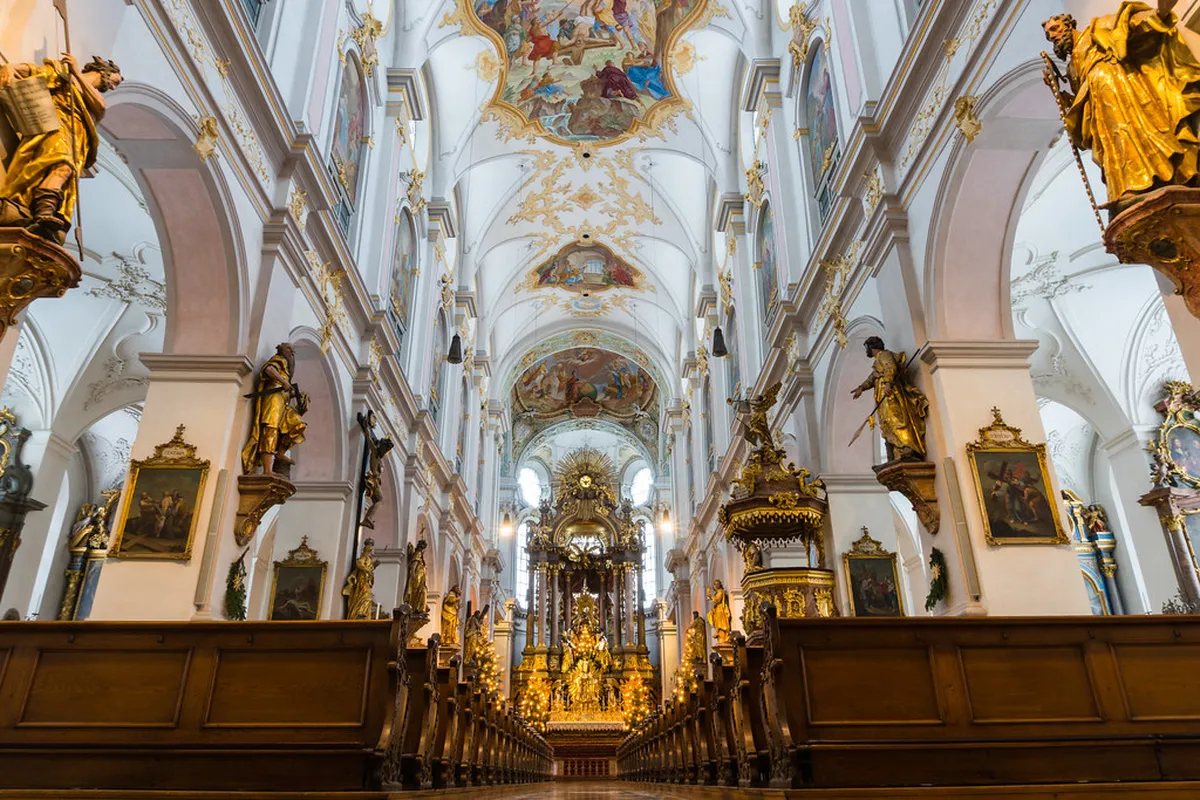
The Asamkirche on Sendlinger Strasse is a hidden-gem detour that most visitors miss. This free Baroque church, built in the 1730s by the Asam brothers, is one of the most ornately decorated spaces in Germany but rarely crowded—it sits tucked between ordinary shops, making it the highest-reward fifteen-minute detour in the city.
Follow the itinerary in order: Marienplatz breakfast and landmarks → Altstadt exploration with the Asamkirche detour → English Garden and Eisbachwelle → Chinese Tower for lunch → museums or parks in the afternoon → return to Altstadt by evening for dinner. This sequence minimizes backtracking and lets you build momentum through the day.
Traditional Bavarian Breakfast
Start your day by 08:30 with a Weißwurst Frühstück, the quintessential Bavarian breakfast. The spread is simple: two white veal sausages with sweet mustard, a fresh pretzel, and a small wheat beer. Local etiquette holds that you must eat Weißwurst before the midday bell rings — a tradition that still holds in 2026 in every traditional tavern.
The sausages are peeled at the table rather than eaten skin-on. Pull the casing off from the top, dip the meat in the mustard, and eat. It sounds fussy but takes about thirty seconds once you see it done once. Schneider Brauhaus on Tal 7 offers a central and non-touristy setting a three-minute walk from Marienplatz. Hofbräuhaus on Platzl 9 is technically for tourists, but catching it before the crowds arrive at 09:00 is a perfectly fine experience.
If you do not eat meat, Café Frischut on Prälat-Zistl-Strasse 8 serves schmalznudel, a fried doughy pastry that is very Bavarian and entirely pork-free. Watch them fry the pastries fresh at the counter and pair one with coffee before heading out to Marienplatz.
Must-See Altstadt Landmarks
The heart of the city beats at Marienplatz, where the impressive New Town Hall dominates the skyline. Visitors gather here daily at 11:00 and 12:00 to watch the mechanical Glockenspiel perform its historic dance. Arrive fifteen minutes early to secure a clear view of the figures; the square fills fast, especially in summer.
Just a short walk away, the twin onion domes of the Frauenkirche serve as an unmistakable symbol of Munich. While the interior is strikingly simple, the "Devil's Footprint" near the entrance adds a touch of local folklore and is worth a two-minute detour. Climbing the tower reveals the city skyline and the Alpine range on clear days; check the official website for opening hours before visiting.
St. Peter's Church tower (Alter Peter) offers perhaps the best 360-degree panorama in the city for around 5 EUR. The 300-step climb is steep and the upper section narrows considerably, so allow extra time and go early in the morning before crowds build. This spot delivers a perfect overhead perspective of the Marienplatz Munich Travel Guide landmarks from above.
End your morning circuit at Viktualienmarkt, a bustling open-air market two minutes south of Marienplatz. The market runs Monday to Saturday and closes around 18:00. You can sample Alpine cheeses, pick up a paper bag of roasted almonds, or grab a quick Bratwurst from one of the permanent stalls. The large maypole at the center — carved each year from the previous Christmas tree — is a Munich tradition worth a photograph.
Wander Around Altstadt
After Viktualienmarkt, spend an hour exploring the Altstadt on foot. The old city roughly covers the area enclosed by the historic gates: Karlstor at Karlsplatz to the west, Isartor to the east, and Sendlinger Tor to the south. You do not need a strict route — the streets are short and well-signposted — but the following landmarks reward a short detour each.
The Hofbräuhaus on Platzl is impossible to miss and worth stepping inside even if you do not sit down. The ground-floor hall seats over a thousand people on long wooden benches, and the Festhalle upstairs (reached by a staircase most visitors skip) is one of the most ornate rooms in Munich. The Residenz palace, a five-minute walk north, anchors the "Royal Munich" district: its facades and outer courtyards are free to walk through, and the Treasury and Antiquarium inside warrant at least ninety minutes if your schedule allows.
On the southern edge of the Altstadt, a small detour to Asamkirche on Sendlinger Strasse rewards the few visitors who find it. The Baroque church was built in the 1730s as a private chapel by the Asam brothers — two wealthy artists who wanted their own place of worship. Civic pressure forced them to open it to the public, which is lucky for visitors today: the interior is among the most densely ornamented in Germany, with gilded figures stacked floor to ceiling, all in a space barely 30 meters long. Entry is free and the church is rarely crowded. It sits between ordinary shops on a shopping street, making it the easiest high-reward detour in the city.
Continue north to Odeonsplatz, the grand square where the mustard-yellow Theatinerkirche faces the Feldherrnhalle. The Feldherrnhalle is a copy of Florence's Loggia dei Lanzi, and it was here that Hitler's 1923 Beer Hall Putsch ended violently. The square today hosts outdoor beer and wine festivals in summer and feels lively and open rather than somber.
The Eisbachwelle and English Garden
From Odeonsplatz, cross through the Hofgarten — the Italian-style royal garden behind the Residenz — and follow the path into the Englischer Garten. The park is larger than New York's Central Park and runs roughly six kilometers from the city center to the northern suburbs. For a one-day visit, stay in the southern section near the Eisbach channel.
The Eisbachwelle is a standing wave on a narrow channel of the Isar river, just inside the park entrance near the Haus der Kunst gallery. Surfers ride it year-round — at night, in winter, in rain — and the steady crowd of spectators is part of the entertainment. The wave produces a three-second ride with a rapid current; experienced surfers make it look effortless while learners get flushed into the pool downstream. Watching from the low stone bridge costs nothing and takes about twenty minutes to feel satisfying.
Walking further north through the park brings you to the Monopteros, a Greek-style temple on a small hill, and eventually to the Chinese Tower beer garden — the recommended lunch stop. Along the way you may encounter nude sunbathers in the open meadows: this is an explicitly permitted area and entirely unremarkable to locals, though it can surprise first-time visitors.
Lunch at the Chinese Tower
The Chinesischer Turm beer garden sits inside the English Garden around a 25-meter wooden pagoda dating from the late 18th century. It is one of the most popular beer gardens in Germany, with seating for several thousand people. Arrive between 12:00 and 13:00 on a weekday to avoid the peak midday rush on summer weekends.
Dining is self-service. Take a tray and choose from food stalls offering rotisserie chicken, giant pretzels, Obatzda cheese spread, grilled sausages, and a range of salads. Pay a 1 EUR glass deposit (Pfand) when you buy your beer and collect a silver token; return the glass and token when you leave to get your euro back. Seating is communal — joining a table with space is standard practice and a good way to meet locals.
If you want a quieter alternative with a lakeside setting, the Seehaus beer garden is a ten-minute walk north through the park. It attracts more locals and fewer tour groups than the Chinese Tower, though the food and beer selection are similar. Both gardens close in bad weather or temperatures below 10°C, so check conditions before committing to a walk into the park.
Afternoon: Parks, Museums, and Royal Palaces
After lunch, your afternoon depends on how much walking you have already done. The 12 Best Things to Do in Munich list is long, but a one-day itinerary realistically allows one major indoor attraction in the afternoon hours. Three options stand out at different distances from the English Garden.
The Munich Residenz museum is the most central choice, roughly a twenty-minute walk from the Chinese Tower. The Antiquarium is the longest secular Renaissance hall north of the Alps, and the Treasury displays the crown jewels of the Wittelsbach dynasty including a 16th-century ceremonial sword. Combined tickets for the Residenz and the Cuvilliés Theatre are around 14 EUR in 2026; allow ninety minutes minimum.
If you prefer modern architecture and are comfortable with a 20-minute U-Bahn ride, BMW Welt on the northern edge of the Olympic Park is free to enter and houses rotating displays of current and concept models. The Bmw Museum Munich Travel Guide covers the ticketed museum across the road, which is worth the 10 EUR admission for automotive history fans. The adjacent Olympiapark is pleasant on foot and the Olympic Tower offers views comparable to St. Peter's Church at a higher price.
Art-focused visitors can head to the Kunstareal district and the Alte Pinakothek, which holds one of the finest collections of Old Master paintings in Europe for around 7 EUR. Sunday admission at the Alte Pinakothek and Pinakothek der Moderne is reduced to 1 EUR each — a significant saving if your visit falls on a Sunday.
Family-Friendly and Budget-Friendly Options
Munich is manageable on a tight budget for a single day. The core Altstadt walking circuit — Marienplatz, Frauenkirche, Viktualienmarkt, Odeonsplatz, Hofgarten, and the Eisbachwelle — costs nothing. St. Peter's tower at 5 EUR and a lunch at the Chinese Tower beer garden at roughly 12 to 18 EUR per person represent the only essential spends for a rich half-day experience.
Families with children do best by concentrating on the English Garden in the afternoon. Children can safely watch the surfers at Eisbachwelle from the bridge and run freely in the meadows near the Monopteros. The Deutsches Museum on an island in the Isar river is widely regarded as one of Europe's best science museums for children — it covers aviation, mining, marine engineering, and physics across 73,000 square meters — and a single ticket covers all exhibits. It is a solid rainy-day alternative if the weather turns.
Budget travelers should note that the Group Day Ticket on Munich's MVV transit network covers unlimited U-Bahn, S-Bahn, tram, and bus travel for up to five people for around 16 EUR (inner zone, 2026 pricing). If you are traveling as a pair or small group, this is cheaper than individual day tickets and pays for itself in two or three journeys. Validate the ticket at the blue or green stamping machines on the platform before the first ride.
Dinner Time in Altstadt
Return to the Altstadt for dinner around 19:00. The neighborhood empties of day-trippers by early evening and the restaurants and beer halls feel markedly calmer. Hofbräuhaus on Platzl is the obvious choice for first-timers: order a Helles beer, a Schweinsbraten (roast pork), and settle in on a bench for an evening of brass-band music and communal dining. Expect to spend 20 to 35 EUR per person including a liter of beer.
For a less touristy atmosphere, Augustiner am Dom near the Frauenkirche or Augustiner Keller slightly further west are both operated by the Augustiner brewery and are generally preferred by locals over Hofbräuhaus. The beer is considered the best in Munich by a significant portion of residents, and the food portions are generous without inflated tourist pricing.
After dinner, the Glockenbachviertel neighborhood to the south of the Altstadt has a dense concentration of bars and restaurants popular with a younger crowd. It is a fifteen-minute walk from Marienplatz or two stops on the U3 or U6 to Goetheplatz. The streets around Müllerstrasse and Hans-Sachs-Strasse are the core of the area.
Munich's Public Transport and Getting Around
The Munich Hauptbahnhof is the central hub for all regional and international train travel, located a fifteen-minute walk from Marienplatz and directly connected by the U-Bahn and S-Bahn. Luggage lockers are available at the station if you need to store bags for the day before check-in or after check-out. The central bus station (ZOB) is near the Hackerbrücke S-Bahn stop and serves long-distance coaches to other European cities.
Using the Getting Around Munich Travel Guide is the most efficient way to navigate. The MVV network covers the U-Bahn (underground), S-Bahn (suburban rail), trams, and buses. Day tickets and group tickets are the best value for visitors doing more than three journeys. Always validate your ticket at the stamping machines before boarding — inspectors check frequently and the on-the-spot fine in 2026 is 60 EUR.
From Munich Airport (MUC) to the city center, the S1 and S8 lines run every ten to twenty minutes and the journey takes approximately 40 minutes. A single ticket costs around 13 EUR in 2026. A taxi covers the same journey in 35 to 50 minutes depending on traffic but costs 50 to 70 EUR. The S-Bahn remains the standard choice for solo and pair travelers. If you are a large group of four or more, a taxi can be competitive on cost.
For a one-day visit, the inner zone MVV day ticket is sufficient to cover Marienplatz, the English Garden area, the Olympic Park, and the central station. If you plan to visit the airport on the same day, upgrade to an all-zone (Gesamtnetz) day ticket at the machine before you travel.
Frequently Asked Questions
Is one day in munich worth including on a short itinerary?
Yes, one day in Munich is definitely worth it because the city center is very compact. You can see the major historic sites, visit a world-class museum, and enjoy a traditional beer garden in 24 hours. For more timing tips, check out our How Many Days In Munich guide.
How much time should you plan for one day in munich?
You should plan for a full 12 to 14 hours to experience the city properly. Start your morning by 8:30 am to beat the crowds at Marienplatz and finish with dinner around 8:00 pm. This schedule allows for three main activities and relaxed meals.
What should travelers avoid when planning one day in munich?
Avoid trying to visit too many museums in a single day, as they are quite large. Also, do not forget to validate your train tickets before boarding, or you may face a 60 Euro fine. Stick to the central Altstadt area to minimize travel time between sights.
You might also like how long to spend in Munich and a three-day Munich plan.
Munich offers a perfect blend of historic charm and modern efficiency that makes a one-day visit highly rewarding. By following a structured plan, you can witness the Glockenspiel, explore royal palaces, and relax in the English Garden. Every hour spent in this Bavarian capital reveals something new and exciting.
While 24 hours only scratches the surface, it provides a wonderful introduction to the local culture and hospitality. You will likely leave wanting to return for a longer stay in the future. Don't forget to Click here to find a great place to stay if you decide to extend your trip.
Safe travels as you navigate the beautiful streets of Munich and enjoy your Bavarian adventure. Whether you are here for the beer, the history, or the art, the city will not disappoint. Pack your walking shoes and get ready for an unforgettable day in southern Germany.
You might also like


Continue reading
More guides you'll find useful


