Oktoberfest Guide Travel Guide
Plan oktoberfest guide with top picks, neighborhood context, timing tips, and practical booking advice for a smoother trip.
On this page
Oktoberfest Guide
Oktoberfest 2026 runs from Saturday, 19 September to Sunday, 4 October on the Theresienwiese in Munich. It is the world's largest folk festival, drawing roughly six to seven million visitors across its 16 days. First-timers often feel overwhelmed by the sheer scale — fourteen large tents, over twenty smaller ones, carnival rides, and food stalls covering 42 hectares. This guide covers everything you need to plan a trip that actually works: tent selection, reservations, what to wear, how much to budget, and the unwritten rules that separate relaxed visitors from stressed ones.
The festival is also a great anchor for exploring Munich more broadly. The 12 Best Things to Do in Munich guide covers the city's museums, neighborhoods, and day trips if you want to build a longer stay around the festival. Most visitors do two to three days in Munich total, with one full day at the Wiesn itself.
What Is Oktoberfest?
Oktoberfest began as a royal wedding celebration. On 12 October 1810, Crown Prince Ludwig married Princess Therese of Saxony-Hildburghausen, and Munich's citizens were invited to celebrate on the fields outside the city gates — the same Theresienwiese that hosts the festival today. The official Oktoberfest site maintains comprehensive historical records of the festival's evolution. The event was so popular it was repeated the following year, and by 1818 beer stands had appeared. By 1890, the massive permanent beer halls that define the modern festival were fixtures on the grounds.
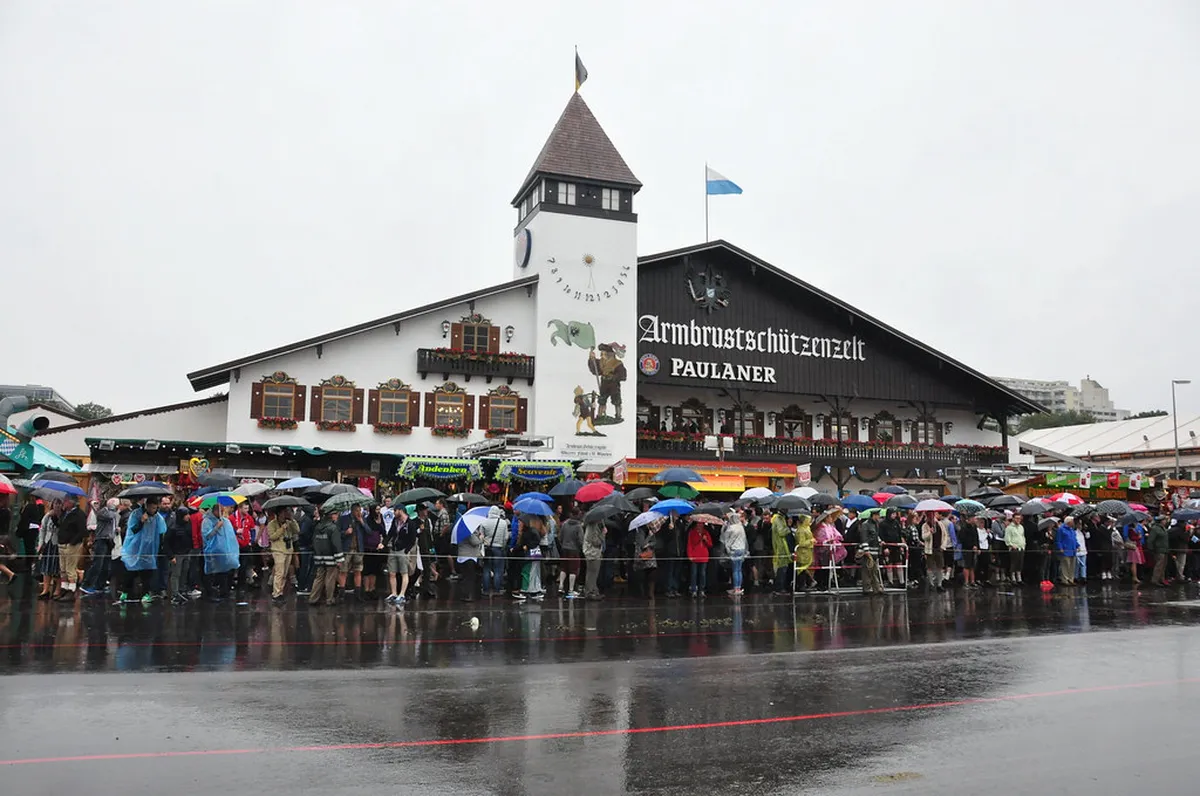
Today's Oktoberfest is a 16-day event split across two weekends in late September and early October. The official opening happens on the first Saturday when Munich's mayor taps the first keg at the Schottenhamel tent and declares "O'zapft is!" — it is tapped. Beer served at the festival must be brewed within Munich city limits and must meet strict Bavarian Reinheitsgebot (purity law) standards — a detail explored in depth on Wikipedia's Oktoberfest article. The result is a style specifically called Märzenbier or Wiesnbier: amber, slightly stronger than everyday lager, and served in one-litre steins called a Maß (pronounced "mass").
About 85% of attendees are German, which surprises many international visitors. It is not primarily a tourist event — it is a genuine Bavarian tradition that happens to attract the world. That distinction matters when you are trying to find a seat, because locals have reserved tables at their favourite tents the same way every year since January.
Oktoberfest 2026 Dates and Key Schedule
The festival opens on Saturday, 19 September 2026 and closes on Sunday, 4 October 2026. Opening day is one of the busiest of the entire run — tents fill to capacity before midday and temperatures in late September can still reach 25–30°C. If your schedule is flexible, the first weekday after opening (Monday, 21 September) is far less crowded and far more enjoyable for first-timers.
Tents are open Monday to Friday from 10:00 to 23:30 and on weekends from 09:00 to 23:30. Beer service stops 30 minutes before closing. The Käfer Wiesn-Schänke is the sole exception, staying open until 01:00 on all nights. On German Unity Day, 3 October 2026, attendance surges as it is a national public holiday — treat it like a weekend in terms of planning.
Family Days fall on every Tuesday throughout the festival run. Ride prices drop significantly and many food stalls offer child-friendly discounts. The Oide Wiesn historical section, in the southern part of the grounds, charges around four Euros entry and is the quietest, most family-oriented part of the whole event on any day of the week.
How to Make Table Reservations at Oktoberfest
Reservations must be made directly with each tent's management office — there is no central booking platform. Most tents open their reservation windows between January and April of the festival year. By May, the prime weekend slots are typically gone. Contact the tent by email or phone (yes, some still accept fax) and be prepared to book an entire table of eight to ten people, not individual seats. A reserved table includes a mandatory food and drink package — typically two Maß of beer and half a roast chicken per person — which works out to roughly 50–60 EUR per head just for the reservation deposit.
Tent reservations fill fast: contact your preferred tents in January or February to secure prime weekend tables. Reserve early and get whole-table packages with beer and food included — not individual seats.
If you are travelling as a group of two or three, a full table reservation is usually not worth it. The better strategy is to arrive early and ask waitstaff directly. Go straight to a server working the section you want and ask if there is a free table. Waitstaff control seating in each section and they are the only people who can direct you to an open spot. Do not wander around looking — this is the single most effective first-timer tactic.
On weekdays before noon, walking in without a reservation and finding a seat is entirely realistic. On weekends or the opening Saturday, tent capacity is reached by 09:30 and you will not get in without a prior booking. If you missed the reservation window for 2026, your best option is a weekday visit between 10:00 and 13:00, before the reserved sections activate.
How Much Does Oktoberfest Cost?
Entry to the main Theresienwiese grounds is free. Beer is the main expense: in 2026, a one-litre Maß costs between 15.30 and 16.10 EUR depending on the tent. Food runs 15–25 EUR for a half-chicken, around 11–14 EUR for a pair of grilled sausages, and 5–8 EUR for a pretzel or Obatzda (Bavarian cheese spread). Tipping is expected and handled informally — most visitors hand over a round number and tell the server to keep the change. On a three-beer, one-meal day, budget 80–100 EUR per person inside the tents.
Cash is the only option at virtually every tent. ATMs exist on the festival grounds but charge fees and have queues. Withdraw cash before you arrive — the machines at Theresienwiese U-Bahn station work reliably. Have one and two euro coins for the restroom attendants; this applies across Munich, not just at the festival, and failing to tip them results in a pointed look that needs no translation.
One genuine money-saving move — validated by Germany Travel — is to eat and drink outside the tent area first. Sausage stands around the perimeter charge 4–6 EUR, roughly half what you pay inside. Arriving with a full stomach also means you pace yourself better inside the tent, which is both cheaper and more sustainable across a full day. The best beer gardens in Munich are worth visiting on the evening before or after your Wiesn day — prices are lower and the atmosphere is equally convivial.
A Guide to the Best Oktoberfest Tents
There are 14 large tents (Festhallen) and over 20 smaller ones. Each has a distinct character, crowd mix, and beer. Choosing based on your group's preferences makes the experience significantly better than just walking into the first tent you find.
- Schottenhamel — the oldest tent on the grounds, capacity 6,000+. Home of the opening ceremony. Skews toward younger Germans and students. Very loud and very traditional.
- Hofbräu Festzelt — the most international tent, popular with English-speaking visitors from the US, UK, and Australia. One of the biggest tents. Expect a rowdy atmosphere and less German spoken at your table.
- Augustiner-Festhalle — widely considered the most authentically Bavarian tent. Uses wooden barrels rather than metal kegs, which many regulars claim produces better beer. Hardest table to get because Munich locals love it.
- Hacker-Festhalle — known for its painted ceiling that opens to reveal real sky on warm days. Popular and atmospheric; good balance between local and international crowds.
- Käfer Wiesn-Schänke — the celebrity tent. Smaller, more upscale, famous for its roast duck rather than just beer, and stays open until 01:00. Arrive by 22:00 if you want entry after the other tents close.
- Marstall — newer, more modern, caters to a younger crowd. One of the few tents with vegetarian and vegan options on the menu.
- Fischer Vroni — fish specialties rather than the standard pork-heavy menu. A genuine change of pace if you are tired of half-chickens and sausages.
- Weinzelt — the wine tent, plus seafood and some Asian dishes. Less intense atmosphere; useful as a fallback when other tents are full.
The honest advice from regulars is that the tent differences are less important than arriving early and getting a seat. Any tent becomes great once you are seated with a Maß in hand. That said, if you have one day at the festival, Augustiner for tradition and Hofbräu for international atmosphere are the two clearest choices for first-timers.
| Tent | Capacity | Vibe | Best For |
|---|---|---|---|
| Schottenhamel | 6,000+ | Oldest & loudest, opening ceremony | Traditional German experience |
| Hofbräu Festzelt | Largest | International, English-speaking | Non-German visitors |
| Augustiner-Festhalle | Large | Authentically Bavarian, locals-only | Hardest reservations, locals' choice |
| Hacker-Festhalle | Large | Atmospheric, open sky ceiling | Balance of local & international |
| Käfer Wiesn-Schänke | Small (upscale) | Celebrity tent, roast duck | Late night (open until 01:00) |
| Fischer Vroni | Medium | Fish specialties | Break from pork-heavy menus |
What to Wear to Oktoberfest
Almost everyone dresses up — both German locals and international visitors. A dirndl for women and lederhosen for men are the expected outfits, and wearing one is considered a genuine sign of respect for the tradition. You will not be turned away in normal clothes, but you will feel conspicuous in jeans among thousands of people in traditional dress.
Dirndl apron bows carry hidden meaning: left side signals single status, right side means taken, front means uncertain, back means widowed. Locals read these at a glance—it's a living social tradition that shows respect when visitors get it right.
Quality dirndls start at around 100–250 EUR; men's lederhosen sets begin at 200–300 EUR. You can find cheaper options at pop-up shops throughout Munich during festival season, or order from online retailers beforehand. Renting is also an option at roughly 60–75 EUR per day, which makes economic sense for a one-day visit. One local detail worth knowing: on a dirndl, the bow tied on the apron communicates relationship status. Tied on the left means single, right means taken, front means uncertain (or sometimes "virgin" in the traditional reading), and back means widowed. Locals read these signals at a glance — it's a piece of living social etiquette that most visitors never know about, and locals appreciate when foreigners engage with it correctly.
For footwear, closed-toed shoes are non-negotiable. Tent floors are slick with spilled beer and glass breaks regularly underfoot. Traditional Haferlschuhe leather shoes are ideal; solid sneakers work perfectly well. Do not wear sandals, flip-flops, or anything expensive that cannot get beer-soaked and muddy. Women wearing dirndls should add a pair of biker shorts underneath — tent benches mean a lot of standing and dancing, and this small addition eliminates any concern about wind or bench gaps. For shopping guidance on authentic outfits before or during your trip, see the Munich shopping guide.
Oktoberfest 2026 attracts six to seven million visitors—expect heavy drinking, crowded tents, and active pickpockets. Never leave belongings unattended, stay hydrated with water between beers, and watch your cash carefully. Pacing your alcohol is not optional—a Maß of Wiesnbier runs 5.8–6.3% ABV and rounds arrive fast.
Where to Stay for Oktoberfest
Accommodation is the hardest logistical challenge of the entire trip. Hotels within walking distance of the Theresienwiese typically book out by April or May — some by January for the closest properties. Prices triple or quadruple versus the city's normal rates. If you are planning for 2026, any booking now is later than ideal, but options still exist if you look at the S-Bahn network rather than the immediate surrounding streets.
Towns along the S-Bahn lines outside Munich — Dachau, Pasing, Moosach, and further out to Augsburg — offer dramatically lower nightly rates. The S-Bahn runs frequently during festival hours and Hackerbrücke station is a ten-minute walk from the grounds. A room in Augsburg that costs 80 EUR per night beats a room near Theresienwiese at 350 EUR. The group train day ticket (Gruppen-Tageskarte) covers two to five people for around 18–22 EUR and makes the commute essentially free per person.
Sleeping in parks or on the festival grounds is illegal and will result in a police fine or removal. The city enforces this strictly during the festival period. If your budget is very tight, the "The Tent" youth hostel north of the city offers dormitory mats from around 12–20 EUR per night and is popular with backpackers who want the authentic low-budget Oktoberfest experience. Book this one early too — it fills up weeks in advance.
How to Get to the Theresienwiese
There is no parking at the festival grounds and driving into the area during Oktoberfest is pointless. Public transport is the only sensible option. The U-Bahn lines U4 and U5 stop directly at Theresienwiese station, which deposits you at the edge of the grounds. Alternatively, the S-Bahn to Hackerbrücke involves a ten-minute walk but uses a different network that avoids the U-Bahn crush. On opening day and weekends, both are packed.
The Munich Airport City Day Pass covers all zones including the airport and is the most convenient option if you are arriving on the same day you visit the festival. For return journeys late at night after Käfer closes at 01:00, U-Bahn services run through the night on weekends. Check the MVV night network timetable before you arrive — Schwanthalerhöhe station is slightly less congested than Theresienwiese and is worth the two-minute extra walk at the end of the night. For detailed route planning, the Munich public transport guide covers every ticket type and zone boundary you need.
Essential Rules and Survival Tips
First-timers repeatedly make the same preventable mistakes. Understanding these before you arrive saves a significant amount of frustration on the day.
- You must be seated to get beer. Waitstaff will not serve you while standing in an aisle or against a wall. The phrase to use when approaching a table is "Ist dieser Platz noch frei?" (Is this seat still free?). Most people will make space if you ask politely.
- Tip your server from the first round. Hand over a round number and say "Stimmt so" (keep the change). A well-tipped server returns to your table far more frequently. On a busy Saturday, this is the difference between three rounds and seven.
- Do not steal the steins. The heavy glass Maß costs the tent around 15–20 EUR and walking out with one is a criminal offence, not a souvenir opportunity. Security checks bags at exits. It is not worth the trouble.
- Try a weekday. Monday through Thursday before 14:00 is a different festival. You can find a table, have a conversation at normal volume, and actually taste the food. Weekends are wall-to-wall. If your trip allows it, arrive on a Tuesday morning and leave Friday. You will have a far better time than the weekend warriors.
- Meet-up point matters. The grounds are 42 hectares and phone reception degrades badly inside packed tents. Agree on a physical meeting spot — the Bavaria statue at the western edge of the grounds is visible from most of the site and rarely as crowded as tent entrances.
- Bring only what you need. Large backpacks are prohibited inside the grounds. Security checks are thorough. Bring cash, your ID, a small bag, and your phone. Leave the camera bag at the hotel.
- Pacing matters more than you think. A Maß of Wiesnbier is typically 5.8–6.3% alcohol by volume — higher than standard lager. Most first-timers do not account for the volume and the pace at which rounds arrive. Eat before entering and drink water between rounds. People passed out on the lawns by 16:00 are a common sight on the opening weekend.
One specific timing note on Käfer: do not plan to arrive there at midnight and get in. The crowd from all other tents descends at 22:30 when those tents start winding down. If Käfer is your target, be there by 22:00 at the absolute latest. The outdoor garden section is marginally easier to access than the interior. Even then, expect a queue and realistic odds of being turned away on a weekend. If you can get inside, the roast duck is genuinely worth the higher prices.
Frequently Asked Questions
How Much Does Oktoberfest Cost?
In 2026, expect to pay between 15 and 16 Euros for a liter of beer. Food items like half a chicken cost around 15 Euros, while snacks are cheaper. Entry to the grounds is free, but you should budget at least 100 Euros per person for a full day of fun.
How to Make Table Reservations at Oktoberfest?
Reservations must be made directly with the individual tent offices, often starting in late winter or early spring. Most require you to purchase vouchers for beer and food in advance. If you miss the window, check out the Best Time To Visit Munich Travel Guide for weekday tips.
What is the best way to get to the festival?
Use public transport as there is no parking near the Theresienwiese. Take the U-Bahn lines U4 or U5 to Theresienwiese or Schwanthalerhöhe. Alternatively, the S-Bahn to Hackerbrücke is a short walk away. Avoid taxis as traffic gridlock is common during the festival weeks.
For the bigger picture, see our complete Munich guide. You might also like the Marienplatz and Old Town and Nymphenburg Palace.
Oktoberfest 2026 rewards visitors who arrive with a plan and a realistic understanding of what makes the festival work. Book accommodation early, target a weekday if your schedule allows it, arrive before the tents fill, and trust the waitstaff to seat you. Everything else — the music, the beer, the communal tables full of strangers who feel like friends by round two — takes care of itself. Munich is a city worth exploring beyond the Wiesn, and the 12 Best Things to Do in Munich guide will help you make the most of any extra days.
You might also like



Continue reading
More guides you'll find useful