Shopping In Munich Travel Guide
Plan shopping in munich with top picks, neighborhood context, timing tips, and practical booking advice for a smoother trip.
On this page
Shopping In Munich
Munich is one of Germany's great shopping cities, offering a range of experiences that few European capitals can match in such a compact area. Within a short walk of Marienplatz you can move from a pedestrian zone packed with international chains to a covered arcade designed by Herzog & de Meuron, then to a luxury boulevard where Chanel and Cartier share pavement with 19th-century neo-Gothic facades.
Knowing which district suits your priorities saves significant time. Luxury shoppers and high-street browsers operate in almost entirely different parts of the city. Budget and vintage hunters need to head further out. This guide covers the eight districts that genuinely matter for shopping in Munich in 2026, plus the practical rules — Sunday closures, VAT refunds, rain-day fallbacks — that apply across all of them.
The Pedestrian Zone: Kaufingerstraße and Neuhauser Straße
The two streets merge into a single car-free corridor running west from Marienplatz to Stachus (Karlsplatz), roughly 800 metres in total. This is the densest concentration of retail in Bavaria: Oberpollinger department store, Saturn electronics, H&M, Zara, and dozens of perfumeries sit alongside hat shops and leather dealers that have traded here for generations. Between the shops you pass the Gothic Frauenkirche towers and the ornate Neues Rathaus facade.
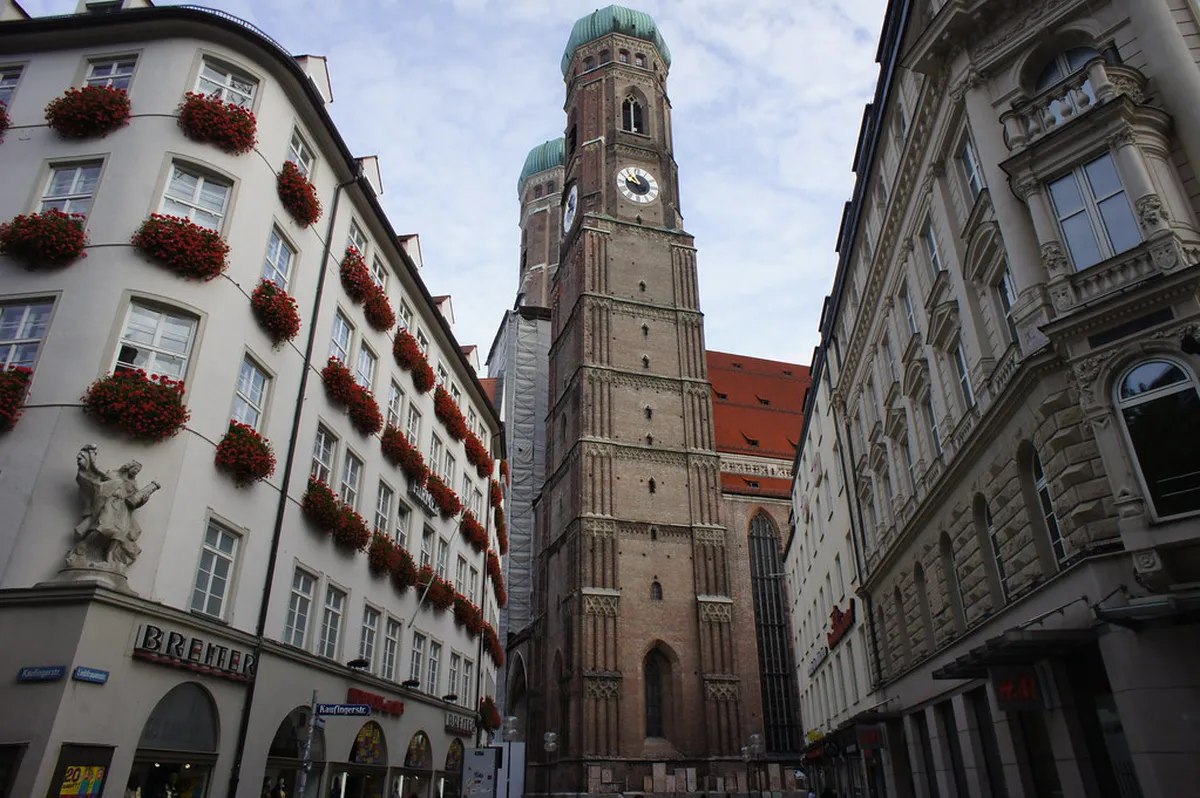
Weekday mornings — before 10:00 — are the most manageable time to visit. By Saturday afternoon the streets are genuinely difficult to navigate. Street performers are a regular fixture near the Karlstor gate; they are good fun but also signal the crowds have arrived. Most shops on this strip close at 20:00 on weekdays and Saturdays, and every single one closes on Sundays.
For a deeper look at the area surrounding Marienplatz, the the Marienplatz and Old Town covers the architecture and free sights you can combine with a shopping morning. The pedestrian zone is the natural anchor for any our complete Munich guide day spent in the city centre.
Lifestyle Paradise: The City Centre's Arcades
Munich has a strong tradition of covered passages, and the best ones are clustered within a few blocks of each other. The Fünf Höfe (Five Courtyards) on Theatinerstraße is the most architecturally impressive: designed by Swiss firm Herzog & de Meuron, it connects five internal courtyards with hanging gardens, galleries, and a mix of premium fashion brands. Entry is free, making it an excellent rain-day destination regardless of whether you plan to buy anything. It stays open until 20:00 on weekdays.
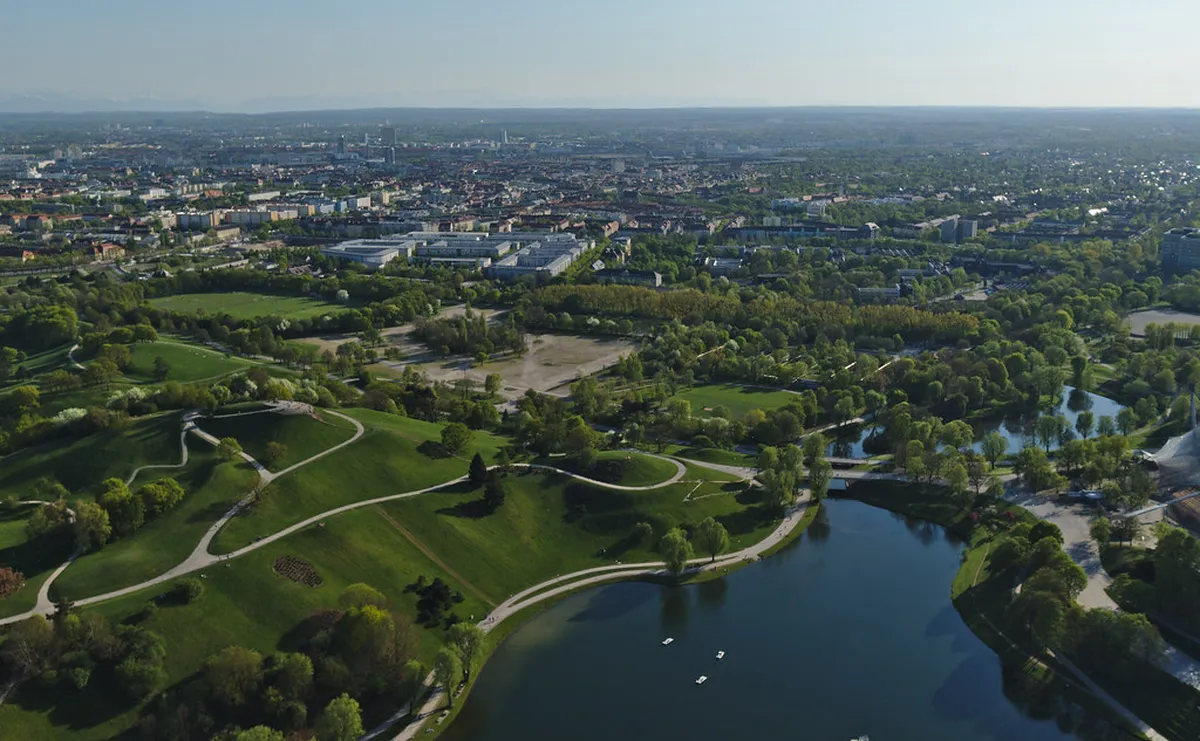
The Hofstatt, tucked between Sendlinger Straße, Hackenstraße, and Färbergraben, is slightly smaller but equally stylish. Trendy fashion and home-décor shops share space with cafés and bars in a beautifully restored courtyard building. It draws a younger crowd than the Fünf Höfe and prices are a step more accessible.
The underground Stachus Passagen at Karlsplatz operate on a different model: this is a practical mall rather than a lifestyle destination, with fashion boutiques, a pharmacy, hairdressers, florists, and delicatessen stalls. Its main advantage is location — directly beneath the tram interchange — and it stays open slightly later than street-level retailers, useful if you land at the Hauptbahnhof in the early evening.
Designer Shopping: Maximilianstraße and Theatinerstraße
Maximilianstraße is the address for serious luxury retail in Munich. The street runs east from the Nationaltheater past the Bavarian State Opera, and its wide pavements are lined with flagship stores for Louis Vuitton, Gucci, Cartier, Dior, and Chanel, all housed in restored 19th-century buildings in the distinctive Maximilian style — a hybrid of neo-Gothic and Renaissance. Classic sports cars parked along the kerb are a Munich cliché that turns out to be entirely accurate.
Theatinerstraße connects the pedestrian zone to Odeonsplatz and carries a slightly quieter luxury offer: fewer mega-flagships, more mid-tier European labels and independent jewellers, with the Fünf Höfe passage forming its retail centrepiece. Residenzstraße, running parallel, adds further high-end boutiques in a narrower, less tourist-heavy setting.
One firm rule applies across all three streets: they are closed on Sundays. Plan luxury browsing for Monday through Saturday, and note that several boutiques take an extended lunch break on quieter weekdays. Non-EU visitors should ask for a tax-free form at any purchase above roughly €50 — most luxury stores on Maximilianstraße display the 'Tax-Free Shopping' sign prominently.
All retail shops in Munich close on Sundays by German law. This applies to department stores, boutiques, malls, and supermarkets without exception. Only pharmacies, gas stations, and the Hauptbahnhof (main train station) remain open. Plan your shopping for Monday–Saturday to avoid disappointment.
Non-EU visitors can claim a VAT refund of 19% on purchases over €50 at a single shop. Ask for a tax-free refund form (Global Blue or Planet Tax Free) at the point of purchase and present it with unused goods at the airport customs desk before departure. Maximilianstraße luxury stores prominently display the 'Tax-Free Shopping' sign.
Shopping in the Trendy District: The Glockenbachviertel
The Glockenbachviertel, centred around Gärtnerplatz, is Munich's most characterful shopping neighbourhood for independent retail. Young designers sell their own collections alongside handmade jewellery, sustainable clothing, vintage furniture, and second-hand shops. The atmosphere is deliberately unhurried — this is a district where locals shop rather than tourists on a tight itinerary.
The neighbourhood is also a genuine food destination. Bars, cafés, and small restaurants occupy many ground floors, so an afternoon here naturally becomes a browsing-and-eating combination. You reach Gärtnerplatz on tram 16 from the city centre or a 15-minute walk south from Marienplatz. Most independent boutiques here open at 11:00 and close by 19:00.
If you are looking for a unique gift or something wearable that nobody else at home will own, Glockenbachviertel consistently outperforms the pedestrian zone. The trade-off is unpredictability: stock is small-batch and changes quickly. It rewards browsing rather than purposeful acquisition.
Tradition and Trends: Tal Street and Sendlinger Straße
The street called Tal runs east from Marienplatz toward Isartor and is the city's main address for outdoor and mountaineering equipment — a practical consideration given how many Munich visitors use the city as a base for Alpine day trips. Specialist retailers here stock hiking boots, weather-proof jackets, and technical gear. You also find traditional costume shops selling Dirndls and Lederhosen; shops like Lodenfrey and Wallach are reliable for authentic Bavarian dress at fair prices relative to the tourist-trap alternatives near Marienplatz.
Sendlinger Straße runs south from the pedestrian zone and offers a calmer, more diverse retail mix: international brands, outdoor and sportswear, small boutiques, jewellery shops, and several arcades with independent traders. The northern section is a car-free pedestrian zone. Halfway down the street, the Asam Church provides an unexpected dose of Baroque architecture between shops. The southern stretch sees slightly more local foot traffic and correspondingly lower prices than the Kaufingerstraße axis.
Both streets are worth combining in a single loop: walk Tal east from Marienplatz, cut through the old town lanes, and come back west on Sendlinger Straße. The full circuit is under two kilometres and passes several Old Town landmarks worth pausing at.
Unusual and Eclectic: Hohenzollernstraße and Schwabing
Hohenzollernstraße in Schwabing runs between Kurfürstenplatz and Leopoldstraße and represents a more relaxed alternative to the city-centre pedestrian zones. The street mixes traditional owner-run shops with modern concept stores: sustainable fashion, Scandi design, Italian clothing, and a notably strong bookshop scene. Between shops you find numerous bakeries, ice cream parlours, and independent cafés where the primary clientele is local. It is the street that Munich residents recommend to each other rather than to tourists.
Leopoldstraße itself, running north through Schwabing, carries fashion chains alongside perfumeries and bookshops. The Elisabethmarkt, a short walk from Hohenzollernstraße on Elisabethplatz, is the smaller, quieter counterpart to the Viktualienmarkt: regional produce, handicrafts, and fresh flowers in a neighbourhood setting free of tourist pricing. Locals call it the 'little brother' of the Viktualienmarkt and it is consistently cheaper.
Schwabing is a 15-minute U-Bahn ride north of Marienplatz (U3 or U6 to Münchner Freiheit). If you have already covered the city centre and want to spend half a day in a Munich neighbourhood that feels genuinely lived-in, this is the right destination.
Student Shopping Scene: Maxvorstadt and the University District
The streets around Ludwig Maximilian University — particularly Schellingstraße, Türkenstraße, and Amalienstraße — constitute Munich's best zone for affordable, independent retail. Second-hand bookshops and curated vintage clothing stores are the core offer, with prices reflecting student budgets rather than tourist expectations. Quality German labels and retro accessories regularly appear in the vintage shops at a fraction of their original cost.
Maxvorstadt is simultaneously Munich's museum district, which means combining shopping with a gallery visit is genuinely straightforward. The Pinakothek trio, the Brandhorst Museum, and several smaller galleries sit within easy walking distance of the main shopping streets. If you are planning a morning at the major city attractions, Maxvorstadt allows you to extend the afternoon into independent retail without changing neighbourhoods.
Art supply shops and specialist stationery stores cluster here due to the proximity of the art academies, making it a reliable source for unusual gifts unavailable in the pedestrian zone. Prices and opening hours are more casual than in the centre — many shops open at 11:00 and close by 18:30.
Large Shopping Centres: Malls for Rain Days and Outlying Districts
Munich's biggest mall is the Olympia-Einkaufszentrum (OEZ) in the north of the city, with 135 stores covering fashion, electronics, cosmetics, and dining. It is accessible by U3 or U1 to Olympiazentrum and fills up less on weekends than the city-centre streets — a useful reversal if you want to avoid crowds. Regular events including fashion shows and exhibitions make it more than a standard retail centre.
In the east, PEP Neuperlach serves the Neuperlach residential district with a practical mix of fashion, cosmetics, multimedia, and expanded dining added in a recent renovation. It is oriented toward daily essentials and family shopping rather than tourism, which keeps prices competitive. The western equivalent is the Pasing Arcaden, convenient for visitors staying in that direction.
One mall that competitors rarely mention: the Riem Arcaden, east of the city near the Messe München trade fair grounds. It is directly accessible from Munich Airport via the S8 S-Bahn line (change at Daglfing or ride to Messestadt West on the U2). For travellers combining a trade fair visit with a city stay, or those with an early evening flight, Riem Arcaden offers a full retail and dining stop without a return journey into the centre. It is the most airport-convenient mall in the city.
Markets: Viktualienmarkt and Beyond
The Viktualienmarkt has operated daily since 1807 and now occupies a permanent site a short walk south of Marienplatz. Over 100 stalls sell exotic fruits, Bavarian cheeses, artisanal sausages, fresh flowers, honey, and handmade soaps. It opens Monday to Saturday from around 08:00 and closes by 18:00 on most days. The market is closed Sundays in line with German trading laws. Cash is still preferred at many stalls, though card payment is increasingly accepted.
The beer garden at the centre of the Viktualienmarkt operates independently of the stalls and is one of the few genuinely authentic outdoor drinking spots in the city centre — seating around 1,000 people, open from 11:00 most days, and rotating seasonal beers from the six traditional Munich breweries. It is an excellent midday stop on a shopping day regardless of whether you buy anything from the market itself.
The Elisabethmarkt in Schwabing is the better option if you are already in the north of the city. Smaller, quieter, and patronised primarily by locals, it carries regional produce and handicrafts at prices that reflect a neighbourhood market rather than a tourist attraction. Combine it with a Hohenzollernstraße shopping loop for a full Schwabing half-day.
Practical Tips: Sunday Closures, VAT Refunds, and Opening Hours
German trading law closes virtually all retail in Munich on Sundays. This applies to department stores, boutiques, malls, and supermarkets without exception. The shops that remain open are pharmacies, petrol stations, and retailers inside the Hauptbahnhof (main train station) and Munich Airport. If Sunday is your only free shopping day, the Hauptbahnhof has a reasonable selection of gifts, clothing, and food up to around 21:00.
Non-EU residents can reclaim the VAT (Mehrwertsteuer) on most purchases, which stands at 19% for standard goods. The minimum purchase threshold is typically around €50 per receipt at a single shop. Ask for a tax-free refund form (Global Blue or Planet Tax Free are the main operators in Munich) at the point of purchase, keep the goods unused and in original packaging, and present the form with the goods at the customs desk before departure from an EU airport. Munich Airport has a dedicated refund counter airside at Terminal 1 and Terminal 2.
Standard opening hours across most of the city run from 10:00 to 20:00 Monday through Saturday. Independent shops in Glockenbachviertel, Maxvorstadt, and Schwabing typically open later (11:00) and close earlier (18:30–19:00). Markets open earlier — the Viktualienmarkt from 08:00 — but also close by 18:00. Always carry some cash for markets and smaller independent shops; card terminals are not universal.
Where to Stay for Shopping in Munich
The Altstadt (Old Town) puts you within walking distance of Kaufingerstraße, Maximilianstraße, the Fünf Höfe, the Viktualienmarkt, and Tal street simultaneously. Hotels here command premium prices but eliminate the need for public transport between your base and the main shopping districts. It is the right choice if you have limited time and want maximum retail density per hour.
For a more local experience, staying near Gärtnerplatz in the Glockenbachviertel places you in the boutique district itself, with the pedestrian zone a 15-minute walk north. This suits travelers who prefer independent shopping and want the neighbourhood feel in the evenings. Hotels here are generally less expensive than in the Altstadt.
Budget-conscious shoppers staying near the Hauptbahnhof benefit from excellent U-Bahn and S-Bahn access to every district described in this guide, including the outlying malls. The Hauptbahnhof's own retail concourse handles late-evening essentials and Sunday purchases. It is a practical base that keeps transport time minimal across the full city.
Frequently Asked Questions
Are shops in Munich open on Sundays?
No, almost all shops in Munich are closed on Sundays due to German labor laws. This includes supermarkets, department stores, and boutiques. Only pharmacies, gas stations, and shops inside the main train station or airport remain open for essential needs. Plan your 12 Best Things to Do in Munich accordingly.
Where can I find affordable souvenirs in Munich?
For budget-friendly souvenirs, visit the stalls at Viktualienmarkt or the department stores like Kaufhof and Karstadt. You can find traditional mugs, magnets, and local snacks at lower prices than specialty gift shops. The University district also offers unique, affordable items from local artists.
Can I get a tax refund on my shopping in Munich?
Non-EU residents can claim a VAT refund on purchases over a certain amount, usually around 50 Euros. Look for the 'Tax-Free' sign in shop windows and ask for a refund form at the counter. You must present this form and the unused goods at the airport when leaving the EU.
Shopping in Munich rewards planning. The pedestrian zone is the obvious starting point but rarely the most interesting one. The covered arcades handle bad weather. The Glockenbachviertel and Schwabing deliver the independent retail that the chains cannot. Maximilianstraße sets a standard for luxury that few European cities match outside Paris or Milan.
Remember the Sunday closure rule: it applies everywhere except the Hauptbahnhof and airport. Carry cash for markets and smaller boutiques. Claim your VAT refund at the airport if you are leaving the EU. With those three rules in hand, the city's retail landscape opens up considerably.
You might also like


Continue reading
More guides you'll find useful