
Museum Island Berlin: The Complete Visitor Guide
Plan your visit to Museum Island Berlin with our guide to the five museums, ticket comparisons, Pergamon closure updates, and tips to see Nefertiti.
On this page
Museum Island Berlin
Museum Island Berlin is a compact peninsula in the River Spree holding five world-class museums and a sixth emerging venue, all within a ten-minute walk of each other. UNESCO added this extraordinary ensemble to its World Heritage list in 1999, recognising it as a unique synthesis of 19th-century neoclassical architecture and international collections. Few places on earth let you move from ancient Egypt to medieval Byzantium to French Impressionism without ever leaving a single island.
Planning your visit well matters more here than at most landmarks, because the island is mid-transformation. The Pergamon Museum is closed until at least mid-2027, ticket types carry real price differences, and crowds at the Neues Museum peak sharply between 11:00 and 15:00. This guide covers what you can and cannot see right now, how to choose the right ticket, and where to find the most important pieces. Start by browsing all the 20 Best Things to Do in Berlin: The Ultimate 2026 Travel Guide to slot the island into a broader city itinerary.
The Five Iconic Museums of Museum Island
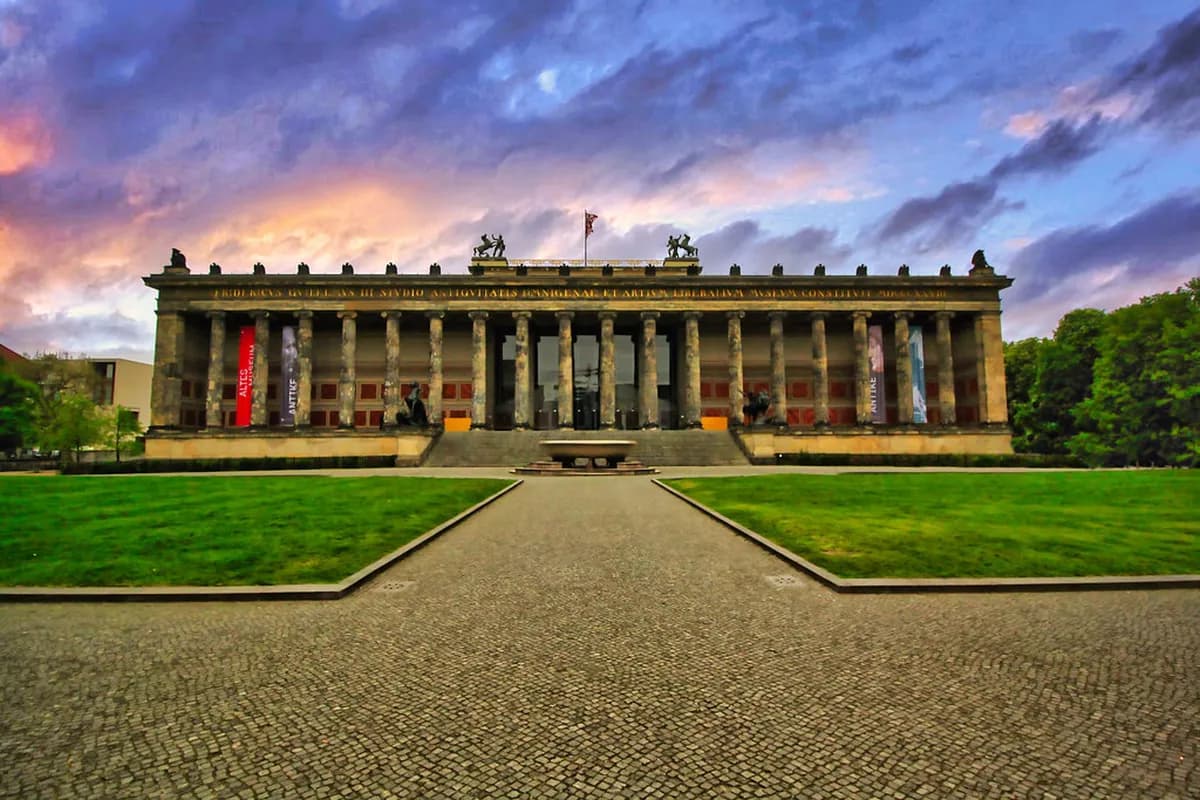
The Altes Museum was the first building on the island, designed by Karl Friedrich Schinkel and opened in 1830. Its rotunda is modelled on the Pantheon in Rome, and the permanent exhibition "New Antiquity in the Old Museum" presents Greek, Etruscan, and Roman sculpture, gold jewellery, vases, and coins. The treasure chamber, displayed under a deep-blue ceiling, is one of the island's quieter highlights. The Altes Museum is closed on both Mondays and Tuesdays, so check before you go.
The Neues Museum is the essential stop for most visitors. David Chipperfield oversaw its ten-year reconstruction after severe World War II damage, blending stripped-back modernism with surviving 19th-century fabric. Inside you will find the Egyptian Museum and Papyrus Collection alongside the Museum of Prehistory and Early History. The bust of Nefertiti sits in the North Dome Hall on the second floor in its own dedicated octagonal room.
The Alte Nationalgalerie rises like a Greek temple on a high stepped pedestal and holds the island's strongest collection of 19th-century painting and sculpture. Caspar David Friedrich's Monk by the Sea, Rodin's Thinker, and the famous Princesses Group by Schadow are all here, along with works by Manet, Monet, Menzel, and Schinkel. The building runs from Classicism through Romanticism, Biedermeier, and Impressionism into early Modernism — one of the most complete surveys of that century anywhere in Europe.
The Bode Museum occupies the narrow northern tip of the island and specialises in European sculpture from the Middle Ages to the 18th century. Works by Donatello, Bernini, and Canova share space with the Museum of Byzantine Art and the Numismatic Collection, one of the largest coin and medal archives in the world. The museum reopened after restoration in 2005, and its interior dome and grand staircase are themselves worth the visit. Like the Altes Museum, the Bode Museum is closed on both Mondays and Tuesdays.
The Pergamon Museum was the last building completed, in 1930, and normally the most visited. It houses the Collection of Classical Antiquities, the Museum of Islamic Art, and the Museum of the Ancient Near East. Its partial reopening is scheduled for 4 June 2027, when the Pergamon Hall with the altar and the Great Frieze, plus the Collection of Classical Antiquities and the Museum of Islamic Art with the Mshatta Facade, will return on twice the previous floor space. Until then, the building is fully closed.
PETRI Berlin: The Sixth Venue Most Visitors Miss
Since 2026, the WelcomeCard Museum Island includes access to PETRI Berlin, a new venue at historic Petriplatz that most first-time visitors do not know exists. The building sits above the excavated foundations of a medieval Latin school and combines permanent exhibition space, an open conservation studio, and collection storage in a single transparent structure. You can watch restorers at work through glass walls — something none of the five classical museums on the island offer.
The exhibition covers Berlin's own archaeological past rather than the ancient Mediterranean world. Highlights include finds from across the city spanning the early medieval period through the 16th century, and an ossuary containing thousands of skeletal remains from medieval burials discovered during construction. For visitors who have already seen the island several times, PETRI Berlin is the freshest addition to the complex and far less crowded than the Neues Museum on any given afternoon.
PETRI Berlin is a short walk from the main island, accessible on foot from the James Simon Gallery in under ten minutes. If your WelcomeCard already covers it, there is no reason to skip it. Check opening days before visiting — it is a newer venue and hours can differ from the five core museums.
The Master Plan and Pergamon Museum Closures
The Masterplan Museumsinsel, adopted in 1999, is an ongoing multi-decade renovation programme covering every building on the island. The most disruptive element is the full closure of the Pergamon Museum, which began in October 2023 and is scheduled to end with a partial reopening on 4 June 2027. You can follow progress on the Staatliche Museen zu Berlin Masterplan page.
Until 2027, the main substitute is the Pergamon Panorama exhibition directly opposite the island. This purpose-built pavilion houses Yadegar Asisi's 360-degree panoramic painting of the ancient city of Pergamon at its peak, displayed alongside original sculptures and frieze fragments from the museum's collection. It is a genuine immersive experience rather than a consolation prize, and it handles crowd flow better than the permanent building ever did.
The master plan's other major project is the Archaeological Promenade, an underground walkway that will eventually connect four of the five museum buildings. The promenade is designed to let visitors move between collections without returning to street level and to display objects that currently have no permanent exhibition home. Construction continues in phases coordinated around keeping the other four museums open during each stage of work.
The Pergamon Museum remains fully closed until June 2027. If you are hoping to see the Pergamon Altar or the Museum of Islamic Art's Mshatta Facade, they are not currently accessible. The Pergamon Panorama offers a 360-degree immersive alternative, but it is not the same experience as standing in front of the original structures.
One practical consequence of the ongoing work: signage around the island changes regularly as access routes shift. Always enter via the James Simon Gallery, which stays open throughout all phases and acts as the coordinating hub for the whole complex.
Where to Find Nefertiti and Other Highlights
The Bust of Nefertiti is in the North Dome Hall of the Neues Museum, second floor. It occupies its own octagonal room under the northern dome, positioned centrally so visitors can walk around it. Photography is not permitted in this room — this is strictly enforced and not a suggestion. The no-photo rule exists to keep the space quiet and to protect the painted limestone surface, which is uniquely fragile given that it has survived more than 3,000 years.
The James Simon Gallery is the starting point that simplifies the entire visit. Architect David Chipperfield designed it as a modern colonnade that echoes the 19th-century buildings without mimicking them. Inside you will find the main ticket counters, a large cloakroom with coin-operated lockers, a bookshop, and direct connections to the Neues Museum and the Altes Museum. Arriving here first means you do not have to carry bags through galleries or queue separately at individual museum entrances.
Other highlights that remain fully accessible in 2026 include the Market Gate of Miletus in the Pergamon's collection — although the gate itself is currently in storage, the island's other Roman and Near Eastern pieces are distributed across accessible galleries. The Bode Museum's sculpture halls contain some of the finest Donatello bronzes outside Florence. And the Alte Nationalgalerie's Caspar David Friedrich room consistently draws the longest pauses from visitors who were not expecting it.
History of the UNESCO World Heritage Site
The island's museum history begins with a royal decision: King Frederick William III of Prussia ordered the first public museum to be built here in the early 1820s. The Altes Museum opened in 1830 and marked the first time royal collections in Berlin became accessible to ordinary citizens. Schinkel's design reflected the Enlightenment ideal that great art should educate the public, not remain locked in private palaces.
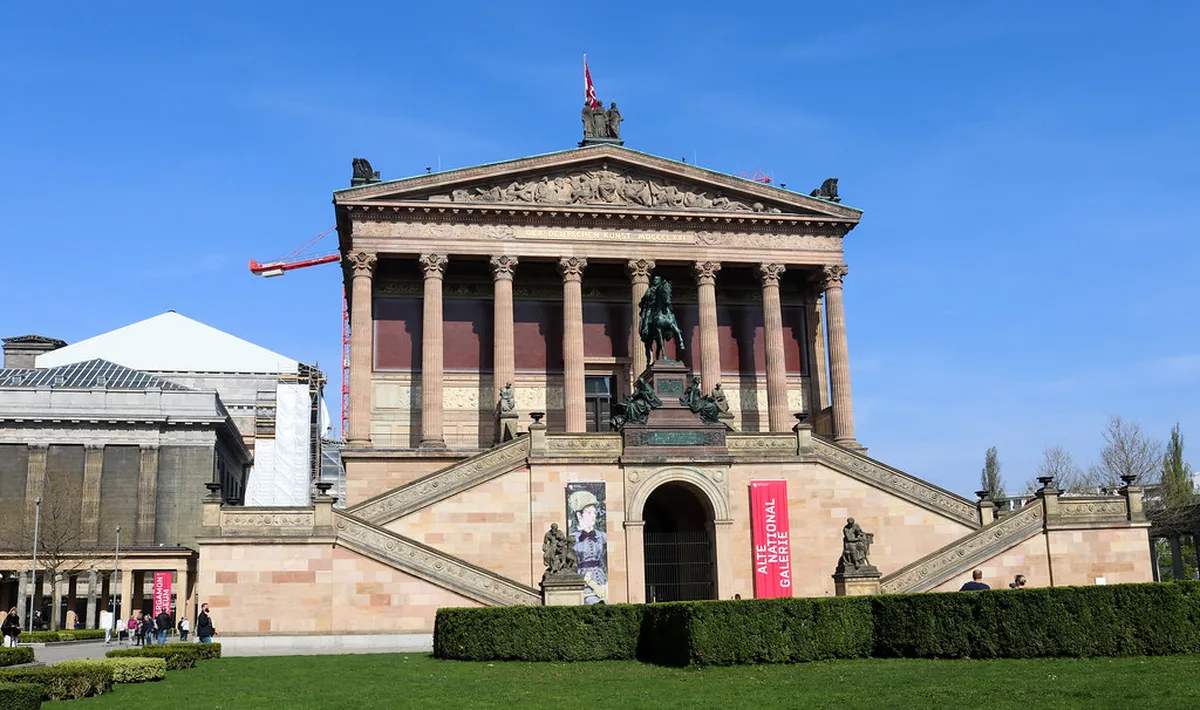
Over the following century, four more buildings followed: the Neues Museum in 1855, the Alte Nationalgalerie in 1876, the Bode Museum in 1904, and the Pergamon Museum in 1930. Each architect built in a different style, which is why the ensemble reads as a survey of 19th and early 20th-century institutional architecture as much as a collection of artefacts. The island received its current name at the end of the 1870s. UNESCO inscribed it as a World Heritage Site in 1999, recognising it on the UNESCO World Heritage list as the only architectural and cultural ensemble of its type anywhere in the world.
World War II left the island devastated. The Neues Museum was nearly completely destroyed and remained a deliberate ruin throughout the GDR period. Reconstruction only began in earnest after reunification. The ten-year restoration of the Neues Museum, completed in 2009, became an international reference for how to rebuild a war-damaged monument without erasing its history. James Simon Gallery opened in 2019, completing the ensemble's transformation from a collection of separate buildings into a unified public institution. The island in 2026 is celebrating its 200th anniversary with special exhibitions across all open venues.
Choosing Your Ticket: Day Pass vs. WelcomeCard
The Museum Island Day Ticket costs around 24 EUR and covers all five museums on a single calendar day. It is the right choice if your entire Berlin visit is centred on the island and you do not need public transport included. The Day Ticket does not bundle transit, so add a day pass for the U-Bahn and S-Bahn separately if you are coming from a hotel outside walking distance.
The Berlin WelcomeCard Museum Island adds free Museum Island admission on top of the standard WelcomeCard, which already gives you unlimited bus, U-Bahn, and S-Bahn travel for 48 or 72 hours plus discounts of 25–50% at more than 170 attractions. The 72-hour version is built for visitors spending three days in the city. It now includes PETRI Berlin alongside the five main venues and the Pergamon Panorama. If you plan to use public transport on multiple days and visit at least two or three other paid attractions, the WelcomeCard math almost always works in your favour. Read the full Berlin WelcomeCard guide for a breakdown of the current pricing tiers.
The 3-Day Museum Pass Berlin (Museum Pass Berlin) covers more than 30 city museums over three consecutive days, including all the island institutions. This is the best option for visitors who want to extend beyond the island to the Gemäldegalerie, the Hamburger Bahnhof, or the Topography of Terror. If you are following a 3-day Berlin itinerary focused primarily on museums and culture, the Museum Pass delivers the widest access at a fixed cost. One rule applies to all ticket types: entry for children and young people up to age 18 is free at all state museums, including every museum on the island.
Book any ticket in advance online and secure a free entry time slot for the Neues Museum. Walk-up queues at the Neues Museum during summer weekends can run 45 minutes or more. The other four museums rarely require advance booking outside public holidays.
How to Get There and Practical Logistics
The island is served directly by the U5 line at the Museumsinsel station, opened as part of the U5 extension in 2020. The S-Bahn lines S1, S2, S25, S5, S7, and S75 stop at Hackescher Markt, about a 15-minute walk. Trams M1 and M12 stop at Kupfergraben, less than five minutes from the James Simon Gallery entrance. Buses 100 and 200 stop at Lustgarten, 600 metres from the Pergamon site. See the full Getting Around Berlin: A Complete Guide to Public Transport & More for route planning across the city.
All museums require large bags and umbrellas to be stored. The James Simon Gallery has a large cloakroom with modern lockers; older lockers elsewhere on the island take a one-euro coin that is returned on exit. Small bags worn across the body or in front are generally allowed inside galleries. Plan five minutes for this at arrival rather than discovering it at the gallery entrance.
Accessibility is well handled across the complex. All five museums offer step-free routes via lifts or ramps, and the James Simon Gallery was designed from the ground up to wheelchair specifications. Audio guides in English, German, French, and several other languages are available for hire at the main counter. A brief security check — bag scan and metal detector — applies at the main entrance to each building. Expect this at the James Simon Gallery, at the Alte Nationalgalerie separately, and at the Bode Museum.
Best Time to Visit and Crowd Management
The Neues Museum is busiest between 11:00 and 15:00 on weekends and throughout July and August. Arriving at 10:00 sharp when the doors open puts you in the Nefertiti room before the first large tour groups arrive around 10:30. The Alte Nationalgalerie and the Bode Museum are significantly quieter at any time of day and rarely require timed entry. Check the Best Time to Visit Berlin: Seasonal & Monthly Guide guide for seasonal patterns across the city.
Thursday evenings are worth noting: some island museums extend their hours, making late afternoon visits on Thursdays a reliable way to avoid the midday surge. By 16:00 on any weekday, visitor numbers in all the museums drop noticeably. Weekday mornings in October through March offer the most relaxed conditions overall, though the weather requires a coat and the Lustgarten loses much of its appeal as a rest stop between museums.
Remember that every museum on the island is closed on Mondays. The Bode Museum and the Altes Museum are also closed on Tuesdays. Planning around these closures prevents wasted trips. Summer brings the largest crowds and the longest security queues; booking a timed slot for the Neues Museum online is the single most effective thing you can do to protect your morning.
Mark your calendar: all five core museums are dark on Mondays, and the Bode Museum + Altes Museum additionally close on Tuesdays. This means Wednesday through Sunday are your only options if you want maximum access. Many travellers discover this too late — double-check the opening calendar on the official Staatliche Museen zu Berlin website before booking your hotel for specific dates.
Exploring the Lustgarten and Surrounding Area
The Lustgarten is the open park directly in front of the Altes Museum, flanked by the Berlin Cathedral on the east. It is a genuine breathing space between buildings and a natural midpoint for a picnic lunch from one of the nearby delis. The view from the Lustgarten south toward the cathedral and north toward the Neues Museum gives you the full architectural scale of the island in a single glance.
The Berliner Dom guide covers the cathedral in detail, including the crypt and the dome climb, which offers one of the best elevated views of central Berlin. The Humboldt Forum sits directly opposite the southern tip of the island, housing ethnographic collections from the Ethnological Museum and the Museum of Asian Art. It is worth at least an hour if you are interested in non-European history, and entry to the permanent collections is free.
Dining directly on the island is limited to small museum cafes inside the James Simon Gallery and the Alte Nationalgalerie. For a proper meal, walk five minutes to Hackescher Markt, where you will find a dense cluster of cafes, bakeries, and restaurants ranging from Vietnamese street food to traditional German Mittagstisch lunch plates. This is also the best neighbourhood for a coffee break mid-morning before the main visitor rush arrives at the Neues Museum.
Frequently Asked Questions
Where is the bust of Nefertiti located?
The Bust of Nefertiti is located in the Neues Museum on Museum Island. You can find it in a specially designed dome room on the second floor. Please remember that photography is strictly prohibited in this specific gallery to protect the artifact.
Is the Pergamon Museum currently open?
The main Pergamon Museum building is closed for major renovations until at least 2027. However, you can still visit the Pergamon Panorama exhibition nearby. This display features the massive 360-degree panorama and selected original sculptures from the collection.
Which ticket is best for Museum Island?
The Museum Island Day Ticket is best for visitors wanting to see multiple museums in one day. If you plan to travel across the city, the Berlin WelcomeCard with the Museum Island add-on offers the best overall value for transport and entry.
How much time do you need for Museum Island Berlin?
Most visitors need at least four to six hours to see the highlights of the major museums. If you are an art enthusiast, you could easily spend two full days exploring every gallery. Planning a focused route helps you see the most important pieces efficiently.
Museum Island Berlin remains a cornerstone of European culture and a must-see destination. Even with current renovations, the island offers an incredible wealth of art and history. Using the right tickets and arriving early will ensure you have a fantastic experience. Start planning your cultural journey to this UNESCO site to see the world's greatest treasures.
You might also like

Continue reading
More guides you'll find useful


