Berlin To Potsdam Day Trip: 10 Essential Stops and Tips
Plan the perfect Berlin to Potsdam day trip with our 1-day itinerary. Includes S-Bahn transport tips, Sanssouci Palace booking, and hidden gems. Book now!
On this page
Berlin To Potsdam Day Trip: 10 Essential Stops and Tips
Potsdam sits just 30 minutes from central Berlin by train, yet it feels like an entirely different country. Where Berlin is urban and gritty, Potsdam is royal, romantic, and unhurried. This guide covers the full day: transport logistics, the main palace loop, Cold War landmarks, and the specific booking details that will save your visit in peak season.
The city is one of the most rewarding 18 Best Day Trips From Berlin: A Local's Guide for history lovers. Its UNESCO World Heritage designation covers over 500 hectares of parks and more than 150 individual buildings. A single day is enough to hit the highlights if you plan your route in advance.
Why Potsdam is the Best Day Trip from Berlin
Potsdam served as the full-time residence of the Prussian royal family from the reign of Frederick the Great until 1918, when Germany became a republic. Frederick chose it as an escape from Berlin's bureaucracy, filling the landscape with palaces, follies, and gardens that reflected his passions for music, philosophy, and the Enlightenment. The result is a city where virtually every building has a story that connects to wider European history.
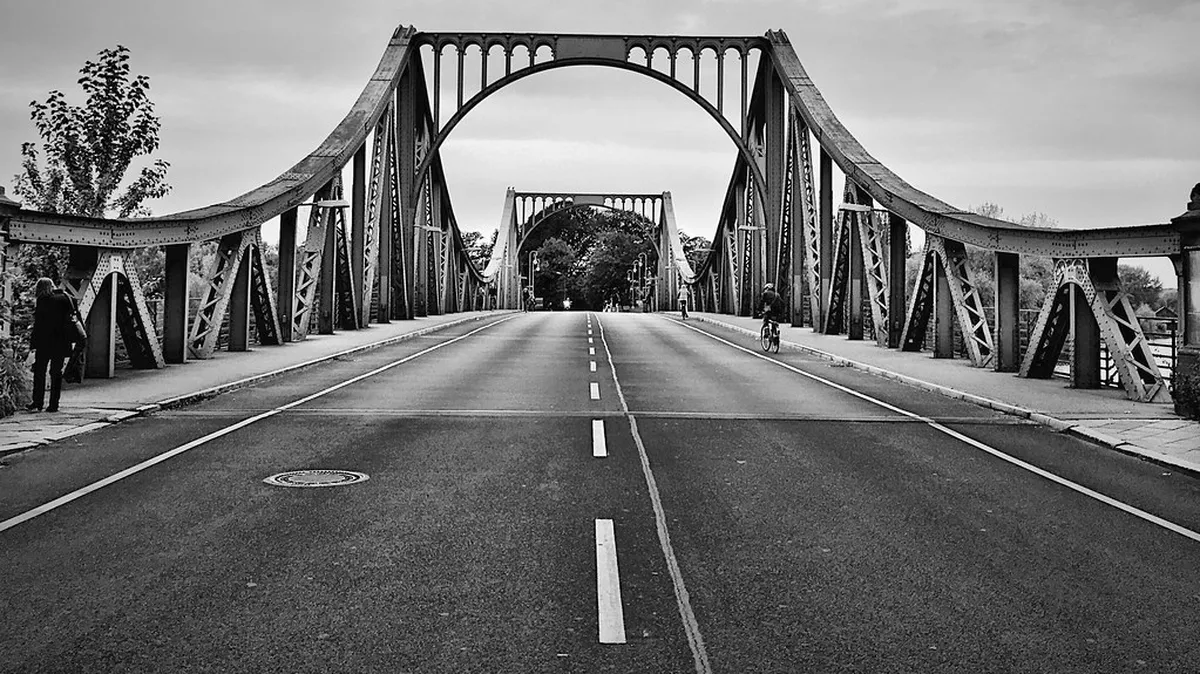
The twentieth century added another layer. The Potsdam Conference of 1945 — where Truman, Churchill, and Stalin divided postwar Germany — took place here. The Glienicke Bridge on the city's western edge became one of the Cold War's most dramatic landmarks. Nowhere else in Brandenburg can you walk from a Rococo tea house to a spy-exchange bridge in a single afternoon.
For any trip longer than three days in the capital, this excursion is a mandatory extension. Even on a grey winter day, the parks are beautiful and the palaces are far less crowded than in summer. If you are working through a longer Berlin itinerary, Potsdam fits naturally as the final full day.
How to Get from Berlin to Potsdam (S-Bahn and Trains)
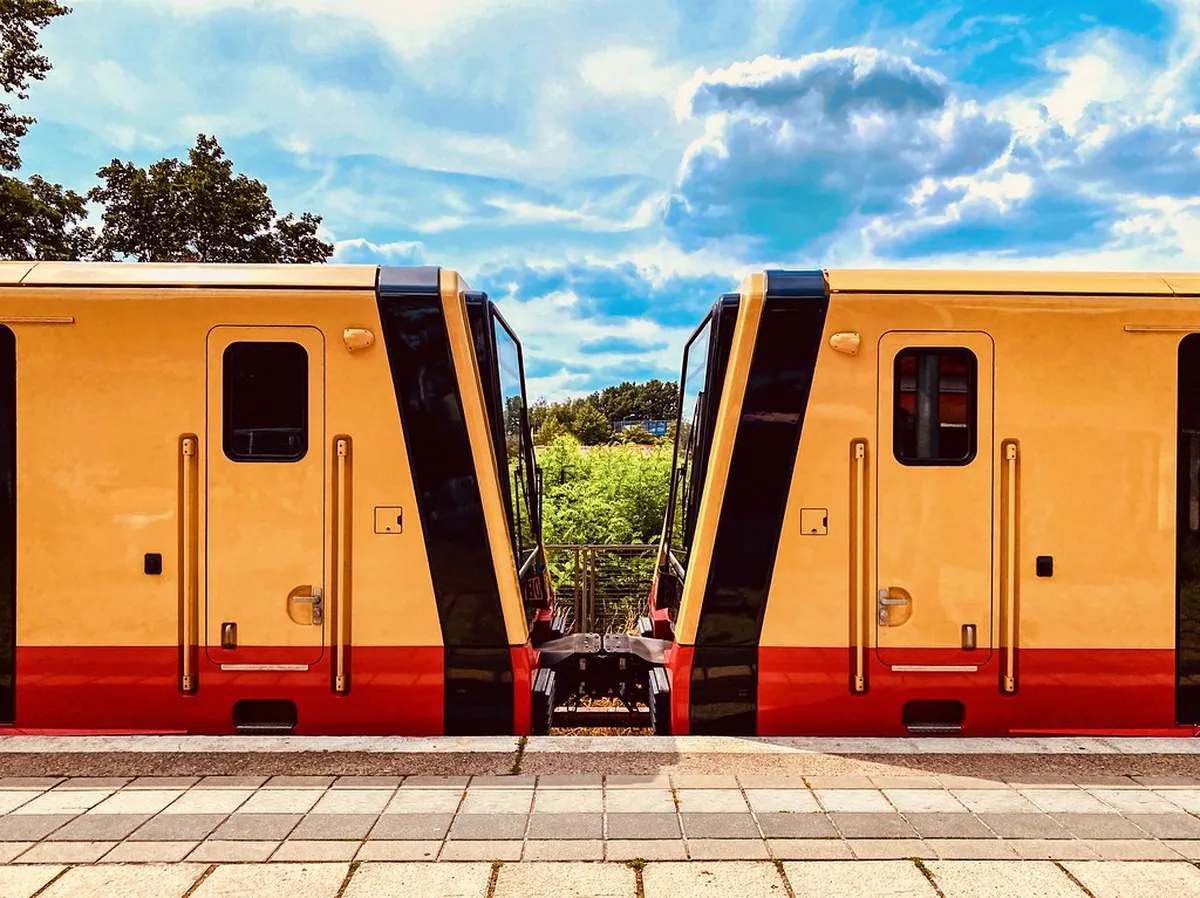
The S-Bahn S7 runs directly to Potsdam Hauptbahnhof from stations across central Berlin, including Alexanderplatz, Hackescher Markt, and Savignyplatz. Trains run approximately every 20 minutes. The journey takes around 40 minutes from Alexanderplatz. Check the destination board before boarding: not every S7 service continues to the Potsdam terminus. For real-time schedules and route planning, the VBB (Verkehrsverbund Berlin-Brandenburg) journey planner is essential.
Regional trains — the RE1 in particular — depart from Berlin Hauptbahnhof and reach Potsdam in about 25 minutes, stopping only at Charlottenburg and Wannsee along the way. If you are starting from Mitte or Charlottenburg, the RE1 saves you 15 minutes each way. Both options use the same ticket.
You must buy an ABC zone ticket. A standard Berlin AB ticket does not cover Potsdam. A single ABC fare costs around €4.40 in 2026, but an ABC day pass at roughly €10.40 covers all of your Potsdam travel — S-Bahn, regional trains, and local buses and trams within Potsdam itself. If you hold a Berlin WelcomeCard, check whether it already includes the ABC zone, as the upgraded version does. Always validate your paper ticket at the yellow machine on the platform before boarding.
Book Sanssouci Palace timed-entry tickets at least 30 days in advance through the official SPSG website, especially for summer travel (May–September). Peak-season slots sell out 3–4 weeks ahead, and same-day availability is rare.
Morning: The Dutch Quarter and City Center
Exit Potsdam Hauptbahnhof and walk north across the bridge over the Havel to reach the Alter Markt, the city's historic central square. Frederick William I designed it to evoke the great squares of Rome: the Pompei Palace on one side, the Old City Hall on another, and an obelisk at the center. The square was heavily damaged in WW2 and restoration work is still ongoing, but the bones of the original plan are visible.
A short walk east brings you to the Holländisches Viertel, or Dutch Quarter. Frederick William I built 130 red-brick gabled houses here in the 1730s to attract Dutch craftsmen to the growing garrison town. The Dutch never arrived in great numbers — the quarter became home to Prussian officers and artists instead — but the architecture remained intact and has been carefully restored. Today the streets house small galleries, independent cafes, and boutiques. The annual Tulip Festival in May draws crowds from across Brandenburg.
For coffee and cheesecake, stop at Café Guam on the edge of the quarter. It is routinely called the best cheesecake shop in Germany, offering seven or eight flavours at any given time — from classic blueberry to more unusual apricot and poppy seed varieties. Arrive before 11:00 to avoid the worst of the queue. The Dutch Quarter area is also where you will find the Potsdam Tourism Info Office inside the main station, useful for picking up a free map on arrival.
Potsdam's Own Brandenburg Gate: A Detail Most Visitors Miss
Between the Dutch Quarter and the Sanssouci park entrance stands Potsdam's Brandenburg Gate, and it catches almost every first-timer off guard. This is not the gate you saw in Berlin. Potsdam's Brandenburg Gate was built in 1770 by architect Carl von Gontard — ten years before Berlin's famous version, which was completed in 1791 by a different architect. The two share a name because both marked the road to the city of Brandenburg an der Havel, but they are otherwise unrelated in style or scale.
Potsdam's gate is smaller and more intimate, with a triumphal arch design inspired by the Arch of Constantine in Rome. It was built to celebrate Prussia's victory in the Seven Years' War. Walking through it toward the palace grounds gives the impression of passing from the civilian city into the royal estate — exactly the symbolic effect that Frederick intended. It is free to pass through and takes just a few minutes, but the historic context makes it worth a deliberate pause rather than an accidental glance.
Afternoon: Sanssouci Palace and the Royal Gardens
Sanssouci Palace is the centerpiece of the park and the reason most visitors make the trip. Frederick the Great sketched the plans himself between 1745 and 1747, naming it from the French for "without worries." The result is a compact 12-room Rococo palace — single-storey, yellow, perched at the top of six terraced vineyard tiers — that feels nothing like a seat of government and everything like a private retreat. Frederick is buried on the uppermost terrace, a wish that was only fulfilled after German reunification in 1991.
The interiors are richly detailed: cedar-paneled library, a circular marble vestibule, Voltaire's Room where the philosopher spent several summers, and music salons filled with 18th-century instruments. Entrance is by timed ticket only and the palace sells out weeks in advance in summer. Book at least 30 days ahead via the official SPSG (Stiftung Preußische Schlösser und Gärten) website for visits between May and September. Admission is approximately €14 in 2026. Audio guides are included and are genuinely useful.
The surrounding park is free to enter and open from 08:00 until dusk. The Great Fountain at the central axis is the natural gathering point. Walking the full east-west promenade from Sanssouci to the New Palace takes about 25 minutes at a comfortable pace. Bikes can be rented near the main station for around €12 a day, which cuts the park traversal time roughly in half and is the better option in summer heat.
Most Potsdam palaces close on Mondays, including Sanssouci. Plan your visit for Tuesday through Sunday. Last entry is typically 30 minutes before closing time, so arrive at palace entrances well before the posted closure hour.
Exploring the Opulent New Palace (Neues Palais)
The New Palace stands at the western end of the Sanssouci park, a 15-minute walk or five-minute cycle from the main palace. Frederick built it between 1763 and 1769, immediately after the Seven Years' War, specifically to demonstrate that Prussia's finances were not exhausted by the conflict. The result is enormous: over 200 rooms, a formal theatre, and four principal ceremonial halls, decorated with over 400 sandstone statues on the roofline alone.
The Grotto Hall alone justifies the detour. Its marble walls are encrusted with more than 24,000 shells, fossils, and semi-precious stones, and the restoration completed in 2015 brought the 250-year-old structure back to full condition. The Raphael Hall holds over fifty 19th-century copies of Raphael's major works displayed against red silk walls. The palace theatre, opened in 1768, is still in active use for performances. Frederick himself sat in the third row, not in a separate royal box, which says something about his character.
Admission to the New Palace costs approximately €14 in 2026 and is also timed entry. The shuttle bus from the Sanssouci visitor center to the New Palace runs regularly and is covered by your park-area transit. Today the palace grounds are shared with the University of Potsdam, whose faculties occupy the historic Communs buildings directly opposite the main facade — an unusual combination of royal architecture and student life. Most palaces in the park close on Mondays; plan accordingly.
The Chinese House and Sanssouci Park Hidden Gems
Halfway along the main promenade, set slightly off the central axis, stands the Chinese House (Chinesisches Haus). Built between 1755 and 1764, it is a Rococo pavilion decorated with life-sized gilded figures of musicians and tea drinkers in elaborate "Chinese" costume — though these costumes reflect 18th-century European fantasy about China rather than actual Chinese dress. Columns shaped like gilded palm trees surround the pavilion, and a ceiling painting inside depicts an exuberant imaginary Chinese banquet. It is considered the finest surviving example of the Chinoiserie fashion that shaped European court culture during the 1700s.
The Chinese House is open Tuesday to Sunday, typically from 10:00 to 18:00 in summer, and admission is around €4. It is small enough to tour in 20 minutes, but the exterior gilding alone makes the visit worthwhile. Nearby, the Temple of Friendship was built by Frederick in memory of his sister Wilhelmine, and the Dragon House — modeled on a Chinese pagoda — once served as a wine merchant's residence and now operates as a restaurant. These smaller buildings are easy to miss if you stay only on the main promenade, but the park is flat and the detours are short.
The Russian Quarter (Alexandrowka)
Alexandrowka is a small colony of thirteen wooden log houses built in the traditional Russian style, located about 15 minutes' walk north of the Dutch Quarter. Frederick William III established it in 1826 for the Russian singers who had served in a Prussian military choir since the Napoleonic Wars. When Prussia and Russia entered a formal alliance and Czar Alexander I died in 1825, the king ordered the houses built as a permanent memorial to the friendship between the two nations.
The houses could not be bought or sold — ownership was tied to the family line — and some descendants of the original Russian singers still live there today. House number 2 contains a small museum tracing the colony's history. The Alexander Nevsky Chapel sits on the hill above the settlement and remains an active Orthodox church, open to visitors outside service times. The apple orchards surrounding the houses are at their best in late April and early May. Alexandrowka is free to walk through and is often completely overlooked by visitors who stay on the main palace circuit.
The Potsdam Conference at Cecilienhof Palace
Cecilienhof Palace sits in the Neuer Garten, north of the city center, about a 20-minute walk from the Dutch Quarter or a short bus ride. The building looks like an English Tudor manor house — an unusual choice for Brandenburg — because it was designed to evoke the comfortable country estates that the last German Crown Prince Wilhelm had admired in Britain. Construction finished in 1917, just one year before the German monarchy collapsed.
In July and August 1945, Cecilienhof hosted the Potsdam Conference. Truman, Churchill (replaced mid-conference by Clement Attlee after the British election), and Stalin gathered here to negotiate the division of postwar Germany and Europe. The conference room has been preserved almost exactly as it was: the large round table, the three national delegation suites, and the red star of geraniums planted in the courtyard by Soviet gardeners before the meeting. The permanent exhibition explains in detail how the decisions made here — dividing Germany into occupation zones, setting Poland's postwar borders — shaped the Cold War that followed.
Admission to the exhibition costs around €10 in 2026 and includes an audio guide. Opening hours are typically 10:00 to 17:30, Tuesday through Sunday. Book weekend slots at least two weeks ahead. The Neuer Garten around the palace is free and pleasant for a walk along the edge of the Heiliger See lake, especially in the late afternoon.
Crossing the Glienicke Bridge (Bridge of Spies)
The Glienicke Bridge spans the Havel River on Potsdam's western boundary, connecting the city to Berlin's Zehlendorf district. During the Cold War it marked the border between the Soviet occupation zone and West Berlin. Between 1962 and 1986 it was used three times for high-profile spy exchanges: the most famous was the 1962 trade of U-2 pilot Francis Gary Powers for Soviet spy Rudolf Abel, which Steven Spielberg adapted for the 2015 film "Bridge of Spies." A line on the pavement still marks where the Iron Curtain ran across the bridge deck.
Walking across takes about 10 minutes. The views upstream toward the Babelsberg shore and downstream toward Klein Glienicke Palace are worth the trip even without the history. The Glienicke Bridge is open 24 hours and free. From the eastern end you can see the Klein Glienicke estate, a neoclassical park designed by Peter Joseph Lenné that is itself part of the UNESCO World Heritage designation. If you have the energy, the walk along the Havel bank between the bridge and the Cecilienhof area takes about 35 minutes and is one of the quietest parts of the whole day.
Reaching the bridge from the city center requires bus 605 or 606 from Potsdam Hauptbahnhof, or a 30-minute walk from Cecilienhof. Factor the bridge visit into your late afternoon, after the palaces and before your return train, and you will end the day with a powerful contrast: gilded Rococo gardens in the afternoon, a Cold War border crossing at dusk.
Practical Tips: Tickets, Tours, and Timing
Book Sanssouci Palace and the New Palace timed-entry tickets as early as possible through the official SPSG website — in July and August, slots for both palaces can sell out 3 to 4 weeks ahead. The Sanssouci+ day pass covers both palaces plus several smaller buildings in the park and is better value than buying individual tickets if you plan to visit more than one interior. Cecilienhof tickets can be booked separately through the same SPSG system.
The Berlin WelcomeCard in its ABC zone version covers all transport to Potsdam and offers discounts at several park buildings. Check whether your card already includes zone C before buying a separate ABC ticket at the station. If you are with a group of four or more, a group day pass for ABC zones often works out cheaper than individual day passes.
Wear comfortable shoes — the walk from Sanssouci to the New Palace alone is about 1.5 km across uneven gravel paths. Public toilets are available near the main palace entrances for a small coin fee (usually €0.50). Most palaces close on Mondays, and last entry is typically 30 minutes before closing time. Visit on a Tuesday or Wednesday to avoid the weekend crowds that arrive by tour bus. To see everything on this list — Dutch Quarter, Sanssouci, New Palace, Alexandrowka, Cecilienhof, and Glienicke Bridge — start by 09:00 and plan to return no earlier than 19:00. It is a full day, and one that rewards the effort.
For anyone visiting from Berlin by public transport, the entire day is manageable on a single ABC zone pass. There is no need to rent a car. The 20 Best Things to Do in Berlin: The Ultimate 2026 Travel Guide and the Potsdam circuit pair naturally for a 4- to 5-day trip to the region.
Frequently Asked Questions
How long is the train from Berlin to Potsdam?
The train takes about 25 to 45 minutes. Regional trains are faster than the S-Bahn. Both options require an ABC zone ticket.
Are Potsdam palaces closed on certain days?
Most palaces in Potsdam close on Mondays. Sanssouci Palace is open Tuesday through Sunday. Always check the official site before visiting.
Can I walk from Potsdam station to Sanssouci?
The walk takes about 30 minutes through the city center. You can also take a bus or tram. These depart frequently from the station front.
A Berlin to Potsdam day trip is an essential experience for anyone visiting the German capital. The combination of Prussian grandeur and Cold War history creates a truly unique atmosphere. By following this plan, you will see the best of the city without feeling rushed.
Remember to book your palace tickets early to ensure you don't miss the interiors. Whether you love architecture or quiet gardens, Potsdam will certainly leave a lasting impression. Enjoy your journey through this royal landscape on your next European adventure.
You might also like


Continue reading
More guides you'll find useful