Berliner Dom Visiting Guide: History, Architecture, and Crypt
Plan your visit to the Berliner Dom with our guide to the Hohenzollern Crypt, the Sauer Organ, and the 2026 reopening updates. Discover Berlin's iconic cathedral.
On this page
Berliner Dom Visiting Guide
The Berliner Dom stands as a majestic symbol of faith and history in the heart of Germany's capital. Visiting this landmark offers a direct encounter with Prussian royal legacy and late-19th-century Renaissance architecture at its most ambitious. It is one of the most popular things to do in Berlin for history enthusiasts and photographers alike. Few buildings in the city pack as much dynastic, political, and artistic significance into a single structure.
This guide covers everything from the royal crypt to the world-famous Sauer organ. You will find practical tips on tickets, transport, and the best times for photography. We also highlight the 2026 reopening of the Hohenzollern Crypt after a six-year renovation. Prepare to explore a site that balances active Protestant worship with five centuries of political history.
Historical Evolution of the Berlin Cathedral
The history of the site dates to the 15th century, when a modest chapel served the royal palace on Spree Island. Over successive reigns, monarchs rebuilt and expanded it to match their growing dynastic ambitions. The structure we see today was commissioned in 1893 by Emperor Wilhelm II and consecrated on 27 February 1905. Architect Julius Carl Raschdorff designed it as a supreme court church for the Hohenzollern dynasty, replacing an earlier neoclassical building by Karl Friedrich Schinkel.
The cathedral carries a darker chapter that most visitor guides overlook. In January 1933, following Adolf Hitler's appointment as Chancellor, the National Socialists staged the first state funeral of the emerging Third Reich inside the Berliner Dom — for Hans Maikowski, a brownshirt killed in an internal dispute that the Nazis blamed on Communists. The ceremony was broadcast on national radio and marked the regime's early use of the cathedral as a propaganda stage.
World War II left the iconic central dome in ruins after a firebomb destroyed much of the roof and interior. The eleven-year original construction period was dwarfed by the restoration timeline: emergency repairs began in 1975 but full interior work continued until 2002. That contrast — eleven years to build, twenty-seven years to restore — underlines how severe the wartime damage truly was. Understanding this timeline helps visitors appreciate the one day in Berlin itinerary context: what you see today is a painstaking reconstruction, not an untouched original.
The Berliner Dom is not a cathedral in the ecclesiastical sense because it has never housed a bishop's seat. It functions as a supreme parish and collegiate church for the Evangelical community in Berlin. This Protestant identity was a deliberate political statement by Wilhelm II, whose ambitions for the building go far beyond simple piety.
Architectural Masterpiece: The Italian Renaissance Influence
The Berliner Dom presents a baroque-inflected Italian High Renaissance facade, with ornate carvings, statues of Protestant Reformers, and four corner towers flanking the central dome. That dome reaches 98 metres, dominating the flat Mitte skyline and visible from a remarkable distance along the Spree. Raschdorff drew heavily on Roman precedents, and the result was the most expensive Protestant church project of its era.
Inside, the floor plan takes the form of a Greek Cross — four arms of equal length radiating from a central square nave. This layout is a conscious reference to the original Donato Bramante design for St. Peter's Basilica in Rome before Carlo Maderno extended it into a Latin cross in 1607. Wilhelm II was making a deliberate theological and political point: a Protestant Kaiser could commission a church that rivalled the architectural ambition of the Catholic papacy. Understanding this rivalry gives the interior an additional layer of meaning that most visitors miss entirely.
The centralized plan also serves a Protestant liturgical purpose. Unlike Gothic cathedrals designed to channel attention toward a distant altar, the Greek Cross layout places the congregation in close proximity to the pulpit, emphasizing the sermon as the heart of Protestant worship. The magnificent carved oak pulpit at the Berliner Dom reflects this priority: it is the most prominent feature after the dome itself. Eight large mosaics depict the Beatitudes, and gilded marble work lines every surface.
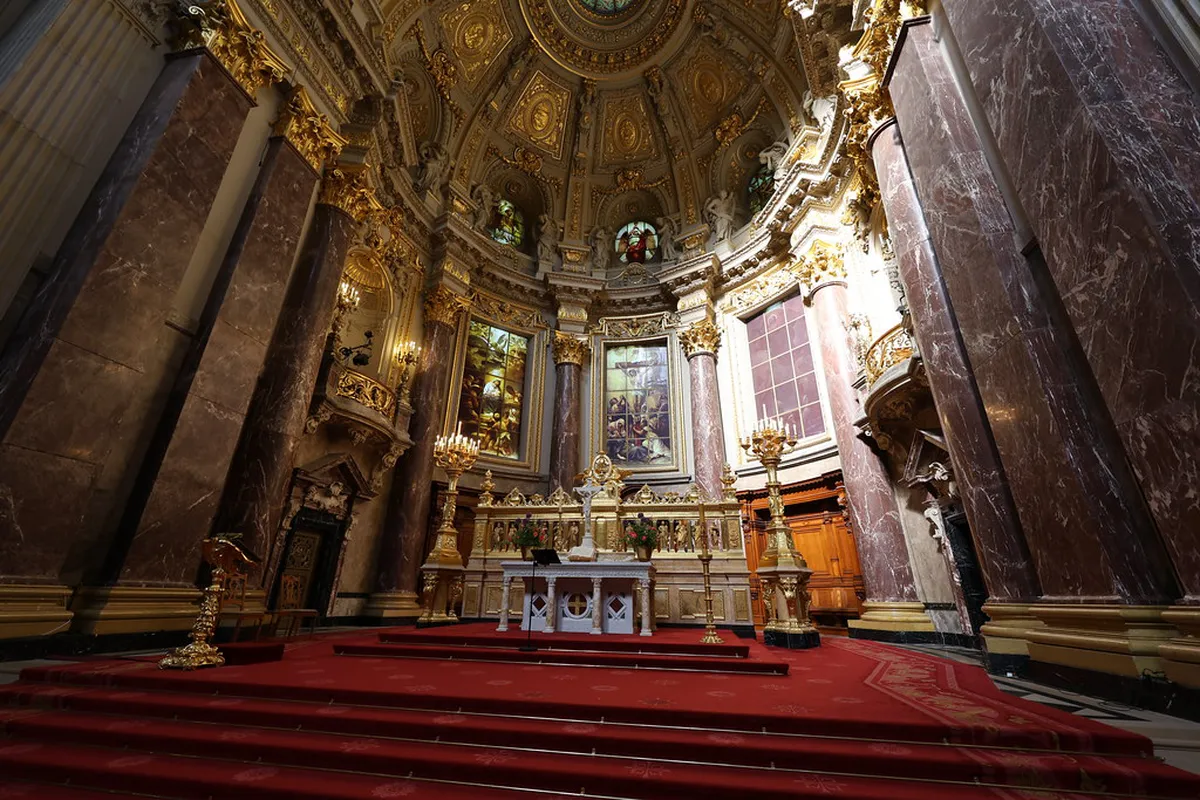
The dome interior is covered in an estimated 500,000 mosaic tiles. Light filters through the gallery windows to create a warm golden atmosphere throughout the nave. The scale of craftsmanship — executed over a decade by hundreds of specialized artisans — represents the absolute peak of Wilhelmine-era German artistic ambition.
The Hohenzollern Crypt: Europe's Significant Burial Site
The Hohenzollern Crypt beneath the cathedral is one of the most significant dynastic burial sites in Europe. It houses 94 sarcophagi belonging to members of the Brandenburg-Prussian royal family, spanning from the late 16th century to the early 20th century. Notable figures interred here include King Frederick I and his wife Queen Sophie Charlotte, alongside dozens of princes and princesses whose names shaped the map of Central Europe.
The crypt reopened on March 1, 2026 after a six-year closure for comprehensive renovation. The project was funded in part by the Cornelsen Cultural Foundation and has transformed the space significantly. A new interactive educational area now explains the complex dynastic history of the Hohenzollerns, including their role in the unification of Germany under Bismarck and Wilhelm I. An annotated scale model of the crypt allows visitors to orient themselves among the 94 burial chambers before descending.
Improved lighting throughout the crypt makes the sarcophagi far easier to study than before. The most elaborate are the ceremonial sarcophagi of Frederick I and Sophie Charlotte, which stand in the upper nave and are covered in intricate relief carvings. Accessibility has also improved: widened pathways and better signage now accommodate wheelchair users in parts of the crypt that were previously difficult to navigate. Check the official Berliner Dom site for current timed-entry slots, which may be required during busy periods in 2026.
The Sauer Organ and Interior Treasures
The Sauer organ is a highlight for music enthusiasts and one of the great instruments of the Western world. Built by the Wilhelm Sauer manufactory and installed in 1905, it features 7,269 pipes and 113 stops. It is classified as the largest intact organ from the Late Romantic period anywhere on earth — a distinction that attracts organists and music scholars from across Europe. The instrument is still used for daily services and regular evening concerts that are open to the public.
The altar area is equally impressive. Designed by Friedrich August Stüler, it survived the wartime bombing largely intact and remains one of the most complete original interior elements. Three large stained-glass windows behind the altar depict scenes from the life of Jesus, filtering coloured light across the white marble and yellow onyx altar surface. The contrast between the dark wood of the pulpit and the luminous altar creates a visual tension that feels intentional.
Look up from any point in the nave and the dome ceiling commands full attention. The mosaic programme covering the dome's interior required decades of skilled labour and includes portraits of Protestant theologians alongside allegorical figures. Many visitors spend far longer than expected simply standing and looking upward. The blend of materials — gold leaf, marble, mosaic, carved stone — reflects the full repertoire of late-19th-century European decorative arts.
Climbing the Dome: Panoramic Views of Berlin
Climbing the dome is one of the most rewarding activities in central Berlin for those who are physically able. A staircase of 270 steps leads up through the gallery levels and out onto the external walkway that encircles the drum. The ascent is moderate — stairs are stone and occasionally narrow — but there are rest points at intervals. Checking the best time to visit Berlin helps you avoid the midday heat during summer months, when the stairwell can become warm.
Once at the top, you have an unobstructed 360-degree view of the city. The TV Tower at Alexanderplatz is directly to the east, the Reichstag dome is visible to the northwest, and the Spree River winds through the landscape below. The Museum Island rooflines — Altes Museum, Pergamon, Neues Museum, Bode Museum — spread out beneath you in a way that no street-level view can match. The external walkway allows you to circle the full dome and find your preferred angle for photographs.
The dome staircase contains 270 steps to the external walkway. The climb takes 20–30 minutes at a moderate pace with rest points available at intervals. Wear comfortable shoes and avoid visiting during midday summer heat when the stone stairwell becomes warm. There is no elevator to the dome; wheelchair users can experience the main floor, altar, and renovated crypt instead.
The descent passes through a small exhibition space that chronicles the dome's construction history and the extent of wartime damage. Scale models show what the interior looked like immediately after the 1944 firebombing. This intermediate level is often overlooked by visitors eager to get back to the main floor, but it provides some of the most striking visual documentation of the restoration project. Budget around 30 minutes for the climb and views, plus 10–15 minutes for the exhibition on the way down.
Practical Visitor Information: Tickets and Hours
Standard adult tickets cost 10 EUR and include access to the main church, crypt, and dome climb. A reduced rate of 7.50 EUR applies to students, seniors, and registered disabled visitors. Children under 18 enter free. An audio guide is available for an additional 4 EUR and covers the main floor and crypt. You can purchase tickets at the door or online; buying in advance is advisable during the summer peak season and whenever timed crypt slots are in operation.
The cathedral is generally open daily from 09:00 to 20:00. Opening hours are reduced on Sundays due to morning and evening services, and sightseeing is suspended during active religious ceremonies. The Berlin.de city portal lists confirmed opening hours and any temporary closures. Always cross-check the official calendar before your visit, particularly during public holidays and the Christmas period when hours vary considerably.
The Berliner Dom is an active Protestant church. Sightseeing is not permitted during religious services, which occur daily and multiple times on Sundays. Entry for worship is free. To tour the interior, climb the dome, or visit the crypt, you must enter during official sightseeing hours (09:00–20:00, varying by day). Check the official Berliner Dom website or your accommodation for service times before planning your visit.
Photography is permitted inside for personal, non-commercial use. Flash is strictly prohibited to protect the mosaics and textile works. Tripods are not allowed for general visitors. For exterior photography, the Lustgarten park immediately in front of the west facade offers the best perspective; the late afternoon light (around 16:00–18:00) catches the dome's copper elements and turns the stone facade gold. Interior photography is most rewarding on bright mornings before the midday crowds arrive, when the light through the gallery windows is at its strongest.
Accessibility and Inclusion at the Cathedral
The Berliner Dom has made substantial efforts to accommodate visitors with different mobility needs. An elevator provides access to the main church floor for guests who cannot use the entrance stairs. Staff are available at the entrance to assist with navigation and to direct visitors to accessible routes through the building. The main sanctuary floor is largely flat and navigable by wheelchair.
Tactile models of the cathedral's exterior are available for blind and visually impaired visitors, allowing them to understand the building's scale and massing. Special guided tours for groups with accessibility requirements can be arranged through the cathedral's visitor services team. Note that the dome staircase (270 steps, no elevator) remains inaccessible for wheelchair users; however, the ground-floor experience — nave, altar, mosaics, and now the renovated crypt on improved pathways — is rich in its own right. Restrooms with accessibility features are located within the building complex. During peak summer months, the elevator can become a bottleneck; arriving before 10:00 or after 16:00 reduces wait times significantly.
Getting There: Public Transportation and Location
The Berliner Dom sits on Museum Island in the Mitte district, surrounded by the Spree River on two sides. It is one of the most central landmarks in Berlin and straightforward to reach on public transport. The Berlin public transport guide covers all the options in detail, but the three main approaches are summarised below.
- Bus 100 or 200 stops at Lustgarten, directly in front of the west facade. The walk from the bus stop to the cathedral entrance is under one minute. This is the most scenic option — Bus 100 runs the classic tourist route through Tiergarten and along Unter den Linden, so it doubles as a sightseeing leg in itself. Frequency is every 5–10 minutes during the day.
- S-Bahn Hackescher Markt (lines S3, S5, S7, S9) is a seven-minute walk through Mitte's lively shopping streets. This is the best connection if you are arriving from Friedrichshain, the main train station (Hauptbahnhof), or Schönefeld airport via the Airport Express.
- U5 Museumsinsel puts you two minutes on foot from the cathedral's north entrance. The U5 extension opened in 2020 and connects directly to Hauptbahnhof and Alexanderplatz, making it the fastest single-line option from either major hub. If you are combining the cathedral with the Pergamon or Humboldt Forum, U5 lets you move between Museum Island stops without surfacing to street level.
For those combining the Dom with an S-Bahn journey, the Hackescher Markt route adds the pleasant bonus of passing through a neighbourhood dense with independent cafes and market stalls — useful if you want to grab coffee before a morning visit. The Lustgarten bus stop wins on pure door-to-door convenience and is the standard recommendation for first-time visitors.
Nearby Attractions on Museum Island
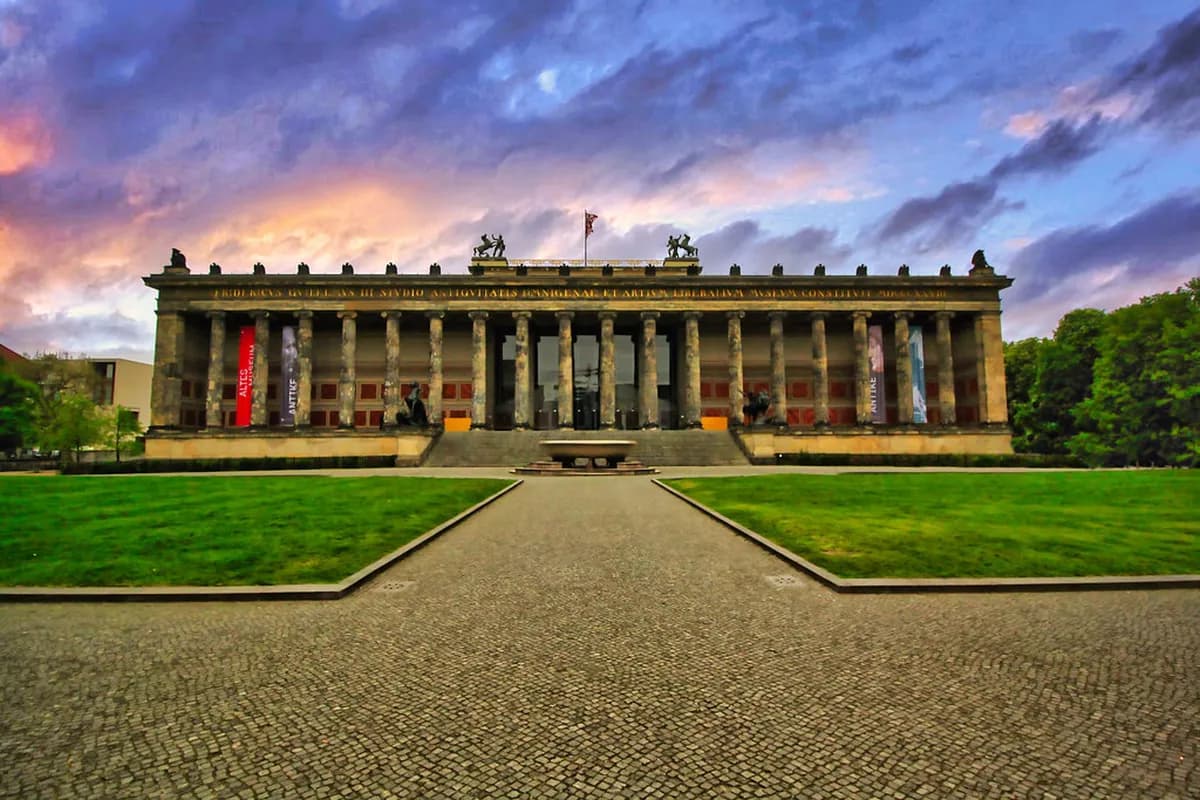
The Berliner Dom is perfectly positioned for a full day of sightseeing. It sits directly across the Lustgarten from the Altes Museum and a short walk from the newly opened Humboldt Forum. Consult our Museum Island Berlin guide to plan an efficient route between these sites and avoid retracing your steps. The Lustgarten itself is an ideal spot for a rest between venues, with open grass and views of the cathedral's west facade.
You can reach some of the best museums in Berlin within a five-minute walk. The Pergamon Museum and the Neues Museum are world-class institutions that share the same island. Walking south along the Spree takes you toward the Fischerinsel neighbourhood and the Nikolaiviertel, Berlin's reconstructed medieval quarter. The area around Museum Island represents the cultural core of the city and rewards an unhurried afternoon of exploration.
Combine this with our ultimate Berlin guide for a complete trip plan.
For related Berlin guides, see our 10 Essential Facts and Visitor Tips for the Brandenburg Gate and 10 Essential Facts and Visitor Tips for Checkpoint Charlie.
Frequently Asked Questions
When will the Hohenzollern Crypt reopen?
The Hohenzollern Crypt reopened on March 1, 2026 after a six-year renovation. The project included a new educational area with an interactive model, improved lighting, and better accessibility throughout the burial chambers. Check the official site for current timed-entry requirements before you visit.
Is the Berliner Dom a Catholic or Protestant cathedral?
The Berliner Dom is a Protestant church. It serves as the supreme parish and collegiate church for the Evangelical community in Berlin. While it looks like a grand Catholic cathedral, its layout and services are firmly rooted in the Protestant tradition. It has never served as a bishop's seat.
How many steps are in the Berliner Dom dome climb?
There are 270 steps to reach the dome walkway. The climb is moderately difficult and takes place in a stone staircase that is narrow in places. Once at the top, you can enjoy a 360-degree view of Berlin including the TV Tower, Reichstag, and Museum Island rooflines. Most visitors spend 20 to 30 minutes at the summit.
Can you visit the Berliner Dom during a church service?
You can attend a church service for worship, but sightseeing is suspended during these times. Services are held daily, with multiple sessions on Sundays. If you wish to tour the architecture and climb the dome, visit during official sightseeing hours. Entry for worship is free of charge.
The Berliner Dom is an essential stop for anyone exploring the history and architecture of Germany's capital. From the reopened royal crypt to the panoramic dome walkway, it offers a layered experience that rewards careful preparation. Plan your visit to coincide with the quieter morning hours and take time to sit in the nave — the scale and craftsmanship become clearer the longer you stay. It remains the defining landmark of Museum Island and one of the most rewarding hours you can spend in central Berlin.
You might also like


Continue reading
More guides you'll find useful