10 Free Things to Do in Munich (2026) Travel Guide
Plan free things to do in munich with top picks, neighborhood context, timing tips, and practical booking advice for a smoother trip.
On this page
10 Free Things To Do In Munich
Munich has a reputation for expensive beer tents and palace entry fees, but the city's best experiences cost nothing at all. The Englischer Garten alone could fill two full days. Marienplatz draws a crowd at every hour. And the Eisbach wave draws world-class surfers to a river in the middle of a landlocked city. This guide, updated for 2026, covers the free activities that top SERP competitors and locals alike rate highest — plus the budget tricks most visitors never find.
Whether you have two days or a week, these no-cost options slot alongside any paid itinerary without feeling like a compromise. Start in the city center and work outward — most of the top free sights sit within walking distance of Marienplatz or a short U-Bahn ride apart.
Top Free Sights in Munich: Where to Start
The city center hands you several free landmarks in quick succession. Marienplatz is the obvious anchor — Munich's main square, dominated by the Neo-Gothic Neues Rathaus and its famous Glockenspiel. The mechanical clock runs 43 bells and 32 life-sized figures through a 12-minute show depicting a royal wedding and tournament. Shows happen daily at 11:00 and 12:00, with an additional 17:00 show from March through October. Arrive five minutes early for a street-level spot; the square fills fast in summer.
A five-minute walk south brings you to Viktualienmarkt, Munich's open-air food market and one of the oldest in Bavaria, dating to the early 1800s. Browsing is free. The 140-plus stalls sell fresh produce, cheeses, Weißwurst, pretzels, and flowers Monday to Saturday from around 08:00 to 18:00 (earlier close on Saturdays). The central beer garden inside the market is one of the few in Munich where you can bring your own food from the surrounding stalls — a legitimate budget hack.
Two minutes north of Marienplatz stands Odeonsplatz, framed by the Feldherrnhalle and the yellow Theatinerkirche. The square itself is free, always open, and worth fifteen minutes of slow walking to read the architecture. Connect it with the Hofgarten directly behind — a Renaissance garden with manicured beds, a central temple, and usually a busker or two. Entry is free from dawn to dusk. Photographers come here at golden hour when the light hits the arcades.
For a deeper look at everything the city offers, see the full our complete Munich guide guide, which covers both free and paid options across all neighborhoods.
Englischer Garten and the Eisbach Wave
The Englischer Garten is larger than Central Park and one of the largest urban parks in the world at 3.73 km². It runs from the northern edge of Schwabing down to the Isar, and the southern entrance is roughly a 20-minute walk from Marienplatz. The park is open 24 hours, free always, and accessible via U-Bahn to Universität or Giselastraße. Learn more about the park's history from its origins in 1789. A full circuit on foot takes three to four hours; by bike, about 90 minutes.
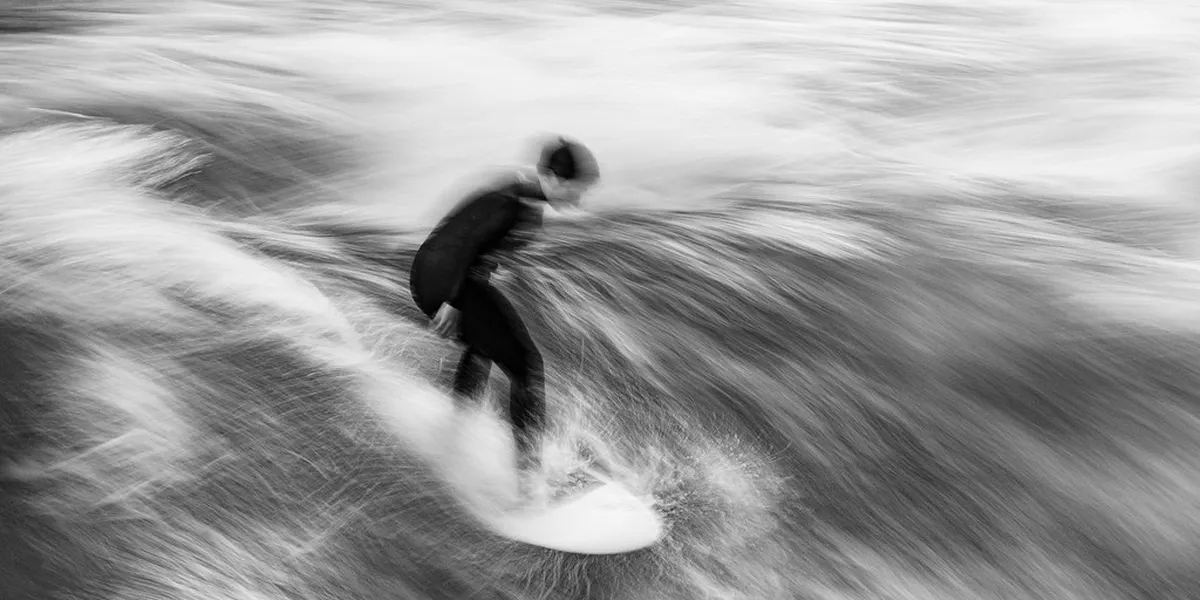
The Eisbach wave draws world-class river surfers year-round, 24/7 — it's one of the world's few permanent standing waves in a city center. Watch for free from the Himmelreich bridge for the best elevated angle. A second smaller wave sits downstream at Haus der Kunst, drawing fewer crowds and perfect for photography.
The single most-watched free spectacle in Munich is the Eisbach wave on Prinzregentenstraße, at the southern entry of the park. River surfers ride a stationary standing wave on the Eisbach creek at all hours, rain or shine. Watch from the Himmelreich bridge for the best elevated angle. What most visitors miss: a second, smaller beginners' wave sits further downstream, past the Haus der Kunst. It draws less of a crowd and is easier to photograph. Both waves are fully free to watch.
Deeper in the park, the Monopteros — a small Greek-style temple on a hill — offers one of the best skyline views in the city at no cost. Come at sunset. Four beer gardens are scattered through the park; the one at the Chinesischer Turm (Chinese Tower) is the most famous and usually has live Bavarian brass music on weekends. You pay for drinks, but entry to the grounds is free and the atmosphere is worth it even if you don't order.
Kleinhesseloher See, the artificial lake in the northern section, is ringed by walking paths and is calm even on busy summer days. Families bring picnics; geese roam freely. Row boats are available to rent, but the path around the lake is free and takes about 20 minutes at a slow pace. Read more about the park's layout and seasonal highlights in the dedicated Englischer Garten guide.
BMW Welt and Olympiapark Grounds
BMW Welt is completely free to enter and explore — one of Munich's best-kept secrets. No reservation needed. The only costs are the BMW Museum next door (paid) and factory tours (paid). Open 07:30–24:00 daily, easily reached by tram 12 or bus 173 from the city center in around 25 minutes.
BMW Welt (Am Olympiapark 1) is a genuinely free attraction that most visitors either skip or assume costs money. The showroom displays current production models, concept cars, and motorcycles across multiple floors of a striking double-cone building. BMW Welt's official site confirms entry is free. You can sit in vehicles on the floor. The only paid sections are the BMW Museum next door and guided factory tours. BMW Welt itself is open daily 07:30–24:00 and free to enter without reservation. Tram 12 or Bus 173 from the city center gets you there in around 25 minutes.
Adjacent to BMW Welt, the Olympiapark grounds are free to walk. The park was built for the 1972 Summer Olympics and the landscape — rolling hills, artificial lake, tent-shaped acrylic canopy over the stadium — is striking even from outside. Olympiapark's official site details free walking options around the grounds and lakeside. The stadium roof climb and Olympiaturm observation deck both cost money, but strolling the grounds and the lakeside is free. The highest free viewpoint in the park is Olympiaberg, a hill built from World War II rubble in the park's southwest corner. The climb takes about ten minutes and on a clear day you can see the Alps. Bring a bottle of wine at sunset and you have one of Munich's best free views.
Free Churches Worth Stepping Inside
Munich has an exceptional density of churches, and most are free to enter. The Frauenkirche (Frauenplatz 1) — recognizable by its twin onion-dome towers visible from most of the city — is Gothic in scale and houses the legendary devil's footprint near the entrance. Legend says the builder tricked the devil into thinking the church had no windows; the footprint is supposedly where he stamped in rage. Climbing the south tower costs €7.50 for adults, but the nave and devil's footprint are free.
Peterskirche (Rindermarkt 1), Munich's oldest parish church, is free to enter. The tower climb (299 steps, €1.50) gives panoramic views, but the interior alone — painted ceiling, gilded altars — is worth ten minutes. Asamkirche on Sendlinger Straße is the most theatrical: a private baroque chapel built by two brothers in the 1730s, free to enter, and impossibly ornate for its narrow width. Opening hours vary; generally open daily from around 09:00–18:00.
The €1 Sunday Museum Hack
Every Sunday, seven major Munich state museums drop admission to just €1 per person — Alte Pinakothek, Neue Pinakothek, Pinakothek der Moderne, Glyptothek, Museum Brandhorst, Bayerisches Nationalmuseum, and Staatliche Antikensammlung. Normal admission runs €7–€10 on other days. Plan ahead: arrive at 10:00 when doors open to beat the crowds.
Several of Munich's major state museums drop admission to €1 on Sundays. This is not a well-guarded secret, but most visitors don't plan around it and end up paying full price midweek. The museums participating in 2026 include the Alte Pinakothek (European masters from the 14th–18th centuries), Neue Pinakothek (19th-century art), Pinakothek der Moderne (modern and contemporary art, plus design and architecture wings), Museum Brandhorst (Cy Twombly collection and contemporary works), Glyptothek (Greek and Roman sculptures), Staatliche Antikensammlung (ancient art), and the Bayerisches Nationalmuseum (European decorative arts). Normal adult admission at most of these runs €7–€10.
The catch: crowds on €1 Sundays are significantly larger than on a Tuesday afternoon. The Alte Pinakothek and Pinakothek der Moderne in particular draw long queues by 11:00. Arrive when doors open — typically 10:00 — and head for the upper floors first, where crowds are thinner. The Glyptothek and Antikensammlung draw smaller Sunday crowds and are worth prioritizing if you want breathing room around the sculpture halls. The entire Kunstareal museum district is walkable; all these museums sit within a few blocks of each other near Königsplatz, reachable by U-Bahn to Königsplatz or by tram from Marienplatz.
The Munich's top museums guide has full opening hours, current admission prices, and which temporary exhibitions are running in 2026 — useful for planning whether to go on a paid weekday or save the €1 Sunday slot for the blockbuster shows.
Nymphenburg Palace Park
Nymphenburg Palace sits about 5 km northwest of the city center and the palace interior requires a ticket (€15 adults in 2026). But the park — over 200 acres of baroque gardens, canals, and woodland — is free and open daily from 06:00 to 21:30 in summer, 06:00 to 18:00 in winter. Tram 17 from the Hauptbahnhof stops directly at the palace gate.
The park rewards slow exploration. Three smaller garden pavilions sit hidden in the wooded sections: the Badenburg bathing house, the Pagodenburg tea house, and the Magdalenenklause hermitage — all technically part of the paid palace ticket, but visible from the exterior paths at no cost. The central canal runs the full length of the formal garden and swans occupy it year-round. Pack comfortable shoes; the park takes a solid 90 minutes to walk end to end.
Walking the Isar River
The Isar runs through Munich south to north, and the riverside paths on both banks are free and open at all hours. The most popular stretch for locals is the section south of the city center between Wittelsbacher Brücke and Thalkirchen — wide gravel banks, trees, and enough space that even on a summer weekend it doesn't feel cramped. Münchners sunbathe here in large numbers from May onwards, and the water temperature is swimmable by July.
The Flaucher area, accessible from the Thalkirchen U-Bahn stop, has a well-known beer garden and picnic spots along the river. Bring food from a supermarket, claim a spot on the gravel bank, and you have an afternoon that costs as little as you want it to. The riverbanks here are one of the more honest slices of how locals actually use the city on a free day.
Free Neighborhood Walks
Schwabing, directly north of the Englischer Garten, was Munich's bohemian quarter in the early 20th century and still has a density of Art Nouveau facades worth a slow walk. The streets around Leopoldstraße and Georgenstraße show ornate stucco detailing that almost no one photographs. There's no entry fee and no organized tour required — just walk north from the Universität U-Bahn stop and take whatever side street looks interesting.
Haidhausen, east of the Isar, is known locally as the French Quarter and is quieter than the tourist center. The daily food market at Wiener Platz is a smaller, less-visited alternative to Viktualienmarkt — same fresh produce culture, significantly fewer tourists, and easier to browse at a relaxed pace. Take the S-Bahn or tram east from Marienplatz to Rosenheimer Platz and walk five minutes south.
Glockenbachviertel, south of the city center, is a neighborhood of independent shops, street art, and a lively café culture. The browsing is free; the atmosphere is genuinely local. It's one of the few Munich neighborhoods that feels distinctly non-touristy even in peak summer. Walk south from Sendlinger Tor on Müllerstraße or Buttermelcherstraße.
Low-Cost Day Trips Around Munich
The Bayern-Ticket covers regional trains throughout Bavaria for €29 per person (or €27 each for groups of two to five), making a day out of the city affordable. Several destinations within 90 minutes of Munich charge nothing for their main outdoor sights. The town of Freising (30 minutes north by S-Bahn) has a hilltop cathedral district with panoramic views over the river — free to walk, worth two hours. Dachau (25 minutes northwest) has a free-entry memorial site and documentation center at the former concentration camp; audio guides are available for hire but the outdoor grounds and main exhibition are free.
Closer to the Alps, Starnbergersee (35 minutes south by S-Bahn) is a lake where the free activity is simply walking the shoreline path between the town of Starnberg and the village of Possenhofen. The lake views toward the mountains are excellent on clear mornings. Swimming is free from the public bathing areas. On a warm day this counts as one of the best free half-days reachable from Munich.
Experiencing Munich's Beer Culture for Free
You can absorb Munich's beer culture without spending much. Walking into a beer garden — even one of the big famous ones like the Chinesischer Turm in the Englischer Garten or the Seehaus on Kleinhesseloher See — is free. Benches are communal, the atmosphere is public, and nobody charges you to sit. You pay only for what you order. Bringing your own food to most beer gardens is legal and widely practiced; the custom dates back to a 19th-century royal decree. The Viktualienmarkt beer garden operates differently — you must buy drinks from the garden's own tap — but most others in the city allow outside food.
The big six Munich breweries — Augustiner, Hofbräu, Löwenbräu, Paulaner, Hacker-Pschorr, and Spaten — each have their own brewery tap or beer hall in the city. Walking between them is free. The Beer and Oktoberfest Museum on Sterneckerstraße 2 charges a small entry fee (around €4) but is genuinely interesting for the history of how Munich's beer laws and culture developed. It's not strictly free, but cheap enough to mention alongside the free options.
Practical Tips for a Free Munich Day
Most central free attractions sit within walking distance of each other or a short tram ride apart. The U-Bahn and S-Bahn are convenient but not free — a single-trip inner-zone ticket costs €3.90 in 2026. If you plan more than two journeys in a day, the day ticket (Tageskarte) at €9.20 for the inner zones is better value. The MVV transit authority app shows live departures and sells mobile tickets.
Timing matters. The Glockenspiel at 11:00 draws the densest crowds of the day; the 17:00 show (March–October) is thinner and the evening light is better for photos. The Viktualienmarkt is quietest before 09:00 and on weekday mornings. The Englischer Garten is crowded on warm weekends but remarkably calm on weekday mornings year-round.
For food on a budget, supermarkets near Marienplatz (Edeka on Rosental, Rewe near Sendlinger Tor) stock picnic supplies at standard prices. Pack a bag and eat in the Hofgarten or along the Isar instead of paying café prices. The city has a strong picnic culture, especially in summer, and outdoor eating in parks is expected and common.
FAQs About Free Things to Do in Munich
Frequently Asked Questions
Which free things to do in Munich options fit first-time visitors?
First-time visitors should prioritize the Englischer Garten, Marienplatz, and Viktualienmarkt. These iconic spots offer a great introduction to Munich's atmosphere and are easily accessible. A free walking tour is also highly recommended for historical context.
How much time should you plan for free things to do in Munich?
You can easily fill 2-3 days exploring free attractions in Munich, especially if you enjoy walking and soaking in the atmosphere. Allocate half a day for the Englischer Garten and a few hours for the city center's main squares and churches. Combining these can create a full, budget-friendly itinerary.
Are there free things to do in Munich today?
Absolutely. Most of the listed attractions like parks, squares, and church interiors are open daily and free. Checking local event listings for free concerts, markets, or festivals is also a good idea. The city always offers spontaneous, no-cost activities.
Munich's free layer is deep enough to fill a full trip without touching a paid attraction. The Englischer Garten, Eisbach wave, Marienplatz, Viktualienmarkt, Nymphenburg Park, BMW Welt, the Isar banks, and the €1 Sunday museums add up to days of material. The city's free appeal is genuine — it's not a consolation for travelers who can't afford entry fees, it's a parallel track that often gets closer to how the city actually lives.
Plan around the €1 Sunday museum slot if you want the art museums at a fraction of the cost. Use the Viktualienmarkt beer garden for a cheap midday break. Walk the Schwabing streets for architecture that most visitors entirely miss. The best free days in Munich tend to be the unhurried ones.
You might also like


Continue reading
More guides you'll find useful