23 Best Restaurants in Berlin: The Ultimate 2026 Foodie Guide
Discover the 23 best restaurants in Berlin, from Michelin stars to legendary street food. Includes booking tips, cash-only warnings, and local favorites.
On this page
23 Best Restaurants in Berlin
After living in Berlin for several years, I have seen the city transform into a world-class culinary destination. This guide reflects my personal favorites and the most consistent performers in the city's ever-changing landscape. I last refreshed this list in early 2026 to ensure all pricing and booking details remain accurate for your trip.
Berlin dining is a mix of high-end experimentation and gritty, authentic street food that defines the local spirit. Many guides suggest queuing for hours at Mustafa's Gemüsedöner, but I recommend skipping it for better local alternatives — Rüyam in Schöneberg offers much shorter lines and superior flavor. This city genuinely has two parallel food worlds, and the best visitors explore both.
This article covers 23 essential stops that showcase why Berlin is a must-visit for foodies. From a historic tavern founded in 1621 to Michelin-starred counters and Gambian soul food, these selections represent the true diversity of the German capital. A practical cash-and-reservations matrix at the end will save you from the most common visitor headaches.
Restaurant Tim Raue
Tim Raue holds two Michelin stars and a place on the World's 50 Best list, yet the restaurant itself is refreshingly relaxed — no dress code, no fussy etiquette, just precise cooking. The menu is built around bold Asian flavors: think wasabi-glazed langoustine, soy-lacquered duck, and his signature Peking duck interpretation. Located on Rudi-Dutschke-Strasse in Kreuzberg, it is one of the few places in Germany where a tasting menu at €200–€300 per person feels genuinely worth the outlay.
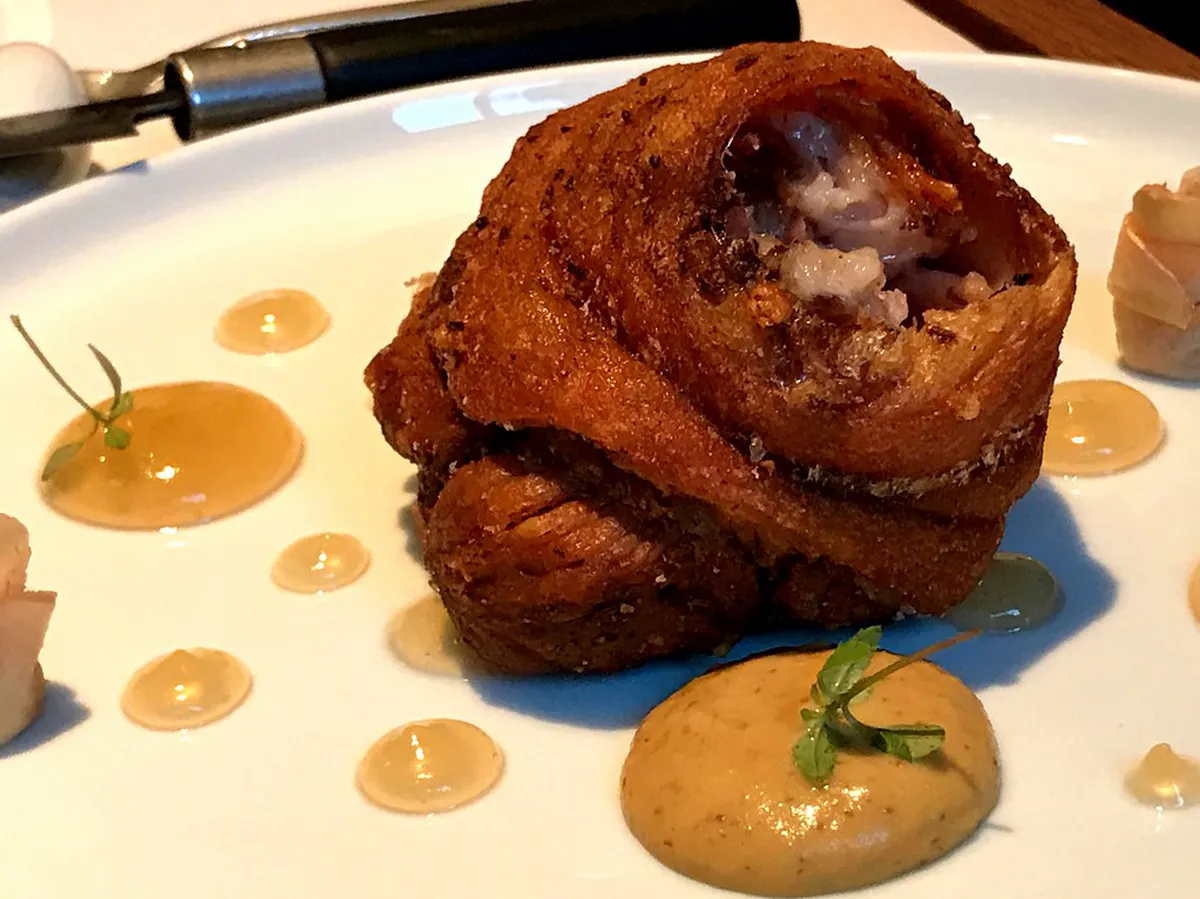
Book at least two months in advance for a Friday or Saturday slot. The restaurant operates Wednesday through Saturday, and even weeknight tables fill up weeks ahead. If the full tasting menu is out of budget, the lunch format (when available) offers the same kitchen at a lower price point.
Reservations must be made 6–8 weeks ahead for weekend slots, especially Friday and Saturday dinner services. The lunch service, when available, books slightly faster but remains popular — plan accordingly if budget is a constraint.
Nobelhart & Schmutzig
The phrase "brutally local" is not marketing copy at Nobelhart & Schmutzig — it is a genuine operating constraint. Chef Micha Schäfer uses only ingredients grown or raised in the Berlin-Brandenburg region, which means no lemons, no pepper, no olive oil. The ten-course menu evolves weekly as the seasons dictate and costs around €175–€225 per person. Located on Friedrichstrasse in Mitte, the counter-bar seating wraps around the open kitchen so every guest watches the team work.
Host and co-owner Billy Wagner is widely regarded as one of the best sommeliers in Europe, and his wine pairing adds significantly to the experience. Plan for at least three hours at the table. Reservations open six to eight weeks out and go quickly; the restaurant is open Tuesday through Saturday evenings only.
Zur Letzten Instanz
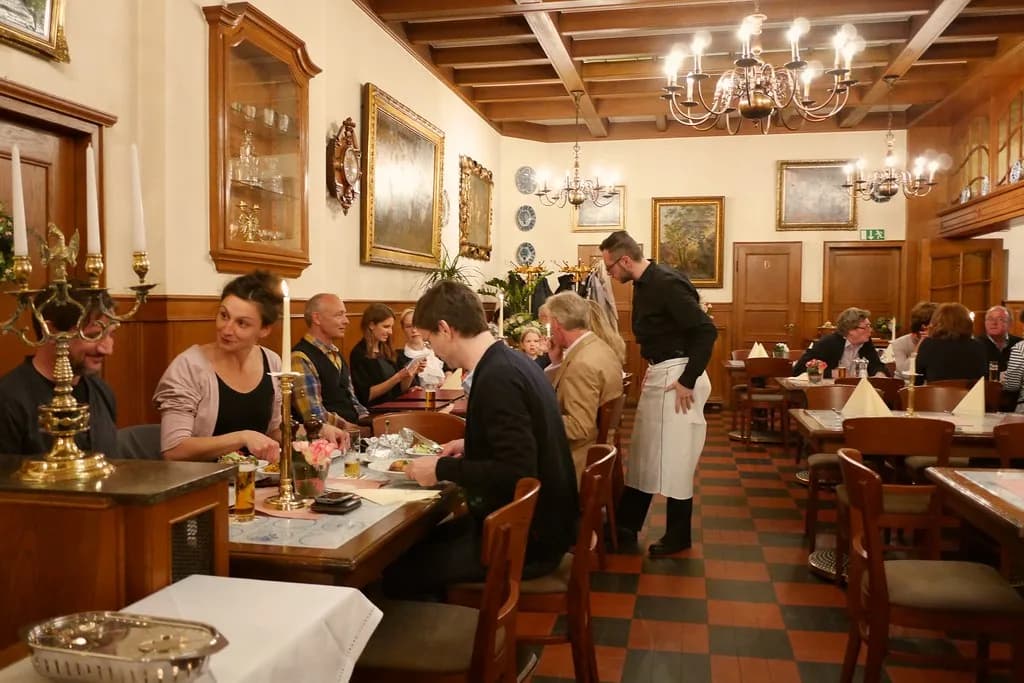
Established in 1621, Zur Letzten Instanz holds a strong claim to being Berlin's oldest continuously operating restaurant. The two-story building near Alexanderplatz has hosted Napoleon, Charlie Chaplin, and Jacques Chirac in its wood-paneled dining rooms. Despite the tourist traffic that its location attracts, the kitchen remains honest: pork knuckle (Eisbein), cabbage-wrapped pork belly, and Berliner Kindl beer are exactly as they should be, priced between €18 and €32 for mains.
Request a table near the historic tiled stove on the ground floor. The restaurant opens Tuesday through Saturday from noon, and booking ahead for dinner is advisable. It is the single best place in the city to understand the robust, unapologetic character of traditional Berlin cooking before exploring newer arrivals.
Wen Cheng Handpulled Noodles
When Wen Cheng opened in Mitte in 2021 it briefly displaced Berghain as the city's most talked-about queue. The restaurant now has three locations — two in Prenzlauer Berg and one in Friedrichshain — which has spread the crowd somewhat. The draw is thick, hand-pulled Shaanxi-style biang biang noodles sauced with chili oil, vinegar, and Sichuan peppers. A large bowl costs €12–€16, and the shops are open daily from noon to 22:00.
The Prenzlauer Berg branch on Kopenhagener Strasse consistently has shorter wait times than the Mitte original. Expect a 20–30 minute queue regardless, especially at lunchtime on weekends. No reservations are accepted at any location, so an off-peak arrival on a weekday evening is the most reliable strategy. The vegan options are genuinely excellent and worth ordering even if you eat meat.
Larb Koi Thai Home Cooking
Tucked into a quiet stretch of Friedrichshain, Larb Koi is the restaurant most Thai food lovers in Berlin point to as the real thing. Chef Monay Sakarin skips the adapted German-palate versions and cooks regional specialities from multiple parts of Thailand: a Southern curry with whole deep-fried sea bass, Isan-style papaya salad with full heat, and an elusive octopus curry that appears only when the catch is right. Mains run €14–€22, and the restaurant is open for dinner daily except Mondays.
Specify your spice tolerance when ordering — the kitchen will genuinely cook to authentic heat levels if you ask. Reservations are recommended for Friday and Saturday evenings, when the small dining room fills by 19:00. This is one of the most consistent kitchens in the city across all cuisine categories, not just Thai.
Izmir Köftecisi Konak Grill
Located on Reichenberger Strasse near Kottbusser Tor, this no-frills specialist draws a loyal crowd for the single thing it does best: köfte. The spiced grilled lamb sausages are layered into thick, hybrid flatbread with fresh herbs, tomato, onion, and sauce. A full sandwich meal costs €8–€12 and the shop is open daily from 10:00 to 03:00, making it one of the best late-night options in Kreuzberg.
Unlike generic döner shops, the bread here is slightly thicker than average and holds the filling without collapsing mid-bite. The kitchen is cash-only, so have Euros ready. Many regulars combine a visit here with a walk along the Landwehrkanal, which is five minutes away on foot.
This establishment operates strictly cash-only — ATMs are available nearby, but it is wise to arrive with at least €15–€20 in Euros to avoid the need to leave the queue. Late-night hours (open until 03:00) make it ideal for post-evening dining, especially after exploring Kreuzberg's bars.
Liu Chengdu Weidao Nudelhaus
Set among the office buildings of central Mitte, Liu is an outlier in its neighborhood: a genuinely excellent Sichuan noodle house where the numbing heat of peppercorns and the depth of homemade chili oil make every bowl worth the trip. The tianshui noodles loaded with sesame paste are a lunch standout, and the cold spicy noodles served in summer are a clever switch from the hot versions. Most bowls are priced €11–€15, with the shop open for both lunch and dinner daily.
The space fits perhaps 25 people, so arriving at 11:30 or after 13:30 avoids the worst of the noon rush. The counter seats are the best vantage point for watching noodles being pulled and dressed. Cash is preferred but cards are increasingly accepted — check the sign on entry before ordering.
Aleppo Supper Club
Just off Boxhagener Platz in Friedrichshain, Aleppo Supper Club serves Syrian mezze and mains in a cozy, warmly lit room that fills quickly. The restaurant is widely praised for its Mutabbal — a smoky, creamy eggplant dip that is frequently cited as the best in the city, more complex and less oily than the hummus-forward versions common elsewhere. The pomegranate salad, kibbeh with bulgur and lamb, and the full mezze spread are equally strong. Expect to spend €10–€18 per person on shared plates, with the restaurant open daily from noon to 22:00.
This is one of the better choices in Berlin for vegetarians and vegans, as roughly half the menu works without modification. The restaurant supports Syrian food culture actively through its sourcing and staff, and a portion of proceeds goes toward community integration programs — a fact that distinguishes it from similar Middle Eastern spots in the neighborhood.
Bantabaa Food Dealer
Bantabaa started in 2015 as a Kreuzberg project to integrate West African refugees into Berlin's workforce through food. A decade later, it has become one of the most distinctive dining stops in the city — not a charity project but a genuinely excellent kitchen. The flavors are Gambian: domoda (a saucy, earthy peanut stew available with chicken or sweet potato), mustardy yassa chicken, and cassava fries with onion sauce. Hearty plates run €10–€14, and the shop is open Monday through Saturday.
Berlin has essentially no other Gambian restaurant, which makes Bantabaa rare by any standard. The tamarind and baobab lemonades are outstanding on a warm day and unlike anything you will find nearby. If you are visiting with someone unfamiliar with West African food, the domoda is the gateway order — deeply savory, aromatic, and less confronting than many of the city's more adventurous offerings.
Bonanza Coffee Roasters
The Adalbertstrasse location in Kreuzberg is the flagship: a converted industrial space with exposed brick, high ceilings, and light pouring through wide windows onto communal tables and a long bar. This is genuinely among the best specialty roasters in Europe, and the pour-overs and filter coffees here showcase single-origin beans with a precision that most Berlin cafes do not attempt. Coffee and pastries cost €4–€9, with the shop open daily from 09:00 to 18:00.
Sunday mornings here are a ritual for a significant portion of Kreuzberg's creative class. The combination of excellent coffee, a calm industrial atmosphere, and good natural light makes it the strongest brunch-adjacent stop on this list. A second roastery location exists in Prenzlauer Berg for those based on the east side of the city.
Eispatisserie Hokey Pokey
This Prenzlauer Berg institution makes ice cream the way a pastry chef approaches a dessert course: using high-quality dairy, seasonal fruit, and unusual flavour combinations that hold up to scrutiny. A single scoop costs around €2.50–€3.00, and the shop is open daily from noon to 22:00 during the warmer months. The Rocky Road is the signature flavour — thick chocolate with textural contrast — and it is the one to start with if you have never visited before.
Summer queues here can stretch to 20–30 minutes on sunny weekends, particularly on the stretch of Danziger Strasse between 14:00 and 18:00. Arriving before noon or after 19:00 cuts the wait significantly. The Jones Ice Cream shop in Schöneberg offers a strong alternative for those staying in the west of the city.
Cookies Cream
The entrance — an unmarked alley delivery dock behind Behrenstrasse, identified only by a chandelier above the heavy metal door — sets the tone immediately. Cookies Cream has held a Michelin star since 2018 for an entirely vegetarian tasting menu served in a room with exposed concrete walls, red banquettes, and a painting of a German expletive. Chef Nicholas Hahn's cooking is serious despite the setting: potato ceviche, red peppers expressed across multiple textures, onsen egg yolk with algae caviar. The tasting menu runs €120–€150 and the restaurant is open Tuesday through Saturday evenings.
The mostly natural wine list is carefully curated, but the non-alcoholic juice and ferment pairing is worth considering — the kitchen makes house ferments with real complexity. Owner Heinz "Cookie" Gindullis ran one of Berlin's legendary clubs before opening this restaurant, and the energy of the room still carries that history. Book at least three to four weeks out.
Rüyam Gemüse Kebab
Berlin has a strong opinion on where to get a döner, and most locals who know the scene skip Mustafa's Gemüsedöner — which can mean an hour-long queue for a product that is good but not exceptional. Rüyam is the alternative they actually visit: toasted bread, abundant fresh herbs, well-seasoned meat or vegetables, and friendly service with no manufactured hype. A kebab costs €7–€9, and there are locations in both Schöneberg and Prenzlauer Berg, open daily from 11:00 to midnight.
The wait at Rüyam rarely exceeds 10 minutes even during peak lunch hours, and they offer free tea while you queue. The seating is proper — not a standing window — which makes a difference when you want to eat without juggling a paper cone. For visitors specifically chasing the Berlin döner experience, this is the honest recommendation over any of the Instagram-famous spots.
Adana Grillhaus
At the heart of Kreuzberg's historically Turkish neighborhood on Manteuffelstrasse, Adana Grillhaus is the benchmark for charcoal-grilled Turkish meat in the city. The chefs work an open fire, cooking lamb chops and minced adana skewers over glowing coals with a focus that makes the grill the center of the room rather than something hidden in a back kitchen. Meat platters cost €15–€30, and the restaurant is open daily from noon to 02:00.
Solo travelers and small groups should specifically ask to sit at the Ocakbaşı — the fireside counter directly facing the grill. It is the single best seat in the house for watching the technique up close, and the kitchen tends to be more generous with extras for diners who show that kind of engagement. Order cold mezze first, followed by raki with ice and water to pace the meal properly. A second location exists on nearby Skalitzer Strasse if the original is full.
Hallmann und Klee
What began as a beloved Neukölln breakfast and brunch spot has quietly become a Michelin-starred dinner destination without abandoning its neighborhood roots. Located on Böhmische Strasse in Rixdorf, the restaurant now operates a split identity: weekend breakfast at €12–€20 per plate, and a sophisticated dinner menu at €110–€140 that draws from the same regional-produce philosophy but with considerably more ambition. The kitchen is open Thursday through Sunday.
Weekend breakfast tables are genuinely difficult to secure — three weeks' advance booking is the realistic minimum, and popular slots disappear faster. The evening menu is easier to get into mid-week. The transition from casual morning spot to serious evening restaurant within the same walls is unusual and worth experiencing as a study in how Berlin's food scene evolves organically.
Hotel Orania.Berlin
The restaurant inside the Orania hotel on Oranienplatz is best known for its signature four-course duck menu — the "Xberg Duck" — which has become one of the more talked-about set menus in the city. The kitchen works the duck across multiple preparations in a stylish open-kitchen room with live jazz performances several nights a week. The four-course experience costs around €85 per person, with the restaurant open daily for dinner.
The bar program here is strong enough to warrant arriving 30–40 minutes early for cocktails before your table. The room draws a creative Kreuzberg crowd rather than a hotel-restaurant tourist demographic, which keeps the energy interesting. Booking ahead is recommended, particularly on weekend evenings when the jazz sets draw additional foot traffic.
Jones Ice Cream
The owner of Jones is a trained pastry chef, and it shows in the texture of the handmade waffle cones — buttery, thin-walled, and structurally sound enough to hold two generous scoops without softening. The flavors are creative without being gimmicky: salted butter caramel, brown butter with toasted hazelnut, and seasonal fruit options that rotate through summer. A scoop in a fresh cone costs €3–€5, and the Schöneberg shop is open daily from noon to 22:00.
The cookies and brownies sold alongside the ice cream are worth picking up separately; the pastry background is most visible here. Jones is the west-Berlin answer to Hokey Pokey and draws less of the weekend tourist crowd, making it a quieter option for families and those staying in Schöneberg or Tempelhof.
Acid Café
This sleek Mitte spot operates as a serious specialty coffee bar that has attracted a loyal creative following. The pour-overs are carefully prepared and the seasonal pastries change regularly, with the kitchen collaborating with local bakers on the rotating supply. Expect to spend €5–€12 for coffee and a snack, with daily hours from 09:00 to 17:00. The space is minimal and quiet during the week but fills by 10:00 on weekends.
A no-laptop policy applies on weekend mornings, which keeps the atmosphere conversational rather than co-working. For visitors who need a slow start before an afternoon in the city center, this is a more considered alternative to the chain options clustered around Hackescher Markt.
Trio
Chef Vadim Otto Ursus trained at Noma under René Redzepi and brought that fermentation expertise back to a Berlin that was ready for it. Trio, his Mitte bistro, has been notoriously booked since it opened in early 2023 — the appeal is precisely its lack of artifice. The menu reads like a rehabilitated German gastropub: pickled gherkin, Rollmops, Solei, a Szediner wild goulash, Kässpressknödel. Main courses cost €18–€28, and the restaurant is open Wednesday through Sunday for dinner.
The modern room — angular, well-lit, with panoramic windows onto the street — contrasts sharply with the traditional menu in a way that feels intentional rather than confused. If you cannot get a table at Trio, Ursus also runs the more accessible Otto nearby, where the experimental side of his cooking is more prominent. Book Trio at least three to four weeks out; weekend slots go in minutes.
Remi
Located in the ground floor of the Suhrkamp publishing house on Torstrasse near Rosa-Luxemburg-Platz, Remi occupies one of the more architecturally striking dining rooms in central Berlin: copper-red quartz counters, built-in shelving, and floor-to-ceiling windows flooding the space with natural light. The menu is deliberately restrained — seasonal European cooking with short lists and clear produce focus: borscht with marinated beet, ravioli with feta and pumpkin, a celery-schnitzel variation. Lunch sets run €25–€35 and dinner mains €22–€34, with service weekdays and weekend evenings.
The lunch service here is one of the better value propositions in Mitte for a sit-down meal that does not feel rushed. Reservations are advisable for dinner, less critical for lunch on a Tuesday or Wednesday. The cultural crowd — publishers, editors, architects — makes the room feel genuinely local rather than tourist-facing.
Sarajevo Berlin
This counter-service Bosnian spot in Wedding produces what is widely agreed to be the best börek in the city. Servers hack off large quarters from circular specimens of burek behind the glass — flaky, greasy-in-the-right-way dough filled with spiced potato, ground meat, or cheese with spinach — for a few euros per portion. The cevapi (small minced meat rolls) are also excellent and similarly priced at €7–€12 for a full portion. The shop is open daily and stays busy through the lunch hour.
Order a side of Ayran (yogurt drink) to cut through the richness of the pastry — it is the standard Bosnian pairing and makes the meal considerably more comfortable. Sarajevo Berlin is a short walk from the Wedding U-Bahn station, and the unpretentious setting is a direct contrast to the more Instagram-ready spots elsewhere in the city.
Curry Baude
The big-name currywurst stands — Curry 36 and Konnopke's — are perfectly serviceable. But Curry Baude, a window tacked onto the side of the Gesundbrunnen U-Bahn station, is what most locals who pay attention to this category actually prefer. Owner Reina Lehmann is a trained butcher who makes her own sausages and the house ketchup-curry sauce from scratch, achieving the crispy-yet-juicy equilibrium that distinguishes a proper currywurst from a convenience one. A classic currywurst with fries costs €5–€7, and the stand is open Monday through Saturday.
The service is gruff — even by Berlin standards — but that is genuinely part of the atmosphere. This is widely considered one of the most authentic currywurst spots remaining in the city, particularly after the closure of several long-running competitors. It pairs well with a walk through the Gesundbrunnen market if you are visiting on a weekend morning.
Verōnika Berlin
Situated inside the Fotografiska photography museum on Friedrichstrasse, Verōnika avoids the low expectations that follow most museum restaurants. The kitchen produces a short but precise international menu: hamachi carpaccio with fennel, veal steak with herb crust, and a saffron crème caramel flambéed at the table. Main courses range from €28 to €55, and the restaurant is open daily for dinner and late-night drinks. The room itself is worth noting — long banquettes in copper-red velvet, panoramic windows, and glasswork designed by Berlin artists.
Arrive early for a cocktail at the bar before your reservation; the drinks program is strong and the pre-dinner hour in that room, with the museum crowd filtering past, is one of the more interesting atmospheric experiences in central Berlin. Tables can be booked independently of museum tickets, and the dinner-only clientele is predominantly local creative professionals rather than tourists.
Cash, Cards, and How Far Ahead to Book
Berlin remains one of Western Europe's most cash-dependent cities for dining. Several of the restaurants on this list either strongly prefer or exclusively accept cash, and discovering this after you have sat down is a frustrating way to end a meal. The rule of thumb: fine-dining and hotel restaurants always take cards; street food, kebab specialists, and some noodle shops are cash-only or cash-preferred. Keep at least €30–€50 in Euros on your person when exploring Kreuzberg, Neukölln, or the food windows around U-Bahn stations.
A quick reference for payment: Izmir Köftecisi Konak Grill, Curry Baude, Sarajevo Berlin, and Bantabaa are cash-only or strongly cash-preferred. Wen Cheng, Liu Chengdu, and Rüyam increasingly accept cards but are not guaranteed. Restaurant Tim Raue, Nobelhart & Schmutzig, Cookies Cream, Verōnika Berlin, Hotel Orania.Berlin, Remi, Trio, and Hallmann und Klee accept cards without issue. If in doubt, check for a "Nur Barzahlung" (Cash Only) sign at the entrance.
For reservations, the lead times vary dramatically. Tim Raue requires six to eight weeks minimum for a weekend slot; Nobelhart & Schmutzig and Hallmann und Klee dinner run four to six weeks. Cookies Cream, Trio, and Hotel Orania.Berlin need two to four weeks for a weekend booking. Larb Koi, Remi, and Acid Café can typically be booked within a week. Walk-in only: Wen Cheng Handpulled Noodles, Curry Baude, Sarajevo Berlin, Bantabaa, Izmir Köftecski Konak Grill, and Rüyam — budget 10–30 minutes of queue time for the most popular of these.
| Restaurant | Cuisine | Price Range (€) | Reservation Lead Time | Payment |
|---|---|---|---|---|
| Restaurant Tim Raue | Modern Asian | 200–300 | 6–8 weeks | Card accepted |
| Nobelhart & Schmutzig | Regional German | 175–225 | 6–8 weeks | Card accepted |
| Zur Letzten Instanz | Traditional Berlin | 18–32 | 1–2 weeks | Card accepted |
| Wen Cheng Handpulled Noodles | Shaanxi Noodles | 12–16 | Walk-in | Card preferred |
| Larb Koi Thai Home Cooking | Thai | 14–22 | 1 week | Card accepted |
| Izmir Köftecski Konak Grill | Turkish Köfte | 8–12 | Walk-in | Cash only |
| Cookies Cream | Vegetarian Tasting | 120–150 | 3–4 weeks | Card accepted |
| Rüyam Gemüse Kebab | Döner Kebab | 7–9 | Walk-in | Card increasingly accepted |
Essential Planning: The Berlin Service Style
Dining in Berlin comes with a cultural adjustment that trips up many visitors. The city is famous for its "Berliner Schnauze" — a direct, sometimes blunt manner that extends to how waitstaff interact with diners. Do not read a rapid plate delivery, minimal small talk, or a server who does not check on you as hostility; it is the local expression of efficiency and respect for your autonomy at the table. Chasing down servers to order or pay is a normal part of the experience, even at higher-end spots.
Tipping is expected at around 10% of the bill, added when you pay rather than left on the table. In Berlin you typically tell the server the total you want to pay when handing over cash — "Stimmt so" means "keep the change." For card payments, the terminal will ask for a tip amount. You can find more details on navigating the city's neighborhoods in our Berlin neighborhood guide.
One practical note: many Berlin restaurants still require you to ask explicitly for the bill (die Rechnung, bitte) rather than bringing it automatically. This is not slow service — it is the local norm that your table is yours until you are ready to leave. Embrace the lack of pressure to turn over your seat quickly, particularly at smaller neighborhood spots.
Where to Eat by Neighborhood
Kreuzberg and Neukölln offer the most concentrated density of excellent and affordable eating in Berlin. This is where to find the Turkish grill specialists, Syrian mezze rooms, Gambian stews, and specialty coffee roasters. The area around Kottbusser Tor in Kreuzberg and Weserstrasse in Neukölln is particularly dense with options. These neighborhoods also house the most interesting late-night eating in the city, with several spots open past 01:00.
Mitte covers the fine-dining end of the spectrum plus some of the best noodle shops and European bistros. Remi, Trio, Cookies Cream, and Restaurant Tim Raue are all reachable on foot from Hackescher Markt. Prenzlauer Berg is the neighborhood for families, weekend brunch culture, and the best ice cream shops. Hokey Pokey and the Prenzlauer Berg branch of Wen Cheng are natural stops when exploring this district. For those staying in west Berlin, Charlottenburg and Schöneberg have their own strong options including Rüyam and Jones Ice Cream, and are often overlooked by guides focused on the trendier eastern districts.
Frequently Asked Questions
Which best restaurants in Berlin fit first-time visitors?
First-time visitors should prioritize Zur Letzten Instanz for history and Rüyam for an authentic kebab experience. These spots offer a perfect introduction to the city's dual identity of tradition and modern street culture. Both are accessible and represent the best of their respective categories.
What should travelers avoid when dining out in Berlin?
Avoid arriving at popular restaurants without cash, as many smaller spots do not accept credit cards. You should also skip the massive tourist queues at Mustafa's Gemüsedöner. Finally, do not expect overly friendly service, as the local style is famously direct and functional.
Is the currywurst at Curry Baude worth the trip?
Yes, Curry Baude is one of the few places that still makes its own sausages and sauce from scratch. It offers a much more authentic taste than the frozen varieties found at tourist stands in Mitte. It is a mandatory stop for anyone wanting the real Berlin street food experience.
Berlin's food scene is as diverse and complex as the city's history, offering everything from €7 kebabs to €300 tasting menus. Whether you are after the numbing spice of Sichuan noodles or the refined localism of a brutally local Michelin counter, the capital delivers in 2026. I hope this guide helps you navigate the city's best tables and avoid the common tourist traps during your stay.
Remember to carry cash, book the fine-dining spots early, and embrace the direct character of Berlin service. For more tips on planning your trip, check out our guide on how many days to spend in Berlin. Enjoy your culinary journey through one of Europe's most exciting cities.
You might also like


Continue reading
More guides you'll find useful