10 Best Restaurants in Munich (2026): A Local Food Guide
Discover the best restaurants in Munich with our 2026 guide. From traditional beer halls to Michelin-starred gems, find where to eat like a local.
On this page
10 Best Restaurants in Munich (2026)
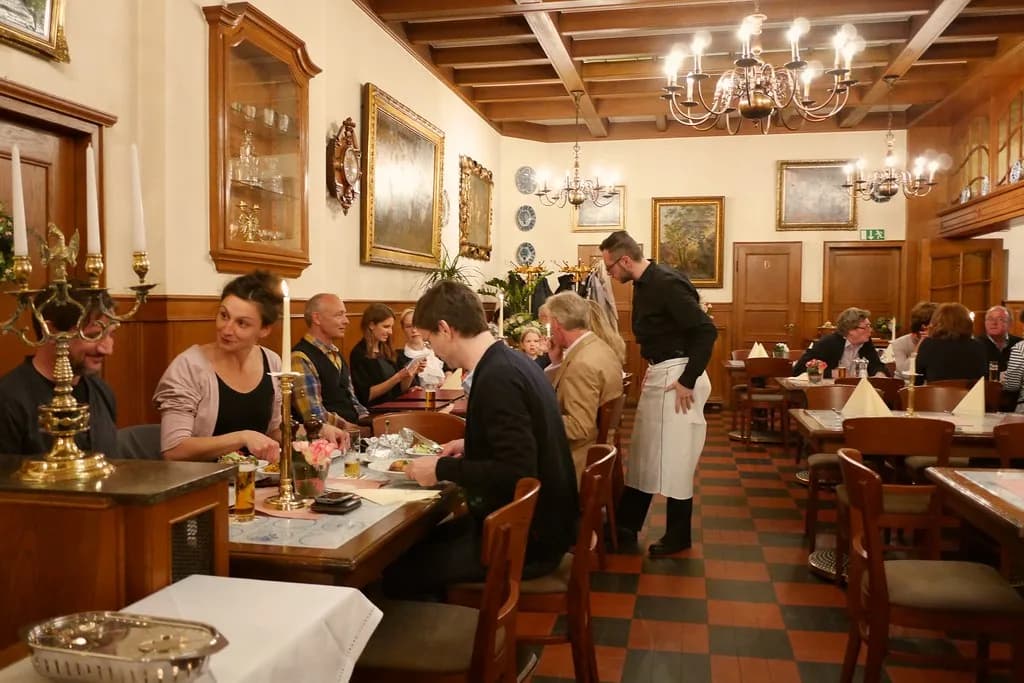
Munich's dining scene runs deeper than beer halls and pork knuckles. The city has a sophisticated, cosmopolitan food culture shaped by its proximity to northern Italy, its affluent local population, and a tradition of taking both cooking and eating seriously. Knowing where to eat — and when — makes all the difference. This guide covers the restaurants where residents actually spend their money, organized by meal type and occasion.
Whether you want a standing espresso at an Italian bar near Marienplatz, a slow lunch under the chestnut trees at the Englischer Garten, or a late dinner at a Michelin-recognized wine house, this list covers 2026's strongest options. Read our full guide to Bavarian food if you want to understand what's on the menu before you sit down.
How Munich Eating Works: Rhythm and Practicalities
Munich restaurants follow patterns that will save you time and money once you understand them. Lunch is often the main meal of the day for locals — many restaurants offer a Mittagstisch (lunch special) from 11:30 to 14:00 that delivers the same quality as dinner at roughly two-thirds of the price. Dinner reservations at better establishments fill up on weekends two to four weeks in advance, especially from May through October.
Portions are generous by European standards. Sharing a main course at a Wirtshaus is entirely normal and saves room for trying two or three dishes across the table. At beer gardens, the convention is self-service for food and drink at the counter — you carry your own tray and find a bench, often next to strangers. Tipping is expected but modest: round up the bill or add 5–10%, and tell the server the total amount you want to pay including the tip rather than leaving cash on the table.
Many traditional places are cash-preferred. Carry €20–30 in small notes, especially at market stalls and older Wirtshäuser. Knowing a few traditional food terms helps enormously when menus are printed only in Bavarian dialect — Obatzda (spiced cheese spread), Schweinsbraten (roast pork), Leberknödelsuppe (liver dumpling soup) are dishes you will encounter in almost every traditional kitchen.
Breakfast in Munich and the Weißwurst Rule
Munich has a breakfast ritual that no competitor guide seems to explain properly: the Weißwurst-Frühstück. The pale veal sausage served with a soft pretzel and sweet mustard is eaten exclusively before noon — traditionally before the bells of the Frauenkirche ring at 12:00. Order one after midday in a traditional Wirtshaus and the server may politely decline. This is not an affectation; it reflects the original reason the sausage exists: before refrigeration, Weißwurst was made fresh each morning without preservatives and had to be consumed the same day.
The correct technique is called "zuzeln" — you pierce the skin at one end and suck the sausage out rather than eating the casing. Most visitors cut them like ordinary sausages and miss half the flavour. Ask any local table and they will show you. The Café Frischhut on Prälat-Zistl-Straße near the Viktualienmarkt opens at 05:00 and draws bakers, market traders, and night-shift workers for this breakfast. It is one of the best food experiences in the city and costs under €8.
For a more polished breakfast setting, Bar Centrale on Ledererstraße 23 opens early with an Italian espresso counter. Hotel Cortiina's Grapes Weinbar serves a beautifully laid-out breakfast with Turkish eggs, artisan cheeses, and outstanding coffee — it is open to non-guests if there are seats available, usually before 09:00 on weekdays.
The Weißwurst-Frühstück tradition is strictly a morning ritual: order Weißwurst after noon in a traditional Wirtshaus and servers may politely decline. This is not nostalgia—before refrigeration, Weißwurst was made fresh each morning and had to be consumed the same day. Use the "zuzeln" technique: pierce the skin and suck the sausage out rather than eating the casing.
Viktualienmarkt: Lunch, Fresh Produce, and the Market Beer Garden
The Viktualienmarkt is Munich's central food market and operates Monday through Saturday from 08:00 to 18:00 — it is closed on Sundays. What started in Marienplatz in 1807 outgrew the square and moved to its current site, where the maypole at the centre marks the trades once practiced in the surrounding streets. The produce is seasonal and genuinely local: in spring you will find fat white asparagus that appears on every restaurant menu in May; in autumn it shifts to wild mushrooms, game, and Zwetschgen (blue plums).
The butchers along the eastern edge of the market sell every Bavarian sausage variety you need to understand: Weißwurst, Bratwurst, Leberwurst, and the thick Regensburger. Buy a Bratwurst from any of the grills and eat it standing with sweet mustard — the white roll (Semmel) is mandatory. Budget €3–5 for a sausage lunch that beats most sit-down options in the tourist corridor.
The beer garden at the centre of the market is one of the city's most atmospheric spots. You are allowed to bring your own food purchased at the market stalls as long as you order a drink. A Maß (one-litre stein) of wheat beer costs around €10. Arrive before 13:00 on weekdays to find bench space without a wait. The surrounding restaurants benefit from the same market supply chain — the neighborhood around the Viktualienmarkt consistently produces Munich's best price-to-quality ratio for lunch.
Bar Centrale: A Taste of Milano in Bavaria
Bar Centrale on Ledererstraße 23 is the place that best explains Munich's relationship with northern Italy. The city is sometimes called "Italy's northernmost city," and here you hear more Italian than German spoken at the standing espresso bar in the mornings. The front counter runs a proper La Marzocco machine and a small pastry selection. The back room — separated by heavy curtains — offers a quieter sit-down experience with a blackboard menu of pasta and daily specials.
Pasta dishes stay under €18 and espresso costs around €3. The back room takes reservations and fills up by 12:30 on weekdays. The Aperitivo hour between 17:00 and 19:00 is the most social window: a Spritz or Negroni comes with small complimentary snacks, and the bar spills onto the pavement in warm weather. It is a short walk from Marienplatz on a side street that most tourists never turn down — look for the small awning and the crowd outside.
Beer Gardens and Beer Halls: Where to Drink Like a Local
Beer gardens are the defining feature of Munich summer eating, open from late April through October. The Chinesischer Turm in the Englischer Garten is the most famous — a brass band plays from the second floor of the pagoda on Sunday afternoons, and the self-service counter serves Obatzda, white sausage, and Schweinshaxe (pork knuckle). Expect to pay €12–18 for a plate. The Seehaus beer garden near the Kleinhesseloher lake inside the same park is quieter and works well for families. Both are reached easily on foot or by rental bike from the city centre.
For beer halls indoors, the Hofbräuhaus on Platzl is the obvious landmark — worth seeing once for the atmosphere and the oompah band, but the food is mass-produced and service can feel rushed. Schneider Bräuhaus on Tal 7 offers a better meal in a more relaxed environment. It has operated since the 1870s, serves excellent Weizenbock (strong wheat beer), and maintains a welcoming atmosphere even during slow hours. Our full guide to beer gardens and beer halls in Munich covers opening hours, transport, and the etiquette of Stammtisch seating.
| Restaurant | Cuisine | Price Range | Location | Signature Dish |
|---|---|---|---|---|
| Weinhaus Neuner | German / Austrian | €35–60 pp | Altheimer Eck | Updated schnitzel, venison |
| Brenner Grill | German / Italian | €25–45 | Maximilianstraße 15 | Charcoal-grilled meat |
| Bar Buffet Kull | French Bistro | €20–35 pp | Near Viktualienmarkt | Seasonal fish & meat |
| Haxnbauer | Bavarian | €22–35 | Sparkassenstraße 6 | Roasted pork knuckle |
| Schumann's Bar | Cocktails & Bites | €15–22 | Odeonsplatz | Benchmark Negroni |
| Café Frischhut | Bavarian Breakfast | Under €8 | Prälat-Zistl-Straße | Weißwurst-Frühstück |
| Bar Centrale | Italian | €15–25 | Ledererstraße 23 | Espresso, pasta specials |
| Tantris Maison Culinaire | Fine Dining | €150–300+ | Schwabing | Tasting menu |
Best Places to Eat in Munich for Dinner
Weinhaus Neuner near Altheimer Eck is Munich's oldest wine tavern, operating since at least the 1850s in a three-hundred-year-old townhouse. Despite its history, the interior is clean and unfussy — white walls, good lighting, no museum atmosphere. The chef specialises in updated German and Austrian classics: schnitzel is always on the menu but so is venison in a cool sauce, and the wine list leans heavily on Austrian Riesling and Grüner Veltliner. Budget €35–60 per person for a full meal including wine. Book at least a week ahead for weekend evenings.
Brenner Grill on Maximilianstraße 15 occupies the former royal stables — a 300-year-old shell with stone columns, arches, and a spectacular ceiling. The kitchen runs a charcoal grill at its centre and divides into three rooms: a busy bar, the main grill room, and a calmer dining room focused on fresh pasta and Italian-German dishes. Main courses run €25–45 and it is open daily from 08:30 to 01:00, making it one of the better options for late-night eating. Reservations are strongly recommended on Friday and Saturday.
For a neighbourhood-style dinner, Bar Buffet Kull — a few streets from the Viktualienmarkt — functions like a compact French bistro: red-checked tablecloths, closely packed tables, precisely cooked seasonal fish and meat. It is reliably good and popular with the kind of local crowd that eats dinner at 19:30 rather than 20:30 like tourists. Grapes Weinbar at Hotel Cortiina transitions from a daytime café into an evening wine bar with small plates, smoked trout, beef tartare, and a tightly edited Austrian and German wine list. Both suit quiet dinners for two.
At the top end, Tantris Maison Culinaire in Schwabing has held Michelin recognition for decades. The iconic 1970s orange-and-red interior is legendary and the tasting menus start around €150 for lunch, rising to €300 or more for dinner with wine. Book two months ahead for Friday and Saturday. Take the U6 to Dietlindenstraße.
Schumann's Bar: One of the World's Top 50 Bars
Schumann's Bar at Odeonsplatz is the most distinguished cocktail venue in Munich and sits on the World's 50 Best Bars list. Charles Schumann opened it in 1982 with a philosophy of good service, best quality, and no frills — that standard holds in 2026. The bar is famously convivial: walk in without a reservation (the bar does not take them), and the four bartenders working the counter will find you a space and treat you as the only guest in the room. Cocktails cost €15–22.
The Negroni here is the benchmark — a proper three-ingredient Campari-based version using quality vermouth, stirred until cold and served with a large ice cube. They also do a roast beef and simple pasta menu if you want a light meal with your drink. The atmosphere draws media figures and well-dressed locals; the crowd is interesting but the bar never feels intimidating. Arrive between 18:00 and 20:00 to avoid the peak evening crush. It is a strictly no-standing rule — wait for a seat rather than hovering.
Haxnbauer: The Gold Standard for Roasted Pork Knuckle
Haxnbauer on Sparkassenstraße 6 is the restaurant to go to when you want the definitive Bavarian pork knuckle. The kitchen runs a large open-fire rotisserie in the window — the Schweinshaxen turn slowly on spits and are carved to order, arriving crisp-skinned with soft, fatty meat underneath. A main course costs €22–35. The restaurant is open daily from 11:30 and seats a large number of people across multiple floors, but the queue at peak hours (19:00–21:00) can stretch outside.
Arrive before 18:00 on weekdays to eat comfortably. The restaurant is a five-minute walk from Marienplatz and appears in almost every Munich things-to-do guide, so it draws a mixed crowd of tourists and regulars. The atmosphere is informal and loud — better for groups than quiet dinners. Vegetarian options are limited; this is emphatically a meat-eater's restaurant. If pork is not your preference, the roast chicken is an underrated second choice.
Dining at Munich Airport: Airbräu and SportsAlm
Munich Airport is one of the few airports in Europe where eating before a flight is genuinely worth doing. The MAC Forum between Terminals 1 and 2 houses Airbräu, the world's only airport brewery, where beer is brewed on-site according to the Bavarian Purity Law and served in an outdoor beer garden under the glazed roof. The menu covers trout with parsley potatoes, roast pork, and Bavarian standards that hold up well against anything you will find in the city centre. Main dishes cost €14–24. The brewery is open daily from 08:00 to 23:00, and you can arrange a tour with the brew master on most days except Sunday.
SportsAlm in Terminal 2 takes a different approach: gondola seating, stonework walls, and deckchairs arranged as if you were on a ski-resort terrace. The food is Alpine comfort — Kaiserschmarrn, Bratwurst, and Weißwurst — and prices sit at €15–28 per plate. It is a genuinely enjoyable hour for anyone facing a long-haul departure. Budget 90 minutes if you want a full meal and a beer before security.
For a quick coffee before entering the terminal, there is a retro aeroplane-themed coffee shop right at the airport train entrance that serves well-made espresso for €3–4. Getting from the airport to the city centre is straightforward: the S8 train from the underground station runs every 20 minutes and reaches Marienplatz in approximately 40 minutes. The S1 takes a slightly longer route. Buy tickets at the machine on the platform with cash or card.
Where to Eat Cheaply Without Sacrificing Quality
Munich has a reputation for being expensive, but the city rewards lateral thinking. The Viktualienmarkt bratwurst lunch mentioned above is the single best value meal in the centre. For a proper sit-down lunch at a lower price point, look for the Mittagstisch board outside traditional Wirtshäuser — a two-course set menu typically runs €12–16 between 11:30 and 14:00. Neighborhoods like Maxvorstadt, Schwabing, and Glockenbachviertel offer consistently better price-to-quality ratios than the streets immediately around Marienplatz.
Avoid restaurants on Marienplatz itself that display large photographs of food on A-frame boards outside — these target tourists and charge a premium for average cooking. Walk one or two streets into the Altstadt and the quality improves sharply. Our cheap eats in Munich guide covers the best budget options by neighborhood, including the Augustiner am Platzl for affordable draft beer and solid Bavarian food at better value than the Hofbräuhaus two streets away.
Dinner reservations at better establishments fill up 2–4 weeks in advance, especially May through October. For Michelin venues like Tantris, book two months ahead for Friday and Saturday evenings. Lunch (Mittagstisch 11:30–14:00) at the same restaurants costs roughly two-thirds of dinner prices and is less competitive for bookings.
Frequently Asked Questions
Do I need to tip at restaurants in Munich?
Tipping is expected but not as high as in the US. Rounding up the bill or adding 5-10% is standard. You should tell the server the total amount you wish to pay including the tip.
What is the best time to eat at a beer garden?
Beer gardens are best enjoyed on sunny afternoons from May to September. Arriving before 5:00 PM helps you secure a table before the after-work crowd arrives. Most gardens serve food until 10:00 PM.
Is tap water free in Munich restaurants?
Free tap water is not standard in German restaurants. Most locals order bottled mineral water, which can be still or sparkling. Expect to pay for water just as you would for a soft drink.
Munich's dining scene in 2026 balances centuries-old Bavarian tradition with a cosmopolitan confidence built on Italian influence, excellent wine culture, and serious craft beer. Start with the market, eat a Weißwurst properly before noon, and resist the pull of the obvious tourist halls. The best meals in this city are almost always one street away from the most famous address.
You might also like


Continue reading
More guides you'll find useful