12 Best Cheap Eats in Munich (2026)
Discover the best cheap eats in Munich for 2026. From €5 falafel to student-priced sushi, eat like a local without breaking your travel budget.
On this page
12 Best Cheap Eats in Munich (2026)
Munich's reputation for being expensive applies mainly to hotels and beer halls, not everyday food. Locals here eat well on tight budgets — they just know which counters to queue at, which neighborhoods to walk through at lunchtime, and when the best deals appear on the board. Bavarian cuisine has deep roots in street food culture and affordable local eating. This guide pulls those habits together so you can eat like a resident from day one.
Every pick below has been checked for 2026 pricing. The range you should plan around is €3.50 for a market snack up to €12 for a sit-down plate with a drink. Stay in that band and you will eat very well across a full day without planning around it obsessively.
Bavarian Street Food and Viktualienmarkt Stalls
The Viktualienmarkt is Munich's open-air food market, open Monday through Saturday from 08:00 to 20:00 in 2026. Most visitors walk through it looking at cheese wheels and honey jars, completely missing the hot food counters tucked between the stalls. That is a mistake worth correcting on your first morning.
Schlemmermeyer (Viktualienmarkt Abteilung 3) is the counter to find. Order a Leberkassemmel — a thick slab of warm Bavarian meatloaf inside a crusty bread roll — and ask for sweet mustard on the side. It costs €3.80 to €5 and takes about ninety seconds to hand over. You eat standing at the stall or perch on one of the wooden benches nearby. This is how Munich office workers eat lunch on a Tuesday.
For soup, the Münchner Suppenküche is directly beside the Bäckerliesl bread stall in the market. Chicken noodle soup runs €3.50 and a bowl of goulash or curry sits between €6.90 and €8. The kitchen closes around 18:00 and is genuinely closed on Sundays. If you want a sweet finish, Chocolaterie Beluga (Viktualienmarkt 6) does a proper Bavarian hot chocolate — a chocolate block on a stick melted into your own cup of hot milk — for around €5, which is one of the better value experiences in the city center.
One practical note: many stalls prefer cash. Bring a small amount of Euros before arriving, as the ATMs immediately around the market charge fees.
Vinzenzmurr Leberkassemmel is one of Munich's best budget discoveries — you'll find it across 30+ locations (Marienplatz, Hauptbahnhof, Schwabing, Maxvorstadt), open daily for €2.80–€3.20. It's €1+ cheaper than the Viktualienmarkt stalls and available even on Sundays when the market closes.
Vinzenzmurr: The Chain That Fills the Sunday Gap
Most visitors burn through their Viktualienmarkt knowledge by Saturday, then hit a wall on Sunday when the stalls close. The answer is Vinzenzmurr, a Bavarian butcher chain with around thirty locations across Munich, most of which are open seven days a week including Sunday mornings. You will spot the red and white sign near Marienplatz, at the Hauptbahnhof, and scattered through residential neighborhoods like Schwabing and Maxvorstadt.
The counter system works like a deli: you order at the glass case, pay, and eat at the small stand-up counter or take your order outside. A Leberkassemmel here costs €2.80 to €3.20, slightly cheaper than the Viktualienmarkt equivalent because the locations are not tourist-facing in the same way. The Weißwurst (white veal sausage) with a pretzel and sweet mustard runs €4.50 to €6 and is one of the most authentic breakfasts you can eat in the city. By convention, Weißwurst should be eaten before noon — Vinzenzmurr tends to sell out of them by 11:30 at most branches.
This is the single tip most guides skip entirely. Every other option in this article requires a walk to a specific neighborhood. Vinzenzmurr is everywhere, always open, and always under €5 for a filling snack.
Beer Gardens and the BYO-Food Rule
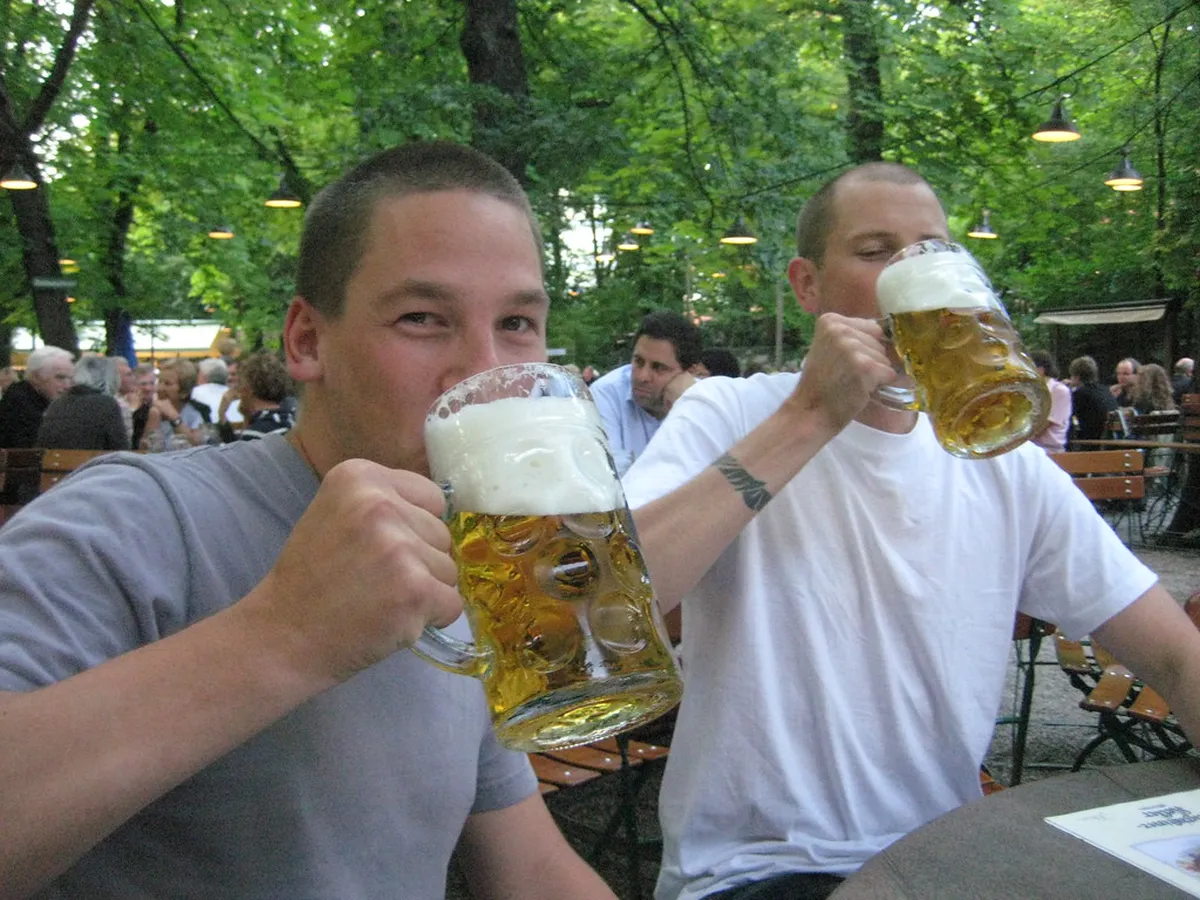
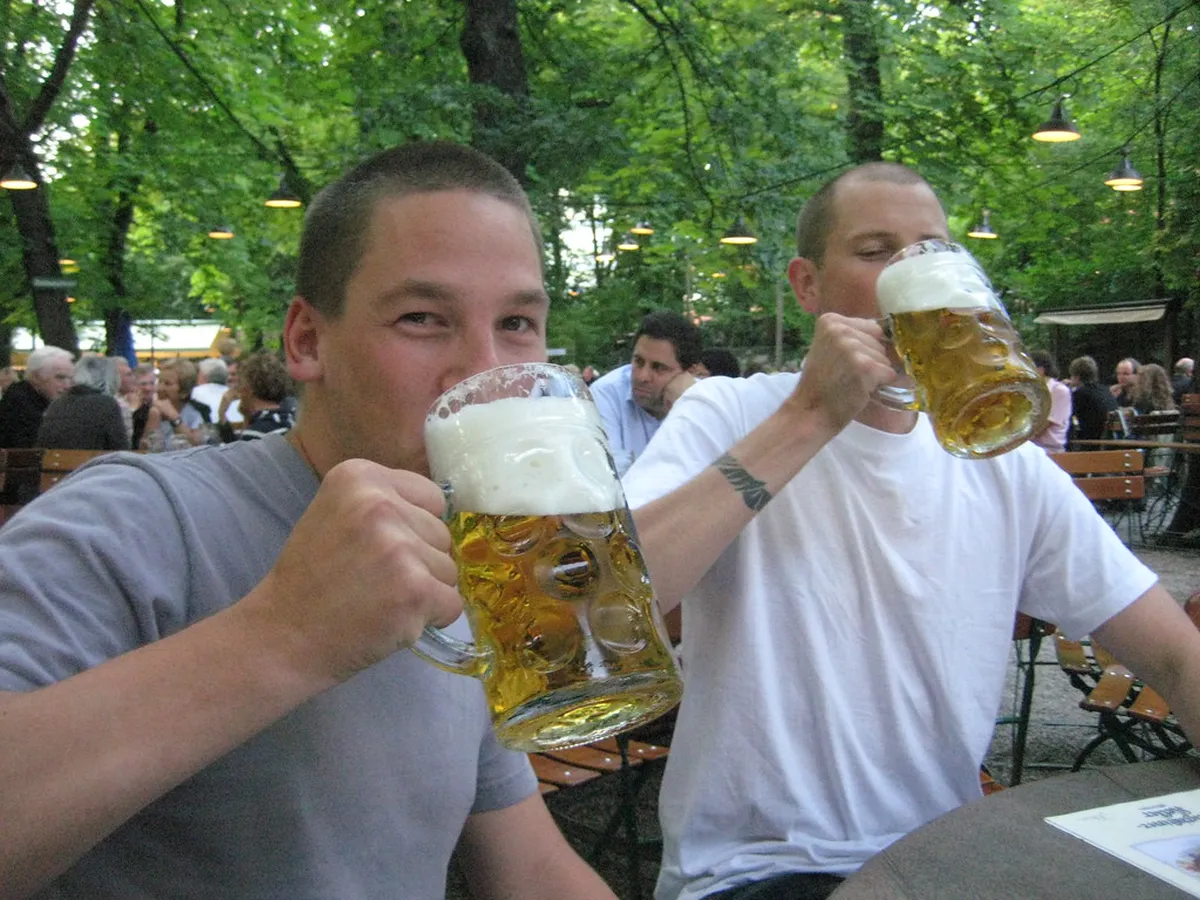
Munich's beer garden culture has a built-in budget hack that most travelers discover only by accident. Every traditional beer garden in the city allows you to bring your own food from outside, as long as you buy your drinks from the venue. The rule applies at the Viktualienmarkt beer garden, the Chinese Tower in the English Garden, and Hofbräukeller at Wiener Platz. You sit at the long wooden tables without tablecloths — those are reserved for outside food — and everyone around you understands exactly what you are doing.
The practical move is to pick up food from Schlemmermeyer, a bakery, or a grocery store first, then carry it into the beer garden. A half-liter of beer starts at around €5 at most gardens. Add a €4 Leberkassemmel from the market and a pretzel for €2, and you have a proper Bavarian lunch in a classic setting for roughly €11. Compare that to ordering food from the beer garden kitchen where a plate of roast pork runs €16 to €22.
The Isar river bank is worth knowing about separately. In summer, Munich residents barbecue directly along the Flaucher and Gärtnerplatz stretches of the Isar almost every evening. There is no cost involved — people bring their own food and drink. For a solo traveler or a small group, joining this scene on a warm evening is one of the more memorable and genuinely free Munich experiences available.
Munich's BYO-food beer garden rule is unique to Bavaria. Bring your own food from a bakery or market, buy your drinks (€5 per half-liter), and sit at the wooden benches without tablecloths. A €4 Leberkassemmel + €2 pretzel + €5 beer = €11 lunch in an authentic Bavarian setting — compared to €16–€22 if you order from the beer garden kitchen.
The Maxvorstadt Student Circuit
Maxvorstadt is where Ludwig Maximilian University and the Technical University sit, which means the neighborhood is engineered around feeding people on a student budget. The streets between Theresienstraße and Schellingstraße are lined with canteens, bakeries, and small restaurants that have survived on repeat local business for decades. Prices drop noticeably the moment you cross from the tourist center into this district.
Make Falafel Not War, near the university, is the most consistent recommendation among students. A falafel wrap costs €6 to €9 and the herbs inside are noticeably fresher than comparable wraps elsewhere in the city. Hours run roughly 11:30 to 21:00 daily. Zum Koreaner (check Google Maps for current address as they have relocated once) is the go-to for Korean food — spicy pork with kimchi and rice between €8 and €11. Both places are cash-preferred and tend to fill up from 12:30 to 14:00.
The university mensa (student canteen) on Leopoldstraße is technically open to non-students, though you pay a slightly higher non-student rate. A hot lunch plate with sides sits at roughly €5 to €8 for visitors. It is not glamorous — think a large cafeteria — but the portions are generous and the food rotates daily. Der Verrückte Eismacher on Amalienstraße 77 is the neighborhood's ice cream landmark. The crazy flavors like Beer and Sauerkraut are real and worth sampling; standard flavors cost about €2.50 per scoop. It is open from 11:00 through the warmer months.
For a full Bavarian food guide covering what to eat in Munich, including the regional dishes that go beyond street food, that article explains the context behind each dish and where the quality genuinely differs.
International Options Under €12
Munich's international food scene punches above its weight in the €8 to €12 range. The best options are concentrated in a few districts rather than spread evenly across the city.
Gyoza Bar (Augustenstraße 47) is the standout for Japanese food. Their gyozas are handmade and a combo plate of twelve runs about €12 to €14. They also serve complimentary mango pudding on the house, which makes it feel like better value than the price suggests. The lunch window (12:00 to 15:00) is the quietest time to visit. LeDu Dim Sum Bar (Klenzestraße 62) does a westernized take on Chinese cuisine with ten dumplings at €11.90 — not traditional dim sum by Hong Kong standards, but consistently fresh and well-made for Munich.
For tacos, Condesa Gourmet Tacos near Münchner Freiheit (Münchner Freiheit 6, Schwabing) remains one of the better budget finds in the city. Individual tacos start at €3.80 and burritos from €9.90. L'Osteria has multiple locations across Munich and serves pizzas large enough for two people at €11 to €15 per pizza — their half-half option lets you split toppings with no extra charge. Chat Junction handles Indian street food with samosas and chana masala for well under €10; the mango lassi here is a consistent local recommendation.
If you want to compare these against the full restaurant tier — including when it is worth spending a bit more — the best restaurants in Munich guide covers mid-range and splurge options by neighborhood.
| Where | What | Price (2026) |
|---|---|---|
| Schlemmermeyer (Viktualienmarkt) | Leberkassemmel + mustard | €3.80–€5 |
| Vinzenzmurr (30+ locations) | Weißwurst + pretzel + mustard | €4.50–€6 |
| Münchner Suppenküche (Viktualienmarkt) | Goulash or curry soup | €6.90–€8 |
| Make Falafel Not War (Maxvorstadt) | Falafel wrap with fresh herbs | €6–€9 |
| Gyoza Bar | 12 handmade gyozas + mango pudding | €12–€14 |
| L'Osteria | Large 2-person pizza (half-half) | €11–€15 |
| University mensa (non-student rate) | Hot lunch plate with sides | €5–€8 |
| TooGoodToGo bakery pickup | Bread, rolls, pastries (magic bag) | €3.50–€5 |
TooGoodToGo and Mittagstisch: The Two Systems Locals Use
Munich has two budget-eating systems that residents use daily but that most travel guides mention only in passing. Understanding both will cut your food spending noticeably over a multi-day stay.
TooGoodToGo is an app where restaurants and bakeries list their end-of-day surplus food at prices under €5. In Munich, the app is particularly useful at bakeries — Rischart, Hofpfisterei, and dozens of independent bread shops participate. You reserve a "magic bag" in the app, pay in advance, and collect at a set time (usually 18:00 to 20:00 for bakeries, 21:00 to 22:00 for restaurants). What you receive varies by day, but bakeries in Munich tend to be generous: expect bread, rolls, pastries, and occasionally sandwiches for €3.50 to €5. The app is free to download and works immediately without a local phone number.
Mittagstisch is the German lunch-menu tradition. Between 11:30 and 14:30, most Munich restaurants that are otherwise expensive in the evening offer a set lunch — typically a main course, sometimes a soup or salad, and a drink — at a fixed price between €9 and €14. The same schnitzel that costs €22 at dinner appears on the Mittagstisch board for €12. Look for the chalkboard sign outside; restaurants serving a Mittagstisch almost always advertise it at the door. This works particularly well at Steinheil 16 (Steinheilstraße 16, near the Technical University), where the giant schnitzel on the evening menu is reduced at lunch and is genuinely large enough to split.
What to Skip: Overrated Munich Food Traps
Avoid buying pre-packaged sandwiches or snacks directly inside the main train station or at Marienplatz if you can help it. These items are often marked up by 50% compared to bakeries just two blocks away in less central streets. The quality is also notably lower, as these shops rely on high foot traffic rather than repeat local customers.
Be wary of restaurants that display large, laminated photos of their food on the sidewalk. These tourist menus often indicate higher prices for mediocre versions of Bavarian food. Instead, look for handwritten chalkboards in German, which usually signal a kitchen that uses fresh, seasonal ingredients. If the menu outside the door is only in English with photographs, walk past it.
How to Plan a Smooth Munich Food Day
The most efficient cheap-eating day in Munich follows a simple sequence. Start at a Vinzenzmurr branch for a Weißwurst breakfast before 11:30. Move to the Viktualienmarkt for a mid-morning Leberkassemmel or soup. Hit a Mittagstisch restaurant in Maxvorstadt for the main midday meal — you will spend €10 to €13 and get the best value of the day. Use the beer garden BYO rule in the afternoon if the weather holds. Finish at a TooGoodToGo bakery pickup in the evening and you have covered five food stops for under €30 total.
Munich's tap water is some of the cleanest in Europe, though unlike in the UK or US, German restaurants rarely serve it for free. Carry a reusable bottle and fill it at public fountains, especially around the English Garden. This saves €2 to €4 per meal that would otherwise go on a beverage. Locals typically order a Schorle (fruit juice mixed with sparkling water) when they do want a drink — it costs less than a soft drink and is far more refreshing.
For getting between these neighborhoods without spending on taxis, the Munich public transport guide covers day tickets and the most useful U-Bahn lines for a food-focused itinerary. The U3 and U6 lines connect the city center to Maxvorstadt in under ten minutes.
Pssst… Looking for more Munich travel tips?
Knowing how many days in Munich you need will help you budget your food expenses across the stay. Most travelers find three to four days is enough to sample the major food scenes — Viktualienmarkt, Maxvorstadt, and at least one proper beer garden — without feeling rushed. For those on a very tight budget, the list of free things to do pairs well with the cheap eat suggestions above, since most of the free sights are within walking distance of the food spots covered here.
Check the Munich's weather month by month before your trip to plan for outdoor dining. The beer garden season runs roughly April through October, with the prime months being June through August when the Chinese Tower garden in the English Garden fills up from midday onward. Outside that window, the Isar barbecue culture and indoor Mittagstisch spots remain the best value regardless of weather. The best beer gardens in Munich guide covers which gardens stay open year-round and which ones close in winter.
For a broader look at what is worth your time beyond food, the our complete Munich guide pillar covers the full range of sights, neighborhoods, and experiences organized by budget and interest.
Frequently Asked Questions
How much does a cheap meal cost in Munich?
A budget-friendly meal in Munich typically costs between €7 and €12 per person. You can find snacks like Leberkassemmel for under €5, while sit-down lunch specials usually hover around the €10 mark. Always check for student discounts if you have a valid ID.
Can I bring my own food to Munich beer gardens?
Yes, it is a long-standing Bavarian tradition that you can bring your own picnic to a beer garden. You must sit at the wooden tables without tablecloths and purchase your drinks from the venue. This is a great way to enjoy a beer garden on a budget.
Is tap water free in Munich restaurants?
Unlike in the US, tap water is rarely served for free in German restaurants and can sometimes be as expensive as soda. It is better to drink your water before arriving or carry a bottle. Most locals will order a 'Schorle' (juice with sparkling water) as a cheaper drink option.
Eating your way through Munich does not have to cost a fortune if you know where to look. By mixing traditional market snacks with international student favorites, you can experience the city's culinary heart on a modest budget. I hope this guide helps you find your new favorite spot in the Bavarian capital.
Remember to keep some cash on hand and look for those 'Mittagstisch' signs for the best value. Whether you are here for a a Munich weekend plan or a longer stay, these cheap eats will keep you fueled for all your adventures. Safe travels and Guten Appetit!
You might also like


Continue reading
More guides you'll find useful