10 Must-Try Bavarian Food Dishes in Munich (2026)
Plan your Bavarian food adventure in Munich with top dish picks, dining tips, and where to find authentic flavors for a smoother trip.
On this page
10 Essential Bavarian Food Experiences in Munich (2026)
Bavarian food is one of the strongest reasons to visit Munich beyond the obvious sights. The cuisine here runs deep — slow-roasted pork, hand-pressed dumplings, lye-bathed pretzels, and centuries-old sausage traditions that locals guard with genuine pride. This guide covers every dish worth ordering, how to find the real version of each, and the customs that separate confident diners from confused tourists.
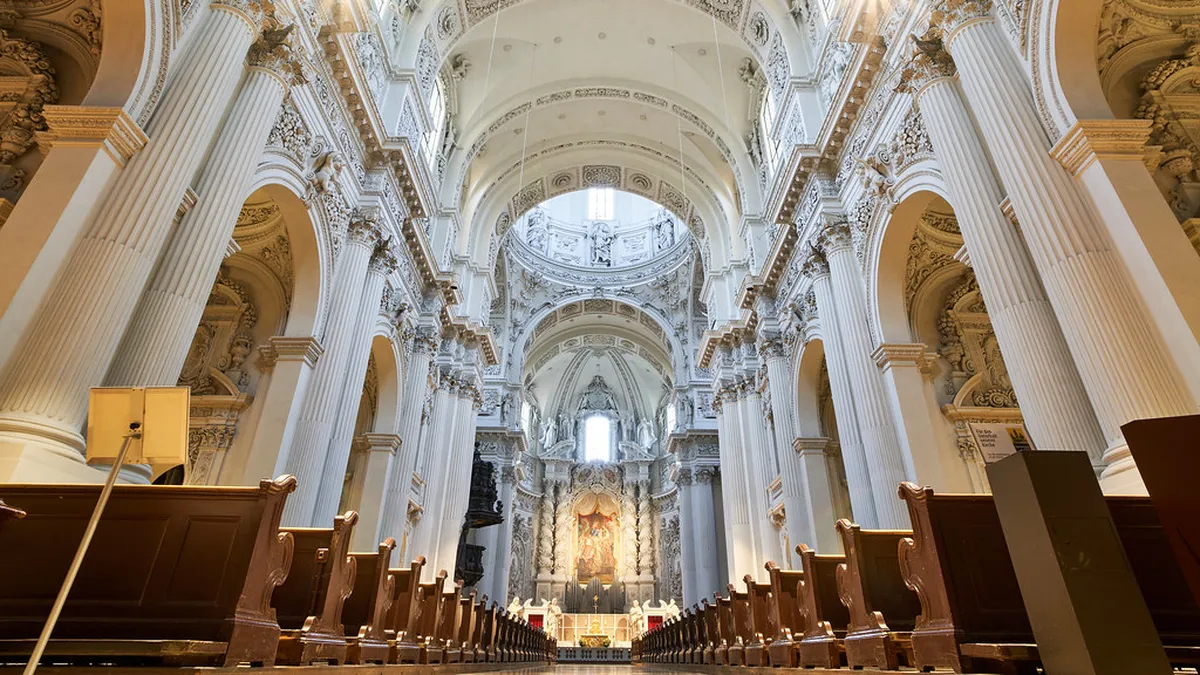
Munich's kitchens are still rooted in the same agricultural logic they've always followed: pork from the region, dairy from alpine farms, freshwater fish from nearby lakes, and wild game from the surrounding forests. Whether you're eating in a beer hall that seats 5,000 or a family-run Gasthaus with ten tables, the same dishes appear and the same rules apply.
Weißwurst: Bavaria's Breakfast Sausage
Weißwurst is the dish that defines Bavarian mornings. These pale, lightly spiced sausages are made from veal and pork, never smoked, and contain no nitrates — which means they're genuinely perishable. Tradition holds that they must be eaten before the church bells toll noon, and in conservative establishments that rule is still enforced. Most Munich restaurants now serve them all day, but ordering them before 11:00 signals that you know what you're doing.
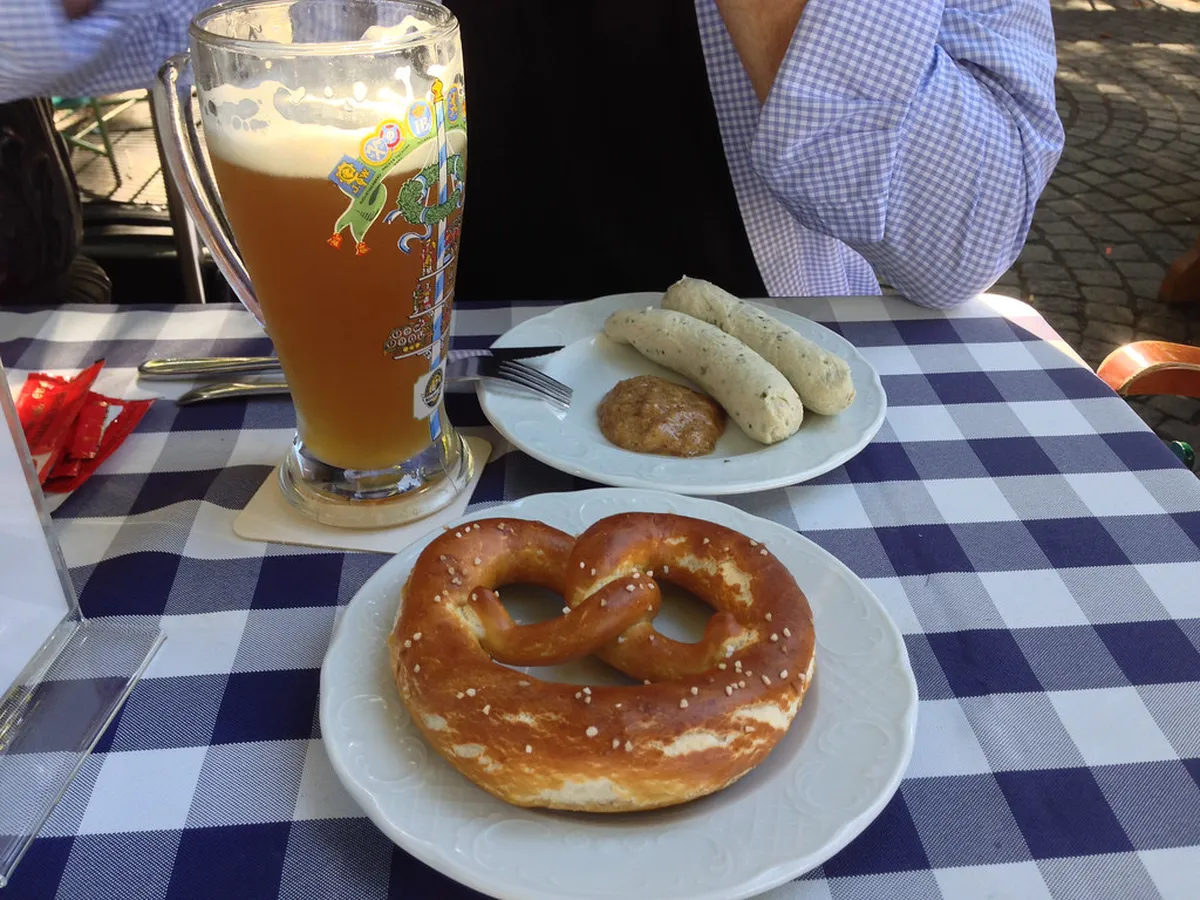
They arrive two per serving, in a ceramic pot of warm water to keep them from cooling too fast, alongside a small pot of Süßer Senf (sweet mustard) and a Brezn. There are two ways to eat them: locals often use the "zuzeln" method, pulling the sausage from its casing with their lips directly from one end. If that sounds challenging, simply cut the sausage lengthwise and peel back the skin, then dip slices in mustard. Either method is acceptable — just don't eat the casing. Expect to pay €4–€6 for a pair. A Weißbier alongside is traditional even at 09:00 — this is the original Frühstücksbier, and it's socially unremarkable at any Munich beer hall.
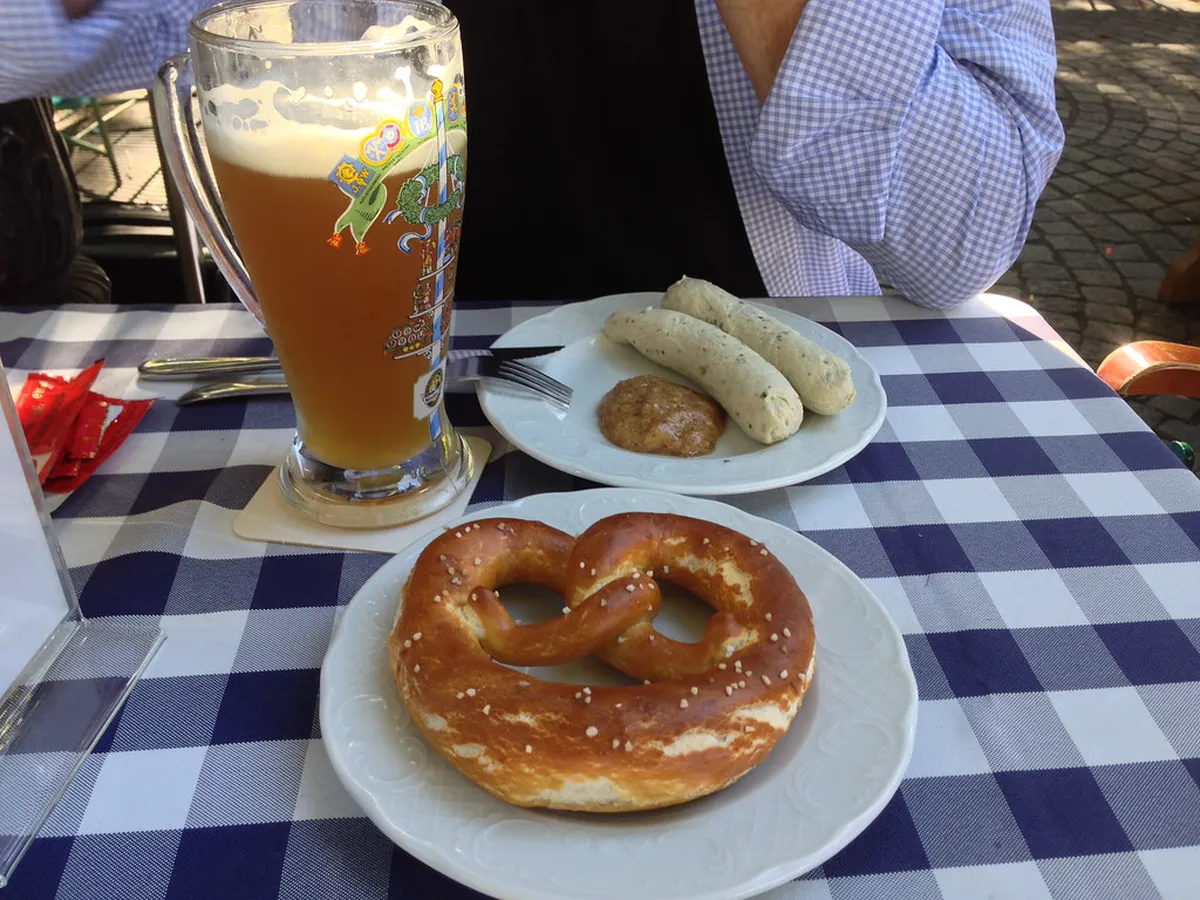
Weißwurst must be eaten before noon according to Bavarian tradition — the sausages contain no preservatives and are genuinely perishable. Ordering them after 11:00 AM is the local rule, and many traditional establishments will politely refuse orders later in the day. This is not a tourist gimmick; it's a genuine cultural practice rooted in food safety and centuries of culinary tradition.
Brezn: Why the Bavarian Pretzel Is Different
A Brezn from a Munich bakery bears almost no resemblance to the soft pretzels sold elsewhere in Europe. The difference comes from the lye bath: before baking, the dough is dipped briefly in a sodium hydroxide solution, which creates the distinctively dark mahogany crust, the slight chewiness in the thick sections, and the brittle, cracker-like thinness at the crossed arms. Skipping this step produces a bread roll. The lye bath produces a Brezn.
A good one costs €1.50–€2.50 at a bakery and slightly more at a beer garden. Look for uneven colouring — darker where the dough is thicker, lighter at the thin crossings — and coarse rock salt that actually sticks to the crust. Many beer gardens sell half-metre pretzels designed for sharing at €4–€6. The classic pairing is Obatzda, either ordered separately or as part of a Brotzeitplatte. Brezn also come with butter splits inside at many cafes, which is the afternoon snack version.
Schweinshaxe and Schweinebraten: The Pork Question
These two dishes are often confused, but they serve different occasions. Schweinshaxe is the pork knuckle — the lower leg, roasted for hours until the skin is lacquered and crackles audibly. It is a substantial commitment: a single portion at Hofbräuhaus or Augustiner Keller weighs around 1 kg, costs €18–€28, and comes with either Semmelknödel (bread dumpling) or Kartoffelknödel (potato dumpling) and Sauerkraut. The side choice matters more than most menus let on. Semmelknödel has a bread-like density that soaks up the rich pork juices cleanly. Kartoffelknödel is lighter and bouncier and holds the gravy differently. Locals generally prefer Semmelknödel with Haxe.
Schweinebraten (or Krustenbraten when the crackling is particularly pronounced) is roast pork shoulder or back, slow-braised in a sauce of dark beer and aromatics. It is less theatrical than Haxe but often more flavourful — the braising liquid reduces into something with genuine depth. A plate runs €16–€25. Schweinebraten is the Sunday dish; you'll find it at virtually every traditional Wirtshaus and is particularly good in smaller neighbourhood restaurants that make it from scratch rather than holding it warm all day. Both dishes appear on the where to eat in Munich lists for good reason.
When ordering Schweinshaxe, the side dumpling choice genuinely affects how you experience the dish. Semmelknödel, made from stale bread and traditionally bound with liver, has a dense crumb structure that absorbs the pork fat and rich jus without falling apart. Kartoffelknödel, made from potato and starch, is lighter and more cloud-like but handles the gravy differently. Locals order Semmelknödel with Haxe because the texture contrast between crispy skin and the bread's ability to soak up juices is part of the dish's logic. If you have a preference for lighter sides, say "mit Kartoffelknödel"; for the authentic pairing, ask for "mit Semmelknödel".
Hendl: Spit-Roasted Chicken
Hendl is the Bavarian word for chicken, and the roasted version eaten in Munich's beer halls is a different animal from standard roast chicken. Between 500,000 and 800,000 Hendl are consumed at Oktoberfest alone each year — more than ten times the number of Schweinshaxe. The best versions are cooked rotisserie-style on a spit, which bastes the bird continuously and produces genuinely crispy skin over moist, seasoned meat.
A half Hendl costs €12–€18. It comes with either Bratkartoffeln (pan-fried potatoes) or Kartoffelsalat (potato salad) and Sauerkraut. At beer gardens and beer halls in Munich, Hendl is often the better value option compared to Schweinshaxe and more appropriate if you're eating alone — a half is comfortably one portion. Order it fresh off the rotisserie when possible; Hendl that has been sitting under a heat lamp loses most of what makes it worthwhile.
Leberkas: The Everyday Bavarian Snack
Leberkas — despite the name meaning "liver cheese" — contains neither liver nor cheese in the modern version. It is a finely ground, baked meat preparation similar to bologna, sold warm by the slice at virtually every Metzgerei (butcher's shop) in Munich from around 09:00 until it sells out. The classic format is the Leberkassemmel: a fresh roll (Semmel) split and filled with a thick slice of Leberkas, sometimes topped with sweet mustard. It costs €3–€5 and is the standard quick lunch for Munich workers.
A sit-down plate with Leberkas, a fried egg (Spiegelei), and potato salad runs €9–€14 at a traditional Wirtshaus. There are also specialty variations — Käseleberkas has pockets of melted cheese inside the loaf, and some butchers sell a version with jalapeños. If you're looking for fast, filling, genuinely local food at the Viktualienmarkt, a Leberkassemmel from a butcher stall is the correct choice. Check out options at the budget eats in Munich guide for specific stall recommendations.
| Dish | What It Is | Where to Try |
|---|---|---|
| Weißwurst | Pale veal and pork sausage, served in warm water with sweet mustard and pretzel; must be eaten before noon | Any Munich beer hall or traditional Gasthaus; €4–€6 |
| Brezn | Bavarian pretzel with lye-bath crust, dark mahogany color, coarse salt; eaten fresh from bakeries | Munich bakeries and beer gardens; €1.50–€2.50 |
| Schweinshaxe | Roasted pork knuckle with crackling skin, served with dumplings (Semmel or Kartoffel), sauerkraut, and gravy | Beer halls and traditional restaurants; €18–€28 |
| Schweinebraten | Slow-braised pork shoulder or back in dark beer sauce; Sunday dinner staple in Bavaria | Traditional Wirtshäuser; €16–€25 |
| Hendl | Spit-roasted chicken with crispy skin; served as half-portions with potatoes and sauerkraut | Beer gardens and beer halls; €12–€18 (half portion) |
| Leberkas | Finely ground baked meat (like bologna); served as a Leberkassemmel (in a roll) or as a plate with egg and potato salad | Metzgerei (butcher shops) and market stalls; €3–€5 (sandwich) |
| Obatzda | Soft-cheese spread made from ripe Camembert mixed with butter, beer, paprika, onions, and chives | Beer gardens; €6–€9 (solo) or €12–€18 (on Brotzeitplatte) |
| Käsespätzle | Egg noodle dumplings layered with aged mountain cheese and topped with crispy fried onions (Röstzwiebeln) | Traditional Bavarian restaurants; €10–€16 |
Obatzda: The Beer Garden Cheese
Obatzda was created roughly a century ago as a way for innkeepers to use up aging Camembert and Brie rather than discard it. Ripe soft cheese is mixed with softened butter, a splash of beer, paprika, chopped onions, chives, and sometimes garlic or caraway. The result is a pungent, creamy orange spread that pairs directly with Brezn — this combination is arguably the defining beer garden snack. A portion as part of a Brotzeitplatte runs €12–€18; as a standalone appetiser it's €6–€9.
Quality varies considerably. The best Obatzda has real funk from well-aged cheese, noticeable paprika warmth, and enough butter to spread easily without being oily. Poor versions use under-ripe cheese and taste primarily of onion. Beer gardens that make it in-house typically label it as hausgemacht. The muenchen.de food guide specifically calls Obatzda the dish that "should not be missing from any visit to a beer garden" — that's not hyperbole if you're eating with a Maß of Weizen on a sunny afternoon.
Brotzeitplatte: The Cold Snack Board
Brotzeit — literally "bread time" — is a Bavarian institution. Rather than a hot cooked meal, a Brotzeitplatte is a composed board of cold items: several types of sausage and sliced ham, two or three cheeses, sliced Radi (white radish), pickles, and sometimes a small pot of Obatzda. It is Bavaria's answer to charcuterie, but cheaper, more filling, and served at any hour in any Gasthaus. Prices run €12–€18 depending on size.
For visitors, the Brotzeitplatte is often the smartest order at a beer garden: it covers multiple Bavarian foods in a single plate, pairs well with both beer and non-alcoholic options, and doesn't require a full appetite. The Presssack — a pressed meat product made with offal and pig's blood that occasionally appears on the board — is an acquired taste and can simply be set aside. Everything else on a standard Brotzeitplatte is approachable for first-timers. It is also the format that showcases local cheese most prominently, particularly mild Bergkäse from alpine dairies.
Käsespätzle: The Reliable Vegetarian Option
Käsespätzle — called Kasspatzn in Bavarian dialect — is made by pressing an egg-rich batter through a slotted sieve or Spätzlehobel directly into boiling water, producing irregular, bouncy noodle-dumplings. These are layered with aged mountain cheese (typically Bergkäse or Emmentaler), then topped with a generous heap of Röstzwiebeln (crispy fried onions). The onions are load-bearing: without them, the dish is just carbs and melted cheese. With them, there is textural contrast and a savoury depth that compensates for the absence of meat.
A portion costs €10–€16 and is genuinely filling. Käsespätzle is one of the few reliable vegetarian main courses at traditional Bavarian restaurants — menus here are overwhelmingly pork-focused. It also represents Bavaria's best claim to a comfort-food dish that requires real technique to execute well. Ask for Käsespätzle mit Röstzwiebeln to make sure the onions are included; some versions skip them or serve them on the side.
Wurstsalat and Steckerlfisch: Beer Garden Plates
Wurstsalat (sausage salad) is made from thinly sliced Lyoner or Regensburger sausage dressed with vinegar, oil, and raw onions. The Swiss variant adds sliced cheese. It is lighter than most Bavarian dishes and serves as a useful counterpoint after a Schweinshaxe or to accompany a second Maß. Expect to pay €9–€14. The dish is a genuine beer garden menu staple and not a tourist invention — locals order it with the same regularity as Obatzda.
Steckerlfisch is the dish that surprises most visitors who assume Bavarian food means only pork. It is whole fish — trout, mackerel, char, or whitefish caught from Bavarian lakes and rivers — skewered on a stick, marinated, and grilled over an open fire. Many larger beer gardens have a dedicated Steckerlfisch stand. The fish arrives on the stick, skin charred and fragrant, requiring hands and patience to work through. It costs €8–€14 depending on size. Steckerlfisch is particularly popular at the Oktoberfest and at beer gardens near the Isar or Starnberger See, where proximity to local fish makes the sourcing especially direct.
Sweet Desserts: Kaiserschmarrn and Beyond
Bavarian desserts are substantial — they follow meals that are already generous, and they don't hold back. Kaiserschmarrn is the one most visitors encounter: a thick, shredded pancake with raisins, dusted with powdered sugar and served with Apfelmus (applesauce). It originated in Austria but appears on virtually every Bavarian menu. A portion costs €8–€14 and is sized for sharing, though locals rarely do.
Dampfnudeln are steamed yeast dumplings served with vanilla sauce, with a slightly crispy base where they've touched the pan — the texture contrast between the caramelised bottom and the pillowy top is the point of the dish. Germknödel are similar but filled with plum jam and often served with poppy seed butter. For something lighter, Bayerische Creme (Bavarian cream) — a set cream made with egg yolk, whipped cream, and gelatin — is the original of what the rest of the world calls panna cotta. For cakes, the Prinzregententorte, a layered sponge and chocolate buttercream torte available year-round at Munich Konditoreien, is the local showpiece. Konditorei Reber near the Viktualienmarkt is a reliable stop for a slice.
Bavarian Dining Customs Worth Knowing
The most important custom is the eye contact rule when toasting. In Bavaria, you make firm eye contact with every person at the table while clinking steins before drinking. Failing to do so supposedly invites seven years of bad luck. Locals genuinely observe this — it is not merely a tourist performance. Say "Prost!" and meet every gaze before your first sip.
Meal timing differs from the rest of Germany. Lunch (Mittagessen) runs 12:00–14:00 and is traditionally the main hot meal. Many traditional kitchens close between 14:30 and 17:30 before reopening for dinner. Dinner starts around 18:00–19:00, and Abendbrot (evening bread) — cold cuts, cheese, Brezn — is a legitimate substitute for a hot dinner in many Bavarian households. Ordering just a Brotzeitplatte at 19:00 is not eccentric; it's common. Tipping is 5–10%, rounded up to a round number — tell the server the total you want to pay rather than leaving money on the table.
A note on the Munich dining scene in 2026: the city's traditional Wirtshäuser have held their ground against the expansion of international restaurants. In neighbourhoods like Haidhausen, Schwabing, and Au, small family-run Gasthäuser still serve the same menus they've had for decades. These are generally more affordable and more authentic than the large tourist-facing beer halls near Marienplatz, though those halls have their own appeal for the atmosphere alone.
Frequently Asked Questions
Is Bavaria, Germany a good food destination?
Yes, Bavaria is an excellent food destination, particularly for those who enjoy hearty, traditional German cuisine. Munich, as its capital, offers a wide array of authentic dishes like Schweinshaxe, Weißwurst, and pretzels. The region's culinary scene is deeply rooted in history and local produce.
What dish is Bavaria most famous for?
Bavaria is arguably most famous for its Schweinshaxe, a crispy pork knuckle that is a staple in beer halls and traditional restaurants. Another iconic dish is Weißwurst, a white sausage traditionally eaten before noon. These two dishes often define Bavarian culinary identity.
What time does dinner typically start in Bavaria?
Dinner in Bavaria generally starts earlier than in some other European countries, typically around 6 PM. Many traditional restaurants serve dinner until 9 PM or 10 PM. It's common for kitchens to close between lunch and dinner service, so plan your evening meals accordingly.
Are there any food customs I should know about?
Yes, one key custom is eating Weißwurst only before noon, often with sweet mustard and a pretzel. Tipping is customary, usually rounding up or adding 5-10% for good service. Also, ordering a 'Maß' (liter) of beer is very common in beer gardens and halls.
Which Bavarian food options fit first-time visitors?
First-time visitors should definitely try Schweinshaxe, Weißwurst, and a classic Brez'n. For a comforting meal, Käsespätzle or Schweinebraten are excellent choices. Don't forget to sample Obatzda with your pretzel for a complete experience.
Bavarian food in Munich rewards visitors who come with curiosity rather than caution. Order the Weißwurst before noon, ask for hausgemachte Obatzda at the beer garden, try the Steckerlfisch if a stand is open. The dishes here have accumulated flavour and meaning over centuries, and the best way to understand Munich is to eat your way through them.
Use the beer gardens and beer halls guide to choose the right venue for each meal, and the cheap eats guide if budget is a constraint — most of these dishes cost under €15 and the ones served at market stalls and butcher counters are often the most authentic. Guten Appetit.
You might also like

Continue reading
More guides you'll find useful