12 Unusual Things to Do in Munich (2026 Travel Guide)
Discover unusual things to do in Munich with our 2026 guide. From river surfing to quirky museums, explore the city's best-hidden gems and local secrets.
On this page
12 Unusual Things to Do in Munich
Most visitors to Munich never leave the orbit of the Glockenspiel. The main square is beautiful, but the city hides a rebellious, quirky soul beneath its polished surface. These picks focus on specific named spots that locals actually use — the places that reward curiosity over convenience. This guide was refreshed for 2026 to ensure all pricing and access rules are current.
Finding unusual things to do in Munich means looking past the lederhosen and the tourist bus circuit. You will find world-class surfing in a public park, a pool that doubles as an Art Nouveau palace, and a museum dedicated entirely to the history of puppetry. Whether you are a repeat visitor or a first-timer, these alternative picks cover what the standard city tours consistently skip.
The Eisbach river current is fast and cold. Only confident swimmers should enter the water; there are no lifeguards. Watching from the bridge is safe and reveals why this is Munich's most iconic hidden gem.
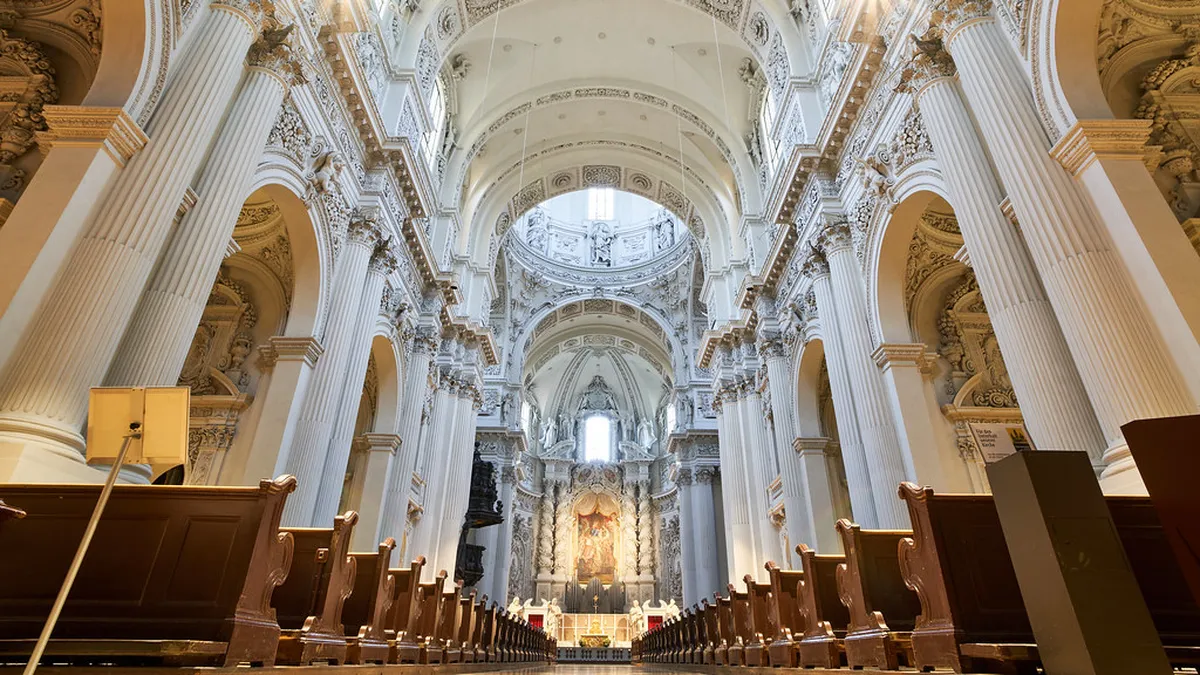
Asam Church (Asamkirche) is one of Europe's most ornate Baroque interiors, built by two brothers between 1733 and 1746. Entry is free, and the ceiling frescoes alone justify the short detour from Sendlinger Straße to Sendlingerstraße.
Must-See Unusual Attractions in Munich
The following list covers specific named attractions that offer a genuine departure from the standard sightseeing circuit. Most are free or under €10, and all are reachable via the excellent Munich U-Bahn and S-Bahn network. I have ordered them by how reliably they surprise visitors who arrive expecting only beer halls and Baroque churches.
- Eisbachwelle river surfing at the edge of the English Garden — free to watch, located on Prinzregentenstraße by the Haus der Kunst. Surfers are out year-round, rain or shine, at all hours.
- Müller'sche Volksbad — one of Europe's most beautiful Art Nouveau public pools. A single swim ticket costs around €6–€8. Open daily 07:30–23:00 at Rosenheimer Str. 1.
- Asam Church (Asamkirche) on Sendlinger Straße — a shockingly ornate Baroque private chapel squeezed between two apartment houses. Built by brothers Egid and Cosmas Asam between 1733 and 1746. Free to enter.
- Olympiaberg sunset viewpoint in Olympiapark — a grassy hill with a free panoramic view of Munich and, on clear days, the Alps. Come at 20:00 in summer and bring something to drink.
- The Walking Man sculpture by Jonathan Borofsky — a 17-metre steel figure striding across the Highlight Business Towers plaza near Olympiapark. Completely free, completely unexpected, and a favourite of local photographers.
- Valentin-Karlstadt-Musäum in Isartor — dedicated to the surrealist Bavarian comedian Karl Valentin. Adult entry is €6 and the museum opens at 11:01 (deliberately odd). The tower café serves a Weisswurst breakfast.
Give yourself at least a full day to hit three or four of these. The Eisbach surfing, Asam Church, and Müller'sche Volksbad cluster together well in a morning — all are within cycling distance of the river. The Olympiaberg is best saved for late afternoon so you arrive for the sunset window.
Museums, Art, and Culture Worth Seeking Out
Munich's museum district (Kunstareal) gets most of the attention, but some of the best finds sit well outside it. The Munich Stadtmuseum near Marienplatz houses one of the world's most extensive puppet and mechanical theatre collections on its upper floors. General admission is around €8 and the museum is open Tuesday through Sunday, 10:00–18:00. Check the Munich Stadtmuseum website for current temporary exhibitions.
The NS-Dokumentationszentrum on Brienner Str. 34 is consistently underused by visitors despite being one of the most important historical sites in the city. The Nazi Party was founded in Munich, and this documentation centre dedicates several floors to that rise and fall through original documents, photographs, and audio guides available in English and German. Admission is €7 and it takes roughly two hours to do justice to the permanent exhibition. If you want to dig deeper, a guided Third Reich walking tour connects the centre to the actual street-level sites.
MUCA (Museum of Urban and Contemporary Art) near the city centre was Germany's first dedicated street art museum. It operates out of a former transformer station and tickets run €14–€16. The exterior calligraffiti mural is visible from the street and worth seeing even if you skip the inside. On Sundays, many of Munich's state museums drop admission to €1 — a genuine budget hack that lets you walk through the Alte Pinakothek's Flemish masters or the Pinakothek der Moderne for less than a coffee.
Parks, Gardens, and Outdoor Spots Beyond the Obvious
The English Garden is enormous and most visitors see only the southern tip near the surfers. Push north past the Chinese Tower and you reach the Seehaus beer garden on Kleinhesseloher See — a lakeside terrace where people set their benches into the shallow water on hot days to keep their feet cool while drinking. This is the local way to spend a summer afternoon, far removed from the coach tour crowd.
The Flaucher, a gravel river beach on the Isar south of Thalkirchen, is Munich's best-kept outdoor secret. On any weekend above 22°C, thousands of locals drag barbecues, speakers, and folding chairs down to the bank. Swimming in the Isar's fast-flowing cold water is normal here — there are no lifeguards, so only confident swimmers should enter. The Flaucher is walkable from the Thalkirchen U-Bahn station (U3) and is genuinely unknown to most tourists, yet it is one of the truest expressions of how Munich residents actually spend their free time. No entry fee, no ticket queue, just the river and the city's famous Freikörperkultur (FKK) culture around you.
The Munich Botanical Garden (Botanischer Garten) at Menzinger Str. 65 sits directly beside Schloss Nymphenburg and charges a modest €5.50 entry fee. Spring is spectacular here but it is open year-round. The tropical greenhouses are particularly worth a visit in winter when the temperature contrast hits immediately as you step inside. Combine it with a loop through the Nymphenburg palace grounds, which are free to walk.
Great Ways to Enjoy Munich's Beer Culture
While most tourists head straight for the Hofbräuhaus, locals prefer the shade of the chestnut trees in smaller neighborhood gardens. Beer culture in Munich is about community and relaxation, and you are always welcome to bring your own food as long as you buy your drinks at the garden. The Chinese Tower (Chinesischer Turm) beer garden in the English Garden is the most-visited, with a traditional brass band playing from the wooden pagoda on weekends. A full liter (Maß) of beer runs €12–€14 across most gardens in 2026.
Munich has six historic breweries — Löwenbräu, Hofbräu, Augustinerbräu, Paulaner, Hacker-Pschorr, and Spaten — and different bars around the city will serve exclusively one brand. Sampling all six across a single day is a local sport sometimes called the Big Six crawl. Start at the Augustiner-Keller near the Hauptbahnhof (their beer comes from wooden barrels, the only garden in Munich to serve it this way) and work outward. Check the Munich's beer gardens for opening hours by season.
Beyond Oktoberfest, Munich runs the Starkbierfest in late February and early March — a strong beer festival (the beer is notably higher alcohol than standard Helles) held at individual breweries rather than a fairground. The biggest party is at the Paulaner Nockherberg brewery in Haidhausen. It is far less crowded than Oktoberfest and genuinely more local in atmosphere. The Frühlingsfest on the Theresienwiese in late April offers the same tent format as Oktoberfest on a smaller, quieter scale.
Touristy Things to Do in Munich That Are Actually Worth It
The Residenz is Munich's most underrated major attraction. As the largest city palace in Germany, it covers 130 rooms and 10 courtyards, including the stunning Antiquarium Hall built in the 16th century for Duke Albrecht V's sculpture collection. The frescoed ceiling alone justifies the entry fee of around €9 for the palace plus treasury. Go on a weekday morning when tour groups are still at Marienplatz. The separate Treasury houses Wittelsbach crown jewels and religious objects of extraordinary craftsmanship.
Climbing St Peter's Church tower (Rindermarkt 1) gives the best overhead view of Marienplatz and the Frauenkirche's twin towers — and it is cheaper and less crowded than the Olympiaturm. Entry costs around €4. The 299 steps are narrow and the staircase is one-directional, so arrive before 09:30 in summer to avoid queuing in the stairwell. The view takes in the red rooftops of the Altstadt and, on clear days, a slice of alpine skyline to the south.
BMW Welt at Am Olympiapark 1 is free and genuinely fascinating even for non-car fans — the architecture alone, designed by Coop Himmelb(l)au, is reason enough to visit. The adjacent BMW Museum charges €10 and traces the brand from its motorcycle origins through to concept vehicles. Both can comfortably fill a morning without rushing.
Browse Viktualienmarkt and Munich's Food Scene
The Viktualienmarkt is open Monday through Saturday from roughly 08:00 to 20:00 and covers 140 stalls. It is not the cheapest place to shop, but it is the best place to understand what Bavarian seasonal cooking looks like in practice. In spring you will see white asparagus (Spargel) stacked in every direction. In autumn the stalls fill with wild mushrooms, Zwetschgen plums, and game. The central beer garden in the market is one of the few spots in Munich where you can drink in the open air surrounded by fresh produce.
For a quieter, more local version, the Markt am Wiener Platz in Haidhausen runs daily and attracts almost no tourists. The neighbourhood around it — sometimes called the French Quarter — is one of Munich's prettiest for an unplanned wander. Look for stuffed peppers, olives, and regional cheeses at the stalls before settling into one of the surrounding cafés.
For unusual food experiences: try Weisswurst before noon (the traditional Bavarian rule is that they should not be eaten past midday church bells), order a Schweinshaxe (roasted pork knuckle) at the Augustiner Klosterwirt near the Frauenkirche, and look for Steckerlfisch (grilled fish on a stick) at any large beer garden. Der verrückte Eismacher at Amalienstraße 77 serves ice cream in flavours including Augustiner beer and sauerkraut — an acquired taste but a genuinely fun stop behind the university.
Shopping in Munich: What to Actually Buy
Munich's best independent shopping concentrates in two neighborhoods. Maxvorstadt around the university has a dense cluster of second-hand bookshops, vinyl stores, and independent clothing boutiques along Amalienstraße and Türkenstraße. Glockenbachviertel, south of the Isar, is the city's design-conscious district — small concept stores, ceramics studios, and natural wine shops line Müllerstraße and the streets behind it. Neither area has significant tourist crowds.
For Bavarian-made souvenirs that are not mass-produced, look for Lebkuchenherzen (painted gingerbread hearts) from smaller confectioners rather than airport shops, or pick up a liter ceramic Maßkrug directly from one of the brewery shops. The Hofbräuhaus shop sells the official Oktoberfest steins year-round, but the Augustiner-Bräu shop near the Hauptbahnhof has better quality at slightly lower prices. Traditional Tracht (lederhosen and dirndl) from specialist shops like Trachten Angermaier on Kaufingerstraße is expensive but made to last a generation — it is what locals actually wear to Oktoberfest, not the cheap polyester versions sold near Marienplatz.
Winter Things to Do in Munich
Winter transforms Munich into a cosy city without losing its unusual edges. The Tollwood Winter Festival at Theresienwiese runs from late November until New Year's Eve and is a genuine alternative to the standard Christmas market circuit. Entry to the grounds is free. The international craft market, organic food stalls, and covered concert tents make it noticeably different from the Glühwein-and-nutcracker formula of Marienplatz. Some tent performances require tickets, typically €15–€35 depending on the act.
The Eisbach surfers are out even when there is snow on the riverbank — watching them with steam rising from the icy water against a grey winter sky is one of Munich's genuinely iconic winter images. Afterward, warm up at the Müller'sche Volksbad pool, which is open year-round and particularly atmospheric in the colder months when the Art Nouveau interior contrasts sharply with the temperature outside. A mug of Glühwein at the Christmas markets runs around €4–€5 plus a small deposit for the ceramic cup.
For indoor alternatives, the BMW Museum, the NS-Dokumentationszentrum, and the Pinakothek museums all make excellent wet-day options. Most major Munich museums offer €1 Sunday admission for state collections — this covers the Alte Pinakothek, Neue Pinakothek, and Pinakothek der Moderne on Sundays through most of the year. The Deutsches Museum on Museum Island is the world's largest science and technology museum and genuinely takes two full days to cover properly.
Family-Friendly and Budget-Friendly Options
Munich rewards budget travelers more than its reputation suggests. The Englischer Garten is entirely free and big enough to spend a full day in. The Olympiapark grounds are free to walk; only the Olympiaturm observation deck (€7) and roof climb cost money. The Paleontological Museum (Paläontologisches Museum) near the university is free and houses fossils including a famous Archaeopteryx specimen found in Bavaria — it is open Monday through Friday and very quiet compared to the main art museums.
For families, the Deutsches Museum has interactive science exhibits across every major discipline and keeps children occupied for an entire day. Entry is €15 for adults and €6 for children. The Hellabrunn Zoo in Thalkirchen, reachable on the U3, is one of the oldest ecology-concept zoos in Europe and charges €20 for adults and €9 for children — generous space and well-maintained enclosures make it a reliable family half-day. Combine it with a walk along the Flaucher riverbank directly afterward.
The city's U-Bahn and S-Bahn network is efficient and a day ticket (Tageskarte) for the inner zone costs €9 in 2026, covering unlimited travel within the city ring. The IsarCard for €45 covers a full week and makes sense for stays of five days or more. Avoid renting a car within the city — traffic is heavy, parking is expensive, and the public transport reaches every attraction on this list.
Frequently Asked Questions
What is the most unusual free thing to do in Munich?
Watching the river surfers at the Eisbachwelle is the most unique free activity in the city. It is located at the edge of the English Garden and operates year-round. You can watch the experts from the bridge for as long as you like without spending a cent.
How do I find hidden gems in Munich?
Focus on neighborhoods like Giesing and Westend rather than the city center. These areas host independent galleries, craft breweries, and local markets that tourists often overlook. Walking along the Isar River south of the center also reveals peaceful, local-only spots.
Is the Potato Museum worth visiting?
The Kartoffelmuseum is excellent for travelers who enjoy niche, quirky history. It is free to enter and takes less than an hour to explore. It offers a surprising look at how a simple vegetable shaped European culture and art.
Munich is far more than just a gateway to the Alps or a place to drink beer in October. By seeking out these unusual things to do, you will discover a city that is creative, daring, and deeply connected to its environment. From the surfers on the Eisbach to the gravel banks of the Flaucher and the gilded excess of the Asam Church, the city rewards visitors who look one street past the obvious. Plan around the when to visit Munich to choose the right season for outdoor activities.
You might also like


Continue reading
More guides you'll find useful