Munich To Salzburg Travel Guide: The Perfect Day Trip
Plan your munich to salzburg trip with top picks, timing tips, and booking advice. Discover the best way to see Salzburg's highlights in one day.
On this page
The Ultimate 1-Day Munich to Salzburg Itinerary
Salzburg sits just 150 km from Munich, and the train connection is so straightforward that this ranks as one of the easiest international day trips in Europe. Whether you are drawn by Mozart's birthplace, the Hohensalzburg Fortress, or the Sound of Music filming locations, one well-planned day is enough to cover the highlights. This guide focuses on getting you there cheaply, moving efficiently through the city, and returning without stress.
Most travelers are surprised how affordable the trip is. The right ticket choice makes the difference between a €15 day and a €45 one. We cover every transport option in detail below, along with what to see once you arrive.
How Far Is Salzburg from Munich?
Salzburg is approximately 150 km from Munich by road and 117 km by the most direct rail line. By train, the fastest services take around 1 hour 43 minutes, while most regional trains take 1 hour 50 minutes to 2 hours. By car on the A8 motorway, you are typically looking at 1.5 to 2 hours depending on traffic, though weekend and Friday evening congestion can push that significantly higher.
The short distance makes this one of the rare international trips where arriving early and leaving in the evening is genuinely comfortable. You do not need to rush. Even a 09:00 departure from Munich gets you into Salzburg by 11:00, leaving a full afternoon for sightseeing before catching a return train at 19:00 or later.
Munich to Salzburg Hbf by Train
The train is the best option for almost everyone. Trains run from Munich Hauptbahnhof (Hbf) directly to Salzburg Hauptbahnhof roughly every hour throughout the day, with up to 47 services on a typical weekday. The first departure leaves just after midnight and the last runs close to midnight, so you have flexibility on both ends. Check our Munich's public transport for help reaching Munich Hbf from your accommodation.
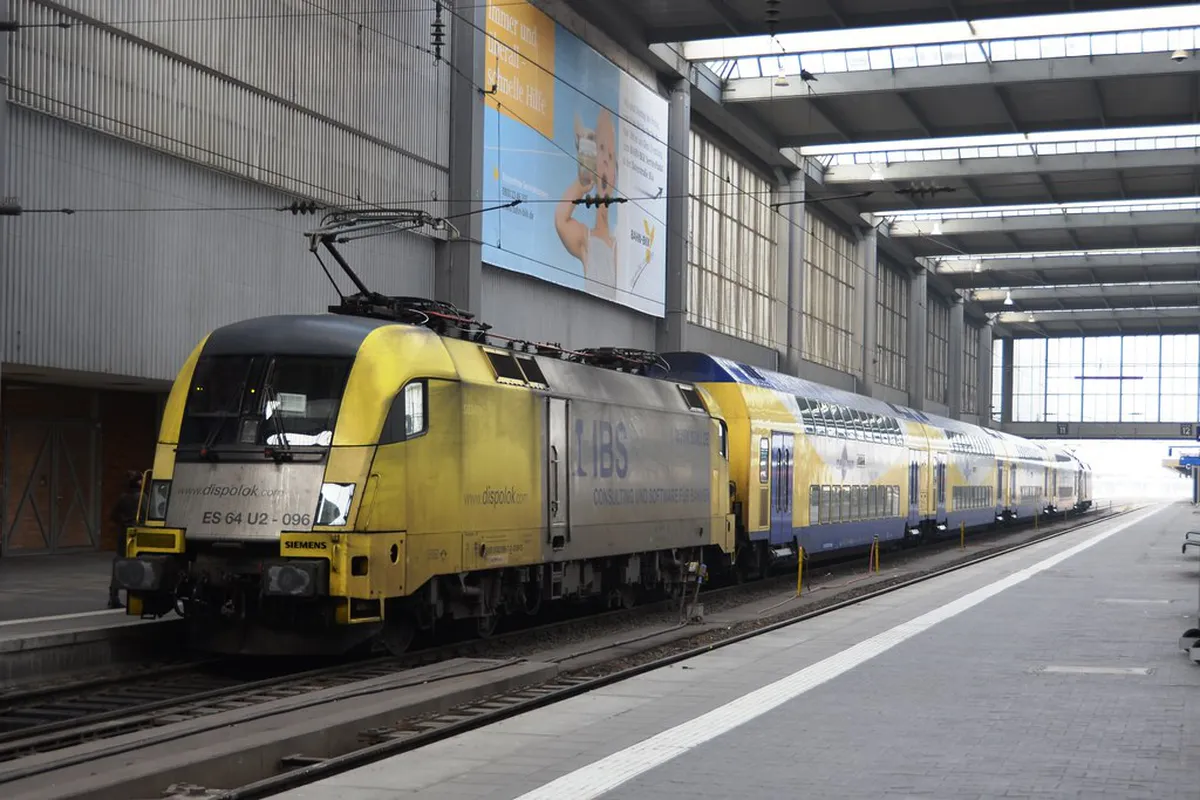
There are two main train categories on this route. Regional trains (RE/Meridian, designated with an "M" on DB timetables) take about 1 hour 50 minutes and are the trains your Bayern Ticket is valid on. Faster intercity services — the Eurocity (EC), Intercity (IC), and ICE — take as little as 1 hour 43 minutes but require a full-price point-to-point ticket or a valid rail pass. Both types depart from Munich Hbf and stop at Munich Ostbahnhof before heading toward Austria.
Second-class tickets on the faster IC/EC/ICE services start from around €8.99 when booked well in advance but average €20–€35 at short notice. All ICE and IC trains offer free Wi-Fi, a bistro car, and power sockets at every seat. ÖBB Eurocity trains (operated by Austrian Federal Railways) include a restaurant car and are particularly comfortable for the cross-border leg.
Bayern Ticket: The Rule Most Travelers Get Wrong
The Bayern Ticket (Bavaria Ticket) is the cheapest way to travel from Munich to Salzburg if you are flexible on departure time. It costs €29 for one person and €39 for two, with each additional person costing €10 up to a maximum of five adults. The ticket covers unlimited regional trains in Bavaria for the entire day and is also valid for local buses and trams inside Salzburg, which means you pay nothing extra for city transit once you arrive.
The critical rule that catches many visitors out: on weekdays, the Bayern Ticket is only valid from 09:00 onwards. On weekends and public holidays, it is valid from 06:00. If you board a train at 08:30 on a Tuesday using this ticket, a conductor can fine you on the spot. Always check your departure time against the validity window before you leave the hotel. On weekdays, plan to board no earlier than the first 09:00 or later departure.
The Bayern Ticket is only valid on Meridian regional trains (marked with "M" in the DB app) from 09:00 onwards on weekdays. If you depart earlier than 09:00 on a weekday with this ticket, inspectors can issue a fine. Always write all passengers' names on the ticket before boarding — this is mandatory and regularly checked.
The second rule to know is which trains accept the Bayern Ticket. It is valid only on regional trains, specifically the Meridian services marked "M" in the DB app. It is not valid on EC, IC, or ICE trains, even on the Munich–Salzburg route. In the DB Navigator app, filter by "only local transport" to see exclusively the trains your ticket covers. Writing all passengers' names on the ticket before boarding is mandatory — inspectors check this.
Other Ways to Get from Munich to Salzburg
Buses are the cheapest option after the Bayern Ticket, with Flixbus tickets sometimes available from under €5. Buses leave from Munich's Central Bus Station (ZOB), a short walk or one S-Bahn stop from Munich Hbf. Journey times run between 1.5 and 2 hours, and there are around five departures per day. The trade-off is less comfort, possible traffic delays, and no scenic views compared to the train.
Driving on the A8 is straightforward — just follow signs for Salzburg and you cannot miss the route. If you cross the Austrian border on the motorway, you need to purchase an Austrian motorway vignette. The cheapest option is a 1-day digital vignette, which costs €9.90 in 2026. You can buy it online in advance at the ASFINAG website. Skipping the vignette risks a fine in the post, which is substantially more expensive. To avoid the vignette entirely, exit the motorway before the Austrian border at Walserberg and take smaller roads into the city.
Organised tours from Munich are worth considering if you want a guide. Several operators run full-day Salzburg coach or rail tours, and they handle all logistics. The main caveat noted in the brief: Austrian law requires guides to hold Austrian qualifications to lead tours inside Salzburg, so check whether your tour includes a licensed local guide or just independent exploration time once there.
| Option | Journey Time | Cost (1 Person) | Best For |
|---|---|---|---|
| Bayern Ticket (Regional Train) | 1h 50min–2h | €29 | Budget travelers, groups, includes local transit |
| IC/EC/ICE Train | 1h 43min | €20–€35 | Speed, comfort, Wi-Fi, scenic views |
| Flixbus | 1.5–2h | €5–€15 | Ultra-budget, flexibility on departures |
| Car (A8 Motorway) | 1.5–2h | €9.90 vignette + fuel | Group travel, road trip experience |
| Organised Tour | Varies (full day) | €45–€120+ | Guided experience, logistics handled |
Getting Back from Salzburg to Munich
Return trains run on the same schedule throughout the evening. The last regional train back to Munich departs Salzburg Hbf well after 22:00, so there is no need to rush your dinner. If you used a Bayern Ticket on the way out, the same ticket covers your return — it is valid all day, not just in one direction. Just make sure you did not enter Austria past midnight, as the ticket expires at the end of the calendar day.
One practical note for the return journey: Salzburg Hbf platforms for Munich trains are clearly signposted, but the station is smaller than Munich Hbf, so allow 10 minutes to orient yourself and find your platform. Trains returning to Munich also stop at Munich Ostbahnhof before terminating at Munich Hbf, which is convenient if you are staying on the east side of the city.
Important Must-Knows Before You Go
Salzburg is in Austria, not Germany. Germany and Austria are both in the Schengen Area, which means there are no formal passport controls at the border in normal circumstances. However, spot checks do happen on trains and buses, and you will need a valid photo ID regardless. Carry your passport or national ID card. Non-EU travelers should have their passport on them as a matter of course.
Spot checks for ID happen on trains and buses crossing into Austria, even though formal border controls do not exist in the Schengen Area. EU citizens must carry a valid passport or national ID card. Non-EU travelers must have their passport. Traveling without valid ID can result in fines, so do not assume the border crossing is an invisible checkpoint.
Currency switches at the border. Both Germany and Austria use the euro, so there is no need to exchange money. Card payments are widely accepted in Salzburg's tourist areas, though some market stalls and smaller cafes still prefer cash. Having €20–€30 in coins and small notes is a reasonable precaution.
Salzburg is genuinely busy with tourists in summer and during the Advent and Christmas market season (late November to December). Arriving before 10:00 makes a measurable difference at the main sites. The Mirabell Gardens and Getreidegasse are most manageable in the early morning or after 17:00 when day-trippers start heading back to the station.
What to See in Salzburg in One Day
The Mirabell Gardens are a 10-minute walk from Salzburg Hbf and a natural first stop. The baroque gardens are free to enter and feature the famous staircase steps used in The Sound of Music. Adjacent Mirabell Palace is now the city hall and viewable from outside. Arrive before 10:00 to photograph the gardens without crowds.
Hohensalzburg Fortress is the city's defining landmark, rising 120 metres above the Old Town. Construction began in 1077, making it one of the largest and best-preserved medieval castles in Europe. You can walk up via a footpath in about 20 minutes or take the Festungsbahn funicular from the base near Kapitelplatz. Buy your funicular and fortress entry ticket online in advance to skip the queue at the base station — this is especially worthwhile between June and September.
The Salzburg Old Town (Altstadt) is a UNESCO World Heritage Site and the area where you will spend most of your time. The Getreidegasse pedestrian street is the most photographed, lined with guild signs hanging over narrow archways. Salzburg Cathedral (Dom) on Domplatz is free to enter and worth 20 minutes of your time for the baroque interior and five pipe organs. Mozart's Geburtshaus (birthplace) on Getreidegasse 9 charges around €13 for entry and covers the composer's life with original instruments and family portraits — book timed entry in peak season.
If you want to see the Sound of Music filming locations beyond the Mirabell Gardens, book a dedicated tour in Salzburg rather than from Munich. The iconic hilltop opening scene and the Von Trapp family property are outside the city centre and inconvenient to reach independently. A local two-hour Sound of Music bus tour typically costs €45–€55 and covers all the key sites efficiently. See our our complete Munich guide guide if you want to plan the broader trip.
Munich to Salzburg Day Trip Suggested Itinerary
The following schedule works for a weekday trip using the Bayern Ticket. Adjust for weekends by catching an earlier train from 06:00 if you want a quieter morning at the major sites.
- 08:30 — Leave your Munich accommodation and head to Munich Hbf via U-Bahn or S-Bahn.
- 09:07 — Board the first eligible Meridian regional train (09:00 or later on weekdays). Write all passenger names on your Bayern Ticket before boarding.
- 10:55 — Arrive Salzburg Hbf. Walk 10 minutes to Mirabell Gardens.
- 11:00–11:45 — Mirabell Gardens and Palace exterior. Free entry.
- 12:00–13:00 — Cross the Salzach River and explore the Altstadt. Pick up lunch away from Getreidegasse to avoid tourist pricing — try Steingasse on the east bank for local bakeries and sandwich spots.
- 13:15–14:30 — Salzburg Cathedral and Residenzplatz fountain area. Free entry to the cathedral.
- 14:45–16:30 — Hohensalzburg Fortress via funicular. Allow 90 minutes inside. Last funicular down at around 20:00 in summer.
- 17:00–18:30 — Getreidegasse stroll. Optional: Mozart's Geburtshaus (allow 60 minutes).
- 19:00 or 20:00 — Board return Meridian train to Munich. Your Bayern Ticket covers the return.
- 21:00 — Arrive Munich Hbf.
This schedule leaves buffer time at every transition. If the fortress takes longer than expected, skip Mozart's birthplace and save it for a return visit. Check our the best day trips from the city guide for other one-day excursion ideas on the same Bayern Ticket.
How to Save Money on Your Day Trip to Salzburg
The Bayern Ticket is the single biggest money-saver. For two people traveling together, it costs €39 total — that is €19.50 each for transport between Munich and Salzburg plus all city transit in both cities for the entire day. A standard regional train ticket purchased separately for two adults would cost around €60 round trip. The savings increase with group size up to five people.
The Salzburg Card is worth buying if you plan to visit multiple paid attractions. The 24-hour card (around €30 in 2026) covers the Festungsbahn funicular, fortress entry, Mozart's Geburtshaus, and the Residenz museum, plus all city buses and trams. If you are visiting the fortress plus one or two other paid sites, the card pays for itself. Buy it at Salzburg Hbf tourist information on arrival.
Food savings are straightforward. The Getreidegasse tourist strip charges roughly double what you pay two blocks away. Steingasse on the opposite bank of the Salzach River has local butcher shops, bakeries, and cafes where a full lunch costs under €12. Avoid the main square restaurants for seated meals — save those for a coffee or a Mozartkugel from a street stand.
Where to Eat and Drink in Salzburg
Austrian cuisine in Salzburg centres on Wiener Schnitzel, Tafelspitz (boiled beef), and Salzburger Nockerl (a soufflé dessert specific to the city). Most traditional Gasthäuser are concentrated in the Old Town, though pricing near the cathedral is high. Café Tomaselli on Alter Markt is one of Europe's oldest coffee houses and worth the visit for a melange and a slice of Apfelstrudel, even if you queue briefly to get a table.
For a quick and affordable lunch, the Green Market (Grüner Markt) near Universitätsplatz runs Tuesday to Saturday with fresh produce vendors who also sell filled rolls, cheeses, and local sausages. It is one of the more authentic spots to eat in the city and costs a fraction of a sit-down restaurant. A Salzburg City Cruise on the Salzach River is a relaxed way to see the fortress from the water — boats depart from near the Staatsbrücke bridge and run April through October.
Frequently Asked Questions
How far is Salzburg from Munich?
Salzburg is approximately 145 kilometers from Munich. The train journey takes about 1 hour and 30 minutes on high-speed lines. Driving takes roughly the same time depending on traffic conditions.
Is 1 day enough for a Munich to Salzburg trip?
Yes, one day is sufficient to see the major historic highlights. You can tour the Old Town, the Cathedral, and the Fortress comfortably. However, you will need to start your day early.
A day trip from Munich to Salzburg is one of the best value excursions in Central Europe. The Bayern Ticket keeps costs low, the train journey is scenic, and the city delivers genuine historic atmosphere in a compact walkable area. Book your fortress entry online, arrive before the tour groups, and leave enough time to simply wander the backstreets of the Altstadt.
The return journey is entirely covered by the same Bayern Ticket you used in the morning. There is no rush to leave — last trains run late, and Salzburg in the early evening, when the day-trippers have thinned out, is well worth the extra hour.
You might also like


Continue reading
More guides you'll find useful