12 Best Things to Do in Cologne (2026 Guide)
Plan your trip with the best things to do in Cologne, from the iconic Cathedral to hidden street art in Ehrenfeld and traditional Kölsch breweries.
On this page
12 Best Things to Do in Cologne
After five visits to the Rhine's most vibrant city, I still find new corners to explore in Cologne. Our editors have reviewed every neighborhood to ensure this guide captures the city's unique blend of Roman history and modern grit. Whether you are here for the Gothic architecture or the legendary beer culture, Cologne offers a warm, inclusive atmosphere.
This guide was last refreshed in October 2025 to reflect 2026 pricing and updated opening times for all major sites. We have focused on providing a mix of world-famous landmarks and local secrets that most tourists overlook. You will find practical tips on how to save money while experiencing the best of North Rhine-Westphalia.
Cologne is preparing for a massive year of cultural festivals and international events in 2026. The city remains one of Germany's most accessible destinations for international travelers and families alike. Follow this guide to navigate the city like a local and avoid the most common tourist traps.
Key Takeaways
- Best Overall: Cologne Cathedral (free entry to the nave, incredible history).
- Best for Families: Chocolate Museum (interactive exhibits and a massive chocolate fountain).
- Best Rainy-Day: Museum Ludwig (world-class art collection located right next to the main station).
- Best Free Activity: Walking across the Hohenzollern Bridge at sunset for the best city views.
12 Best Things to Do in Cologne (2026)
The following list represents the absolute essentials for anyone planning a trip to this historic river city. We have categorized these into iconic landmarks, cultural museums, and neighborhood experiences to help you prioritize. Each selection includes current pricing and logistical details to make your daily planning much easier.
If you are a first-time visitor, I suggest starting with the central attractions before venturing into the outer districts. Check our guide for first-timers for a more detailed introductory look. The city is quite walkable, but the efficient tram system makes reaching further spots like Ehrenfeld very simple.
Keep in mind that many museums are closed on Mondays, so plan your cultural visits for mid-week. Booking tickets online in advance is highly recommended for the most popular spots like the Chocolate Museum. This will save you significant time in queues, especially during the busy summer and Christmas seasons.
Many of Cologne's museums are closed on Mondays, so plan cultural visits for mid-week and book popular spots like the Chocolate Museum online in advance to skip the queues.
- Cologne Cathedral (Kölner Dom)
- This massive Gothic masterpiece serves as the city's spiritual heart and a UNESCO World Heritage site.
- Entry to the main nave is free, though the tower climb costs roughly €6 per adult.
- The cathedral is open daily from 6:00 AM to 8:00 PM, but visiting during services is restricted.
- Consult the Cologne Cathedral Official Site for special event closures and liturgy times.
- Historic Old Town (Altstadt)
- The reconstructed narrow alleys and colorful houses of the Old Town offer a glimpse into medieval Cologne.
- Most visitors gather at the Alter Markt or the Heumarkt to enjoy the outdoor cafe culture.
- It is completely free to wander this area, which is located just south of the main station.
- Our Altstadt guide provides a walking route through the most scenic squares.
- Museum Ludwig
- This world-class institution houses one of the largest Picasso collections in Europe and significant Pop Art works.
- General admission is typically €14 per adult, and the museum is closed on Mondays.
- You can find this striking modern building located directly behind the Cathedral near the Rhine.
- Check the Museum Ludwig site for rotating contemporary exhibitions.
- Hohenzollern Bridge Love Locks
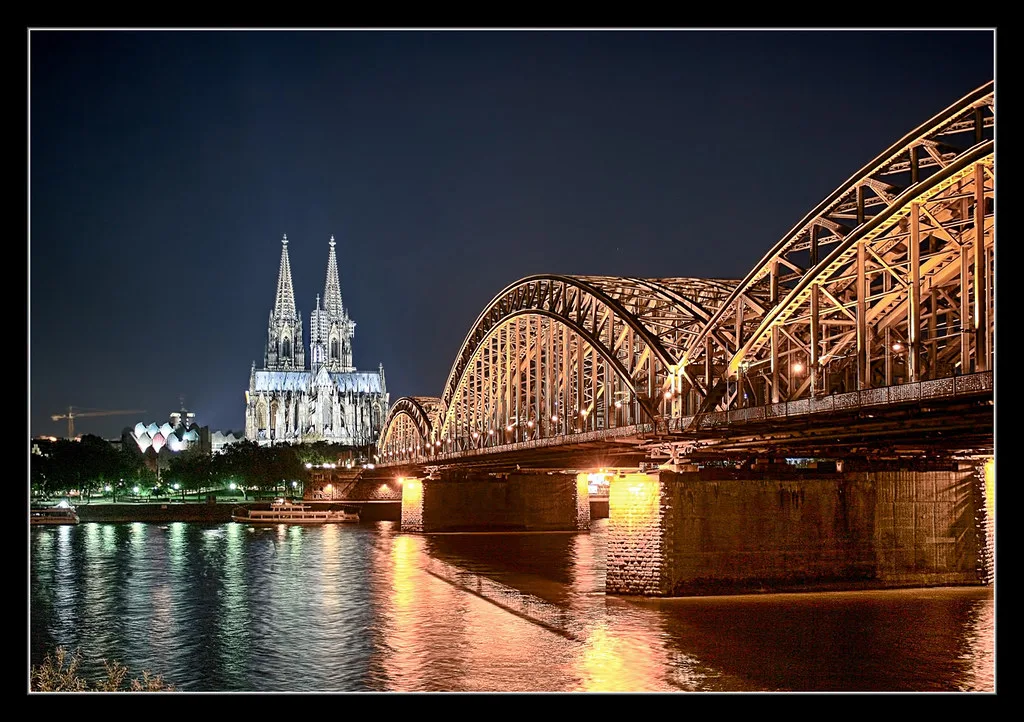
- This heavy iron railway bridge is famous for the thousands of colorful padlocks attached to its fences.
- Walking across the bridge is free and provides some of the best photo angles of the city skyline.
- The bridge connects the Old Town with the Deutz district on the opposite side of the Rhine.
- I recommend visiting at sunset when the light hits the Cathedral's twin spires perfectly.
- Chocolate Museum (Schokoladenmuseum)
- This museum traces the 5,000-year history of cocoa and features a massive, functioning chocolate fountain.
- Adult tickets cost around €15, and the museum is open daily from 10:00 AM to 6:00 PM.
- It is located on a small peninsula in the Rheinauhafen district, a short walk from the center.
- Visit the Chocolate Museum Cologne to book a timed entry slot.
- KölnTriangle Viewpoint
- This glass-walled observation deck offers a 360-degree view that actually includes the Cathedral in the frame.
- Entry is roughly €5 per person, making it a cheaper alternative to the Cathedral tower climb.
- The tower is located in Deutz, right at the end of the Hohenzollern Bridge pedestrian path.
- The wind can be quite strong at the top, so hold onto your hat while taking photos.
- The Belgian Quarter (Belgisches Viertel)
- This is Cologne's trendiest neighborhood, known for independent boutiques, art galleries, and vibrant nightlife.
- The area around Brüsseler Platz is the perfect spot for people-watching with a local beer.
- It is free to explore the streets, though you will likely want to spend money in the shops.
- Take the U-Bahn to Rudolfplatz or Friesenplatz to reach the heart of this district.
- Cologne Cable Car (Kölner Seilbahn)
- This aerial tramway glides over the Rhine River, providing unique views of the city's industrial and green zones.
- A round-trip ticket costs approximately €9 and is available from April through October.
- The stations are located near the Zoo and the Rheinpark on the opposite bank.
- It is a fantastic way to travel between the Botanical Garden and the thermal baths.
- Flora and Botanical Garden
- Spread across 11 hectares, this historic park features over 10,000 species of plants and beautiful glass palaces.
- Admission to the outdoor gardens is free, and it is open daily from sunrise to sunset.
- The park is located in the northern Riehl district, easily accessible via tram line 18.
- The subtropical greenhouses are a great escape if you find yourself visiting on a rainy afternoon.
- NS Documentation Center (EL-DE Haus)
- This former Gestapo headquarters now serves as a powerful memorial and museum dedicated to the victims of Nazism.
- Entry for adults is €4.50, and the preserved basement prison cells offer a sobering historical experience.
- The building is located on Appellhofplatz, just a ten-minute walk from the central station.
- Give yourself at least two hours to read the detailed English translations provided in each room.
- Ehrenfeld Street Art Tour
- The former industrial district of Ehrenfeld has become a massive open-air gallery for international muralists.
- You can see world-class street art for free by wandering down Körnerstraße and under the railway bridges.
- The neighborhood is a 10-minute train ride from the center via the S-Bahn or U-Bahn lines.
- I found that the best murals are often tucked away in small residential courtyards off the main road.
- Melaten Cemetery
- This historic park-like cemetery is the final resting place for many of Cologne's most famous citizens.
- It is free to enter and offers a peaceful atmosphere with impressive 19th-century funerary art.
- The main entrance is on Aachener Straße, and it is open daily from early morning until dusk.
- Please remain quiet and respectful, as this is still an active place of mourning for locals.
Traditional Kölsch Breweries and Local Etiquette
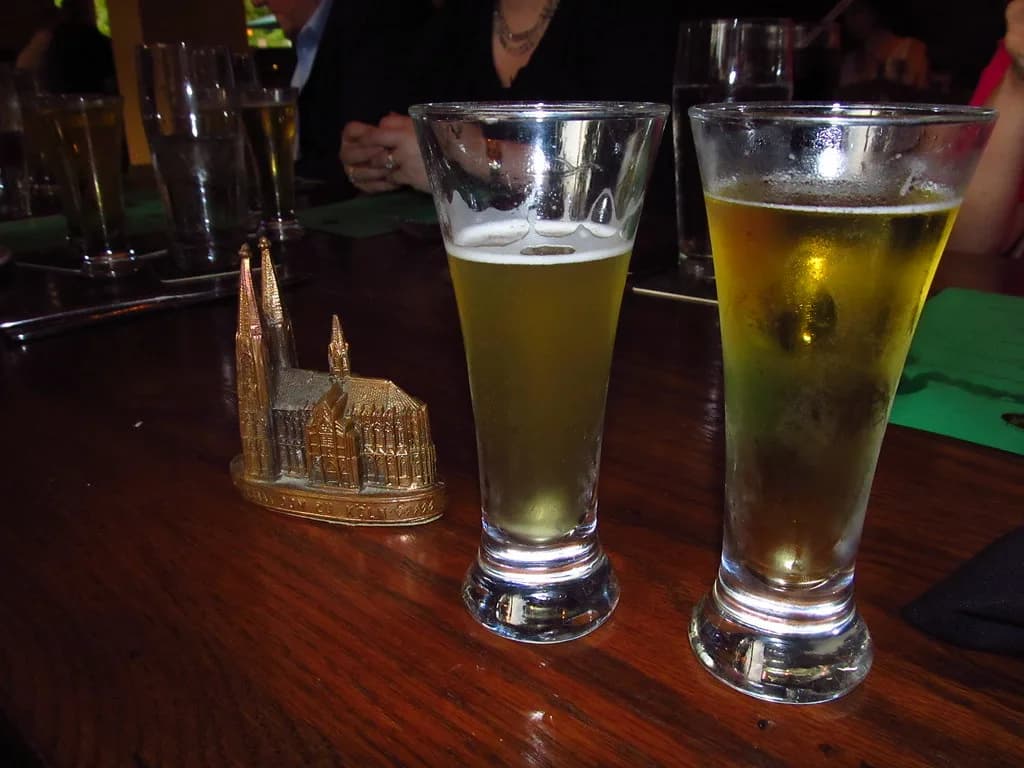
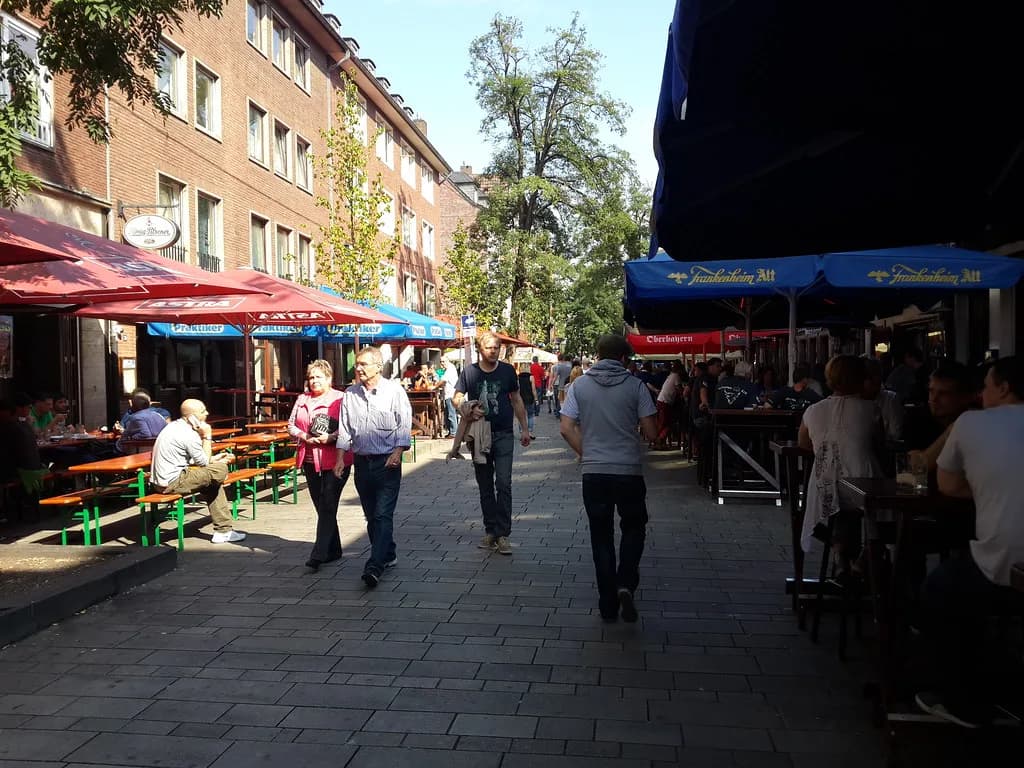
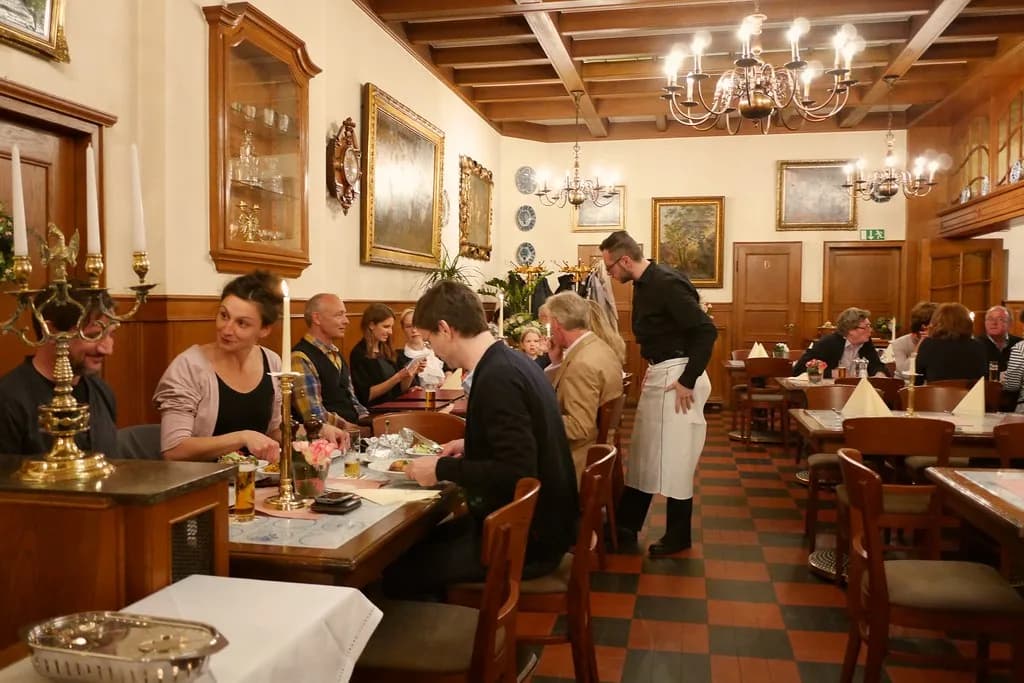
Drinking beer in Cologne is a cultural ritual governed by centuries of unwritten rules and traditions. The local brew, Kölsch, is a light, top-fermented beer served in slender 0.2-liter glasses called Stangen. You will find these served by the Köbes, traditional waiters known for their blue aprons and brusque attitudes. For a deep dive into the best spots, see our brewhouse and beer guide.
The Köbes will continue to bring fresh glasses of beer without being asked until you stop them. To signal that you have finished, simply place your cardboard coaster on top of your empty glass. Each beer is marked as a pencil stroke on your coaster, which serves as your final bill. Do not expect overly friendly service; the brusqueness is a part of the authentic brewhouse charm.
When it comes to food, do not be fooled by the menu item called Halve Hahn. While the name sounds like half a chicken, it is actually a rye roll served with thick cheese. Other local favorites include Himmel un Ääd, which translates to Heaven and Earth, featuring potatoes and apples. Most traditional breweries are open from 11:00 AM until midnight, though they get very crowded after 6:00 PM.
Is the Cologne Card Worth It?
The Cologne Card offers free public transport and discounts of up to 50% at many local attractions. A 24-hour card costs €9, while a 48-hour version is priced at €18 for a single traveler. You can purchase these at the tourism office across from the Cathedral or via the official app. Visit Cologne Tourism - The Cologne Card for a full list of current discounts.
| Cologne Card | Price (single traveler) | Includes |
|---|---|---|
| 24-hour | €9 | Free public transport + up to 50% off many attractions |
| 48-hour | €18 | Free public transport + up to 50% off many attractions |
| Group card | Covers up to 5 people | Most economical for families with children |
The card pays for itself if you plan to take at least three tram rides and visit one major museum. For example, a single short-trip ticket costs about €2, and museum entries average around €12 to €15. If you prefer walking and only plan to see the Cathedral, the card might not be necessary. However, the convenience of hopping on any bus or train without buying tickets is a major plus.
Families can save even more by purchasing the group card, which covers up to five people. This is often the most economical way to navigate the city if you are traveling with children. We explain more about transport options in our transport and KölnCard guide. Check the validity zones carefully, as the card covers the entire city area but not distant suburbs.
What to Skip in Cologne
While the 4711 Flagship House is a famous landmark, it is essentially just a high-end perfume retail shop. If you are interested in the actual history of Eau de Cologne, the Farina Fragrance Museum is much better. The Farina museum offers guided tours that explain the 300-year-old production process in much greater detail. I found the 4711 store a bit too commercial for a meaningful historical experience.
Rhine River cruises are highly recommended in the summer, but they can be underwhelming during the winter months. The riverbanks often look bare, and the cold wind on the deck can make the trip quite uncomfortable. If you are visiting in December, stick to the Christmas markets rather than spending an hour on a boat. The views from the KölnTriangle provide a similar perspective of the river without the high cost.
Rhine River cruises can be underwhelming in winter, when the riverbanks look bare and the cold wind on deck makes the trip uncomfortable. If you visit in December, skip the boat and head to the Christmas markets instead.
How Many Days Do You Need in Cologne?
Most travelers find that two full days are sufficient to see the primary highlights of the city center. This allows enough time for the Cathedral, the Old Town, and at least two major museums. You can see the main sights in a single day if you follow our one-day itinerary. However, a three-day stay is ideal if you want to explore the trendy Ehrenfeld or Belgian Quarter districts.
Cologne also serves as a perfect base for exploring the surrounding North Rhine-Westphalia region. Cities like Bonn and the fairy-tale palaces of Brühl are less than 30 minutes away by train. If you have four days, I highly recommend dedicating one full day to a nearby excursion. The local rail network is incredibly dense and makes these side trips very easy to manage.
Great St. Martin Church and the Fischmarkt
Just south of the Cathedral, the Romanesque tower of Great St. Martin (Groß St. Martin) dominates the riverside skyline and is arguably the most photographed building in the city after the Dom itself. The church dates to the 12th century, was rebuilt after heavy WWII damage, and its trefoil choir and crossing tower form the centerpiece of the Old Town's classic postcard view. Entry to the church is free, and it sits right beside the Fischmarkt, the small triangular square ringed by the cartoonishly narrow pastel houses you will see on every Cologne souvenir. Pair the two in fifteen minutes of slow wandering, then carry on along the Rhine promenade. For more of these compact riverside corners, our Altstadt guide maps a walking route through the prettiest squares including the Alter Markt and Heumarkt.
Roman Cologne and the Roman-Germanic Museum
Cologne was founded as the Roman colony of Colonia Claudia Ara Agrippinensium nearly 2,000 years ago, and its ancient bones still surface across the center. The Roman-Germanic Museum (Römisch-Germanisches Museum) holds the city's archaeological treasures, including the famous Dionysus mosaic and a towering reconstructed tomb; during its long renovation, key pieces are displayed at the Belgian House (Belgisches Haus) on Cäcilienstraße. Nearby you can walk through the underground Praetorium, the seat of the Roman governor, and trace surviving stretches of the original city wall and the Roman tower (Römerturm). Most of these Roman sites cluster within a ten-minute walk of the Cathedral, and admission to the museum is modest, typically around €6 for adults. History lovers should budget a half day; quieter Roman traces also feature among our hidden gems in Cologne.
Wallraf-Richartz Museum: Old Masters by the Rathaus
While Museum Ludwig draws the modern-art crowd, the Wallraf-Richartz Museum is the place for older European painting, spanning roughly 700 years from medieval altarpieces to Impressionism. Its highlight is Stephan Lochner's luminous "Madonna in the Rose Bower," a defining work of the Cologne School, alongside rooms of Rembrandt, Rubens, and Monet. The museum sits near the historic Town Hall (Rathaus) in the Old Town, an easy add-on after the Roman sites. Adult admission usually runs around €13, and like most Cologne museums it closes on Mondays, so plan a mid-week visit. It rarely feels crowded, making it one of the calmer cultural stops in the center and an ideal rainy-day choice. For a fuller rundown of the city's collections, see our Cologne museums guide.
Basilica of St. Ursula and the Golden Chamber
Cologne has twelve great Romanesque churches, and the most arresting of them is the Basilica of St. Ursula, north of the Cathedral near the Eigelstein gate. The basilica itself is free to enter, but the real draw is the Golden Chamber (Goldene Kammer), a baroque reliquary room whose walls are covered floor to ceiling with human bones arranged into letters and patterns, said to honor St. Ursula and her companions. It is a genuinely unusual, slightly macabre sight that few first-time visitors know about. The Golden Chamber charges a small entry fee of a couple of euros and keeps limited hours, so check the times before you go. Allow around thirty minutes, and combine it with a stroll through the surrounding Eigelstein quarter on your way back toward the center.
Rheinauhafen and the Crane Houses
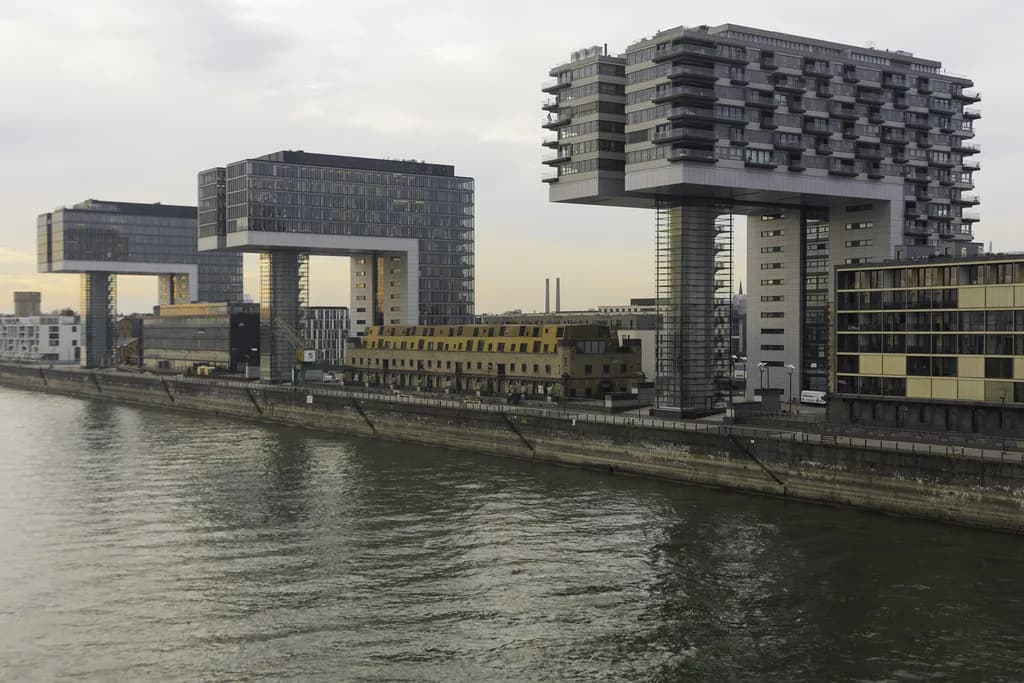
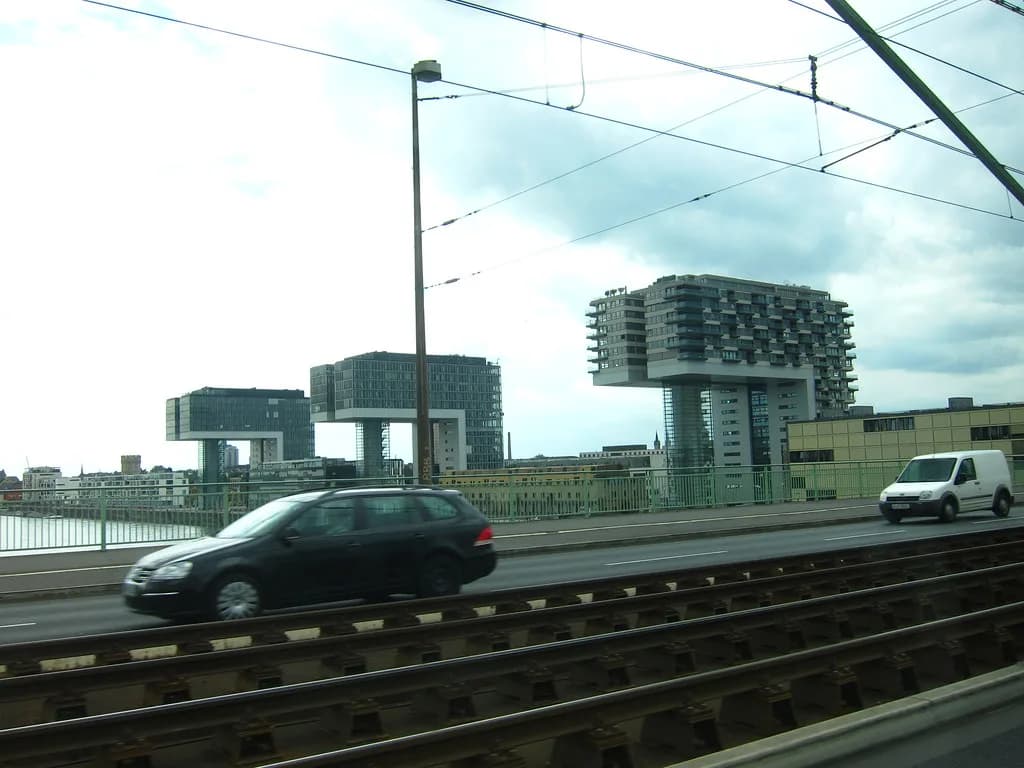
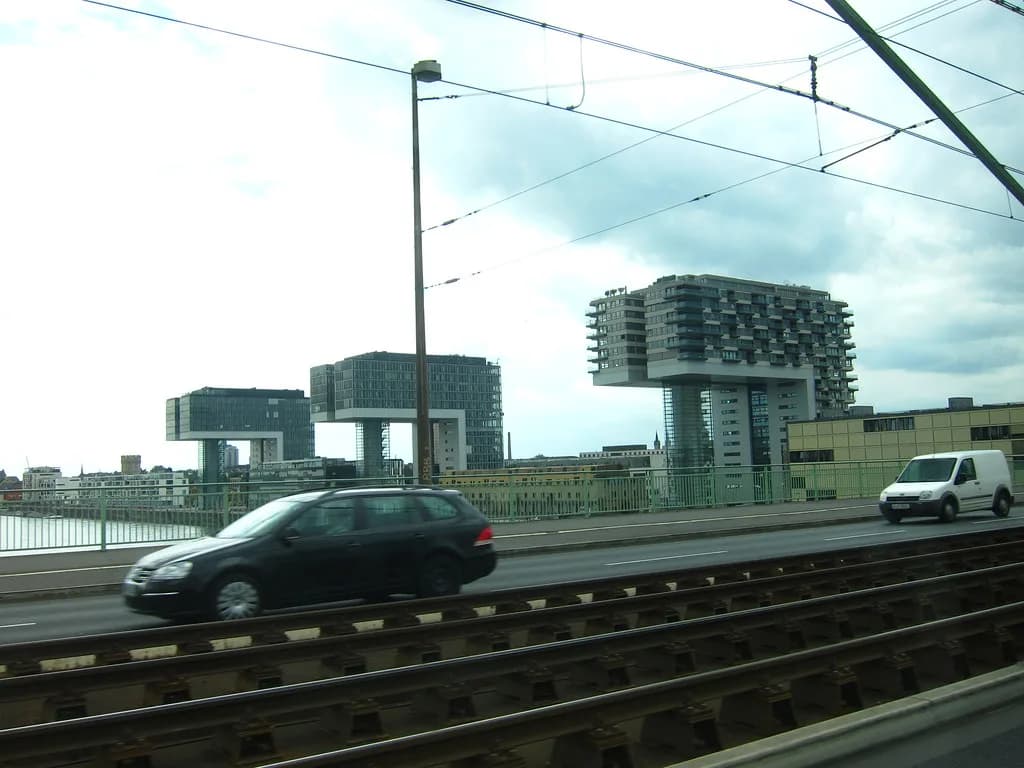
For a complete contrast to the Gothic Old Town, head south along the river to Rheinauhafen, a former industrial harbor reborn as one of Germany's most striking pieces of modern architecture. The three Crane Houses (Kranhäuser) are L-shaped glass towers built to echo the old dockside cranes, and the promenade between them is a fine place for a riverside walk, a coffee, or sunset photos of the skyline. The same peninsula is home to the Chocolate Museum and the German Sport and Olympic Museum, so it stitches easily into a half-day on foot. It is free to wander, and the area sits a short walk or one tram stop south of the center. The clean lines and waterfront cafes make it popular with locals in the evening, well away from the tourist crush around the Dom.
Relax at Claudius Therme Thermal Baths
When your feet give out after a day of sightseeing, cross the Rhine to the Claudius Therme, a thermal spa set inside the leafy Rheinpark in Deutz. The complex blends warm mineral pools, indoor and outdoor thermal basins with skyline views, and an extensive sauna landscape, making it a perfect rainy-day or cold-weather retreat. A two-hour pool ticket starts at roughly €15, with longer sessions and sauna access costing more; note that the sauna areas are traditionally clothing-optional, in keeping with German spa culture. It is reachable on foot via the Cologne cable car or a short tram ride, and pairs naturally with a walk in the Rheinpark or the Flora gardens nearby. Bring a towel and flip-flops, or rent them on site, and aim for a weekday to avoid the busiest hours.
Explore More Cologne Guides
Plan every part of your Cologne trip with our complete guide collection — where to stay, how to get around, the best things to do, food, day trips, and seasonal tips.
- 10 Best Restaurants in Cologne
- 12 Essential Things to Do in Cologne for First-Timers (2026 Guide)
- Best Time To Visit Cologne
- Cologne Cathedral Visiting Guide
- Cologne Christmas Market Guide
- 10 Essential Sections for Your Museum Ludwig and Cologne Guide
- 9 Best Areas in This Cologne Neighborhoods Guide
- 17 Best Districts, Bars & Clubs
- 15 Best Day Trips from Cologne
- Getting Around Cologne
- 9 Essential Sections for your Cologne Itinerary
- 9 Best Areas and Tips for Where to Stay in Cologne
- 10 Best Bars in Cologne Old Town
- 14 Best Hotels and Neighborhoods in Cologne Old Town
- 12 Best Budget Hotels and Hostels in Cologne
- 10 Best Cheap Eats and Budget Tips for Cologne
- Chocolate Museum Cologne Guide
- 13 Best Cologne Brewhouses and Kölsch Beer Guide
- Cologne Cable Car (Rheinseilbahn) Guide
- Cologne Carnival Karneval Guide
- 14 Best Cologne Cathedral Photo Spots and Night Guides
- 10 Essential Cologne Cathedral History and Facts
- Cologne Cathedral Tickets and Tower Climb
- Cologne Old Town Altstadt Guide Travel Guide
- 10 Best Day Trip Ideas from Cologne (Including Bonn and Brühl)
- Cologne Weekend Itinerary
- 15 Best Free Things to Do in Cologne (2026 Guide)
- 12 Best Hidden Gems in Cologne
- How To Get To Cologne From The Airport
- One Day in Cologne Itinerary
- 10 Best Rhine River Cruises From Cologne
- 11 Best Shopping Areas and Tips in Cologne
- 12 Best Things to Do in Cologne with Kids
Frequently Asked Questions
Is the Cologne Cathedral free to enter?
Entry to the main nave of the Cologne Cathedral is free for all visitors. However, there are small fees to climb the tower or visit the Treasury. Expect to pay around €6 for the tower climb.
What is Cologne famous for?
Cologne is most famous for its massive Gothic Cathedral and its unique Kölsch beer culture. It is also known as the birthplace of Eau de Cologne and for its vibrant Carnival celebrations.
How many days in Cologne is enough?
Two days is typically enough to see the major central landmarks and museums. If you want to explore local neighborhoods like Ehrenfeld or take a day trip, plan for three days.
Is Cologne in Germany worth visiting?
Yes, Cologne is well worth visiting. Its UNESCO-listed Gothic Cathedral, lively Kölsch brewery culture, world-class museums, and almost 2,000 years of Roman history make it one of Germany's most rewarding city breaks. It is also easy to reach and very walkable, so even a short stay feels full.
What to do in Cologne for 2 hours?
With only two hours, focus on the area around the Cathedral. Step inside the free nave of the Kölner Dom, walk across the Hohenzollern Bridge to see the love locks and the skyline, then wander the Old Town past Great St. Martin and the Fischmarkt for a quick Kölsch. This compact loop captures Cologne's highlights on foot.
What is the #1 tourist attraction in Germany?
Cologne Cathedral (Kölner Dom) is consistently ranked among Germany's most-visited landmarks, drawing several million visitors a year. This UNESCO World Heritage Gothic masterpiece is widely cited as the country's top attraction, alongside contenders such as Neuschwanstein Castle and Berlin's Brandenburg Gate.
Is 2 days enough for Cologne, Germany?
Two days is enough to enjoy Cologne's essentials at a comfortable pace. You can cover the Cathedral, Old Town, and one or two museums on the first day, then add the Belgian Quarter, Ehrenfeld street art, or the Rheinauhafen on the second. Add a third day if you want a day trip to Bonn or Brühl.
Cologne is a city that rewards those who look beyond the massive shadow of its famous Cathedral. From the quirky brewery traditions to the industrial art of Ehrenfeld, there is a deep sense of local pride here. I hope this guide helps you navigate the city's best experiences with ease and confidence.
Whether you are visiting for the history or the modern culture, Cologne always offers something new. Remember to pack comfortable walking shoes and an open mind for the brusque but friendly local service. Safe travels as you explore one of Germany's most charismatic and welcoming urban centers.
You might also like
Continue reading
More guides you'll find useful