Heidelberg Castle History: A Guide to Germany's Iconic Ruin
Discover the deep Heidelberg Castle history, from its royal beginnings to its famous ruins. Learn how this German landmark survived wars and lightning. Plan now!
On this page
Exploring the Fascinating Heidelberg Castle History and Legacy
Heidelberg Castle history spans over eight centuries of royal power and tragic destruction. The red sandstone walls tell stories of royal weddings and brutal sieges that shaped the region. Today, these ruins stand as the most famous landmark in the historic city of Heidelberg. Visitors can explore the grounds to see how the fortress changed over several hundred years.
The castle ruins sit high above the city and offer a glimpse into the past lives of royalty. Many visitors start their journey with a Heidelberg Castle visiting guide to navigate the massive grounds. This helps them understand the complex layout of the various buildings and defensive towers. Walking through the courtyard feels like stepping back into a time of knights and electors.
In 2026, the castle remains the most visited ruin in all of Germany for good reason. Its blend of Gothic and Renaissance architecture creates a unique skyline against the green hills. You will find layers of history in every stone and every crumbling staircase you encounter. The site serves as a powerful reminder of how nature and war can change human history.
Medieval Origins and the Rise of the Palatinate
The first official mention of a castle on the hill dates back to the year 1214. It began as a small defensive structure for the Palatinate counts of the Wittelsbach family. These early rulers chose the location for its strategic view over the Neckar River valley. The initial fortress was much smaller than the sprawling complex visitors see today.
Expansion continued through the 14th century as the counts gained more political power in Germany. They added thicker walls and defensive towers to protect their growing wealth and influence. This period focused on security rather than the artistic beauty that would come much later. The Ruprecht Building stands as one of the oldest residential parts still visible on the site.
Life in the medieval castle was focused on military readiness and local governance. The counts used the high vantage point to control trade routes along the river below. They slowly transformed the rocky outcrop into a symbol of their hereditary right to rule. This early phase of Heidelberg Castle history laid the foundation for a grand royal residence.
The Ruprecht Building, built around 1400, is the oldest residential wing still visible at the castle, while the Library Tower from the early 14th century is among the best-preserved defensive structures on the site.
- The Ruprecht Building
- Type: Medieval palace
- Built: Around 1400
- Feature: Oldest residential wing
- Style: Late Gothic
- The Library Tower
- Type: Defensive tower
- Built: Early 14th century
- Purpose: Guarding the entrance
- Status: Well-preserved ruins
Renaissance Splendor and Royal Ambition
During the 16th century, the castle transformed into a magnificent and ornate royal palace. Electors like Ottheinrich added grand facades that showcased the latest artistic trends of the era. These buildings mixed traditional German styles with the elegant details of the Italian Renaissance. The castle became a center for culture, science, and political debate in Central Europe.
The Friedrich Building remains one of the most impressive parts of the inner castle courtyard. It features large statues of the Wittelsbach ancestors carved directly into the red sandstone walls. Many people use Heidelberg Castle tickets to see these intricate sculptures up close. The detail in the stonework reflects the immense wealth of the Palatinate rulers at the time.
Another famous addition was the English Building, constructed for the princess Elizabeth Stuart. Elector Friedrich V wanted to provide his bride with a home that reminded her of England. This building was part of a larger plan to modernize the castle for a new age. The couple enjoyed a short but legendary reign before the clouds of war gathered.
Architects during this time focused on creating large windows and decorated halls for royal banquets. The Glass Hall Building once featured a roof made entirely of glass to let in light. These innovations made the castle one of the most modern residences in the entire Holy Roman Empire. The transition from fortress to palace was complete before the era of destruction began.
| Building | Era / Style | What to see |
|---|---|---|
| Ruprecht Building | Around 1400, Late Gothic | Oldest residential wing on the site |
| Friedrich Building | 16th-century Renaissance | Statues of the Wittelsbach ancestors carved into the sandstone |
| English Building | Early 17th century | Built by Friedrich V for his bride Elizabeth Stuart |
| Glass Hall Building | 16th-century Renaissance | Once roofed entirely in glass to let in light |
Wars and Lightning: The Era of Destruction
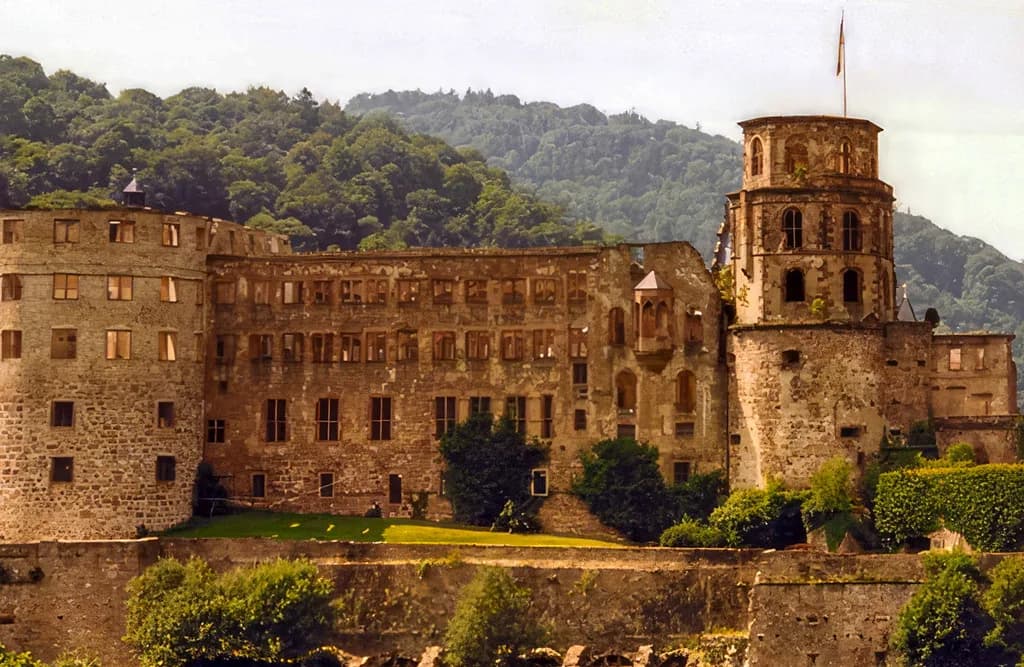
The Nine Years' War in the late 17th century brought immense devastation to the castle grounds. French troops under King Louis XIV blew up the fortifications and set the buildings on fire. They wanted to ensure the castle could never be used as a military base again. This conflict left the once-grand palace in a state of semi-ruin for many decades.
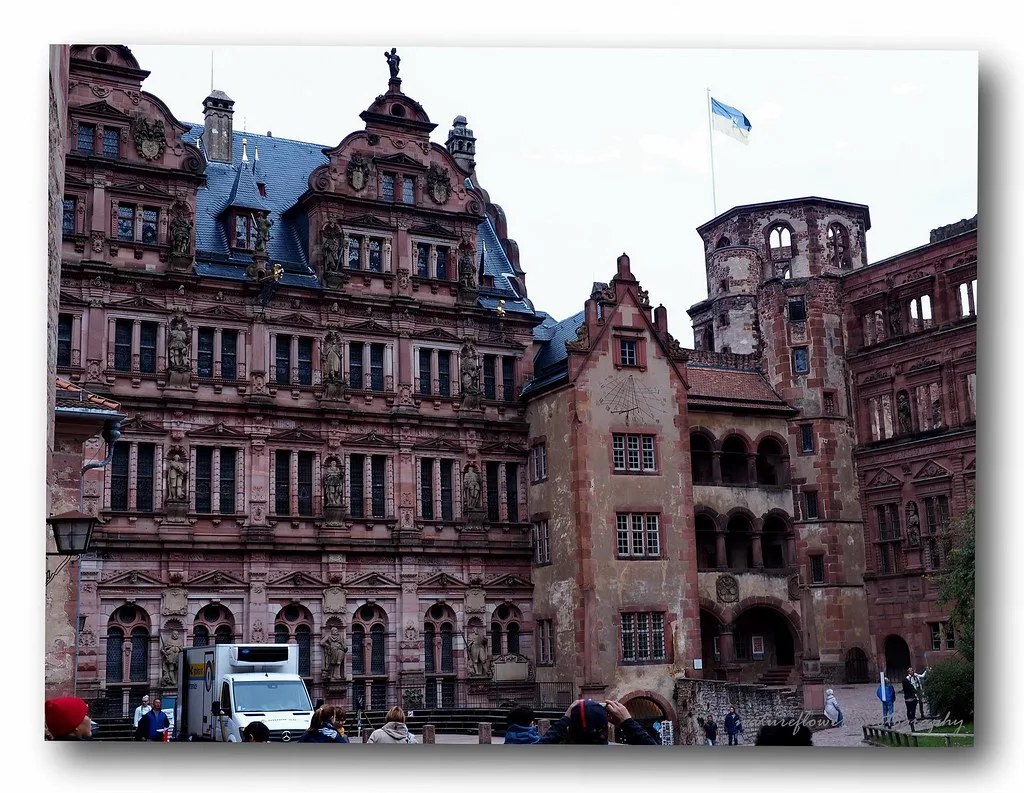
Nature added to the human damage when lightning struck the castle twice in 1764. The resulting fires destroyed the remaining roofs and much of the wooden interior structures. At the time, the royal court was already considering moving to a more modern palace in Mannheim. After the second lightning strike, the electors decided to abandon the site forever.
Local citizens began to use the abandoned ruins as a source of free building materials. They carried away stones and decorations to build houses in the town below the hill. This practice caused even more damage to the historic structures over the next fifty years. The castle seemed destined to disappear completely until the Romantic era changed public opinion.
Romanticism and the Fight for Preservation
In the 19th century, the ruins became a powerful symbol of the German Romantic movement. Poets and painters visited the site to find inspiration in the crumbling, vine-covered walls. They saw beauty in the decay and argued that the ruins should be protected. Their artwork helped convince the government to stop people from taking stones away.
A French count named Charles de Graimberg became the castle's most dedicated protector and fan. He lived in the ruins for many years to prevent further theft and vandalism of the site. Graimberg also created detailed drawings of the buildings before they decayed even further. His efforts ensured that the core of the castle survived for future generations to enjoy.
Conservationists later debated whether to rebuild the entire castle or keep it as a ruin. They eventually chose to preserve it as a romantic monument rather than a modern reproduction. Today, it ranks among the top Heidelberg sightseeing highlights for travelers from around the world. The balance between preservation and natural decay gives the site its unique atmosphere.
Hidden Secrets of the Castle Ruins
The Broken Tower offers a unique look at the power of 17th-century military engineering. French soldiers tried to blow it up, but the thick walls only split into two pieces. One massive section of the tower still rests in the dry moat where it fell. You can see the massive cracks in the stone where the gunpowder blew the tower apart.
Beneath the courtyard lies the Great Vat, which is a massive wooden wine barrel. It was built in 1751 and could hold over 220,000 liters of wine for the court. Learning about the Heidelberg Castle great wine barrel reveals the festive side of royal life. A small dance floor was even built on top of the barrel for palace parties.
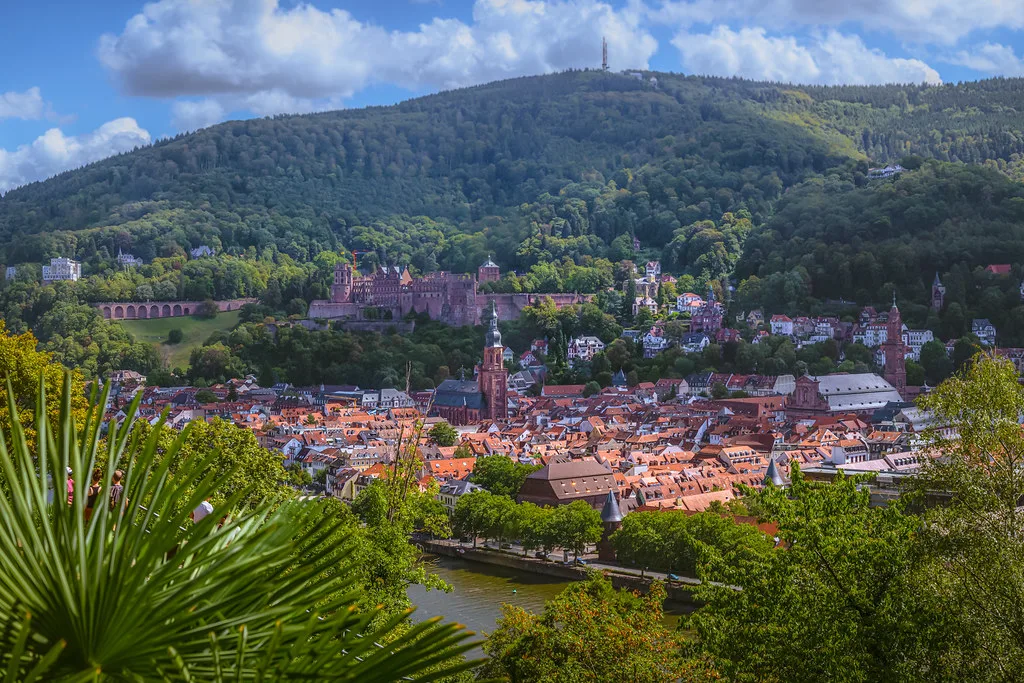
The Hortus Palatinus was once considered the eighth wonder of the world by many people. These gardens featured terraced levels and complex water machines that amazed 17th-century visitors. You can still walk the garden paths and find the best photo spots today. The view from the Scheffel Terrace provides a perfect panorama of the Old Town and river.
Look closely at the iron ring on the main gate to find the 'Witch's Bite'. Legend says a witch tried to bite through the ring to win the castle as a prize. You can still see a small indentation in the metal that locals point out to tourists. These small details make the Heidelberg Castle history feel alive and personal for every visitor.
The interior rooms are only accessible on guided tours run by the castle administration, so book ahead during the busy summer season to avoid missing out.
Frequently Asked Questions
Why is Heidelberg Castle a ruin today?
Heidelberg Castle became a ruin due to a combination of war and natural disasters. French troops destroyed the fortifications during the late 17th century. Later, lightning struck the castle twice in 1764, causing fires that led the royal court to abandon the site. You can see these layers of damage on a one day in Heidelberg itinerary.
Who was the most famous resident of the castle?
The Prince-Electors of the Palatinate were the primary residents for centuries. Friedrich V and his wife Elizabeth Stuart are perhaps the most famous couple. They lived there during the early 17th century before the Thirty Years' War began. Their legacy remains in the English Building and the castle gardens.
Can you go inside the castle buildings?
Visitors can explore the courtyards, gardens, and the Great Wine Barrel on their own. However, the interior rooms are only accessible through guided tours provided by the castle administration. These tours explain the specific Heidelberg Castle history of the royal living quarters. It is best to book these tours in advance during the busy summer season.
How old is Heidelberg Castle?
The castle is over 800 years old, with the first recorded mention occurring in 1214. It evolved from a medieval fortress into a Renaissance palace over several centuries. Different sections of the ruins represent various architectural styles from different eras. This long history makes it one of the most complex heritage sites in Germany.
Heidelberg Castle history is a fascinating mix of royal ambition and tragic events. The ruins offer a powerful glimpse into the past of the Palatinate region and its rulers. Every stone in the inner courtyard tells a story of survival, change, and artistic beauty.
Planning a trip helps you appreciate the massive scale of this historic German site. If you are visiting for the first time, check out the best things to do in Heidelberg for first timers. The walk up the hill is rewarding, but the funicular train is a great alternative for many.
The view from the castle terrace remains a highlight of any European vacation. Take your time to explore the hidden corners and read the plaques throughout the grounds. You will leave with a deeper understanding of why this ruin captures so many hearts.
You might also like

Continue reading
More guides you'll find useful