Cologne Old Town Altstadt Guide Travel Guide
Plan cologne old town altstadt guide with top picks, neighborhood context, timing tips, and practical booking advice for a smoother trip.
On this page
Cologne Old Town Altstadt Guide
Walking through the narrow alleys of Cologne feels like stepping back into a medieval storybook. This comprehensive cologne old town altstadt guide helps you navigate the historic heart of Germany's fourth-largest city. Many travelers start their journey at the iconic cathedral before exploring the colorful houses along the Rhine. The area offers a unique blend of reconstructed history and vibrant modern culture for every visitor.
You will find cozy traditional pubs and high-end boutiques tucked away in these charming cobblestone streets. Planning your route ahead of time ensures you see the most important landmarks without feeling rushed. There are countless things to do in Cologne that center around this historic district. Seasonal events like Carnival and Christmas markets bring a special energy to the local squares.
The Altstadt serves as the social and cultural anchor for both residents and international tourists alike. Discovering the hidden courtyards and ancient Roman walls requires a bit of curiosity and comfortable shoes. Local guides often share fascinating stories about the city's resilience and its famous brewing traditions. Prepare for an immersive experience that combines ancient ruins with the friendly atmosphere of the Rhineland.
Map of Cologne Old Town
The historic center is primarily located in the district known officially as Altstadt-Nord near the river. Most major attractions sit within a compact area that is easily explored entirely on foot. The Rhine River forms the eastern border, providing a scenic backdrop for the colorful promenade houses. Navigating the winding streets becomes much easier once you understand the relationship between the squares.
The central station serves as the northern gateway, placing you steps away from the majestic cathedral. From there, the shopping streets of Hohe Strasse and Schildergasse lead you toward the bustling market squares. Official resources from Cologne-Tourism.com offer detailed digital maps for first-time visitors. Using these tools helps you locate the small passages that connect the main thoroughfares.
The southern end of the Old Town transitions into the more modern shopping and residential districts. Most visitors spend the majority of their time between the Cathedral and the Heumarkt square. The riverfront path offers a flat, accessible route for those who prefer a more relaxed walking pace. Keep an eye out for the historic city gates that once protected this thriving medieval metropolis.
Getting lost in the side streets is often the best way to find quiet cafes. Look for the distinctive spire of Great St. Martin to help maintain your sense of direction. The area is densely packed with history, so every turn often reveals a new commemorative plaque. Understanding the layout ensures you spend more time enjoying the sights than checking your phone.
Cologne Cathedral (+ Treasury)
No visit to the city is complete without spending time at the breathtaking Cologne Cathedral. This UNESCO World Heritage site dominates the skyline with its massive twin spires and intricate Gothic details. The interior houses the Shrine of the Three Kings, which has drawn pilgrims for many centuries. Entry to the main floor is free, though donations are always appreciated by the local parish.
Entry to the cathedral's main nave is free, but climbing the 533-step South Tower costs 6 Euros. The climb is narrow and demanding, so wear sturdy shoes and bring water.
Active travelers should consider climbing the 533 steps of the South Tower for panoramic city views. The climb is physically demanding and narrow, so wear sturdy shoes and bring some water along. You will pass the massive St. Peter's Bell, which is the largest free-swinging bell in the world. The view from the top provides a perfect perspective of the Old Town and the Rhine.
The Cathedral Treasury is located in the medieval cellars and requires a separate admission ticket. It contains a vast collection of liturgical vestments, reliquaries, and ancient manuscripts from the church's history. Visitors can see artifacts dating back to the 4th century within these well-preserved stone vaults. Check the official schedule for evening concerts or special liturgical services during your visit.
Photography is permitted inside the nave, but please remain respectful of those who are there to pray. The stained glass windows, including the modern pixelated window by Gerhard Richter, are truly spectacular sights. Allow at least one hour to fully appreciate the scale and artistry of this architectural masterpiece. The cathedral remains the most visited landmark in all of Germany for very good reasons.
- Cathedral Visiting Essentials
- Entry: Free for nave
- Tower Cost: 6 Euros
- Hours: 6am to 8pm
- Best time: Early morning
| Sight | Cost | Access notes |
|---|---|---|
| Cathedral (nave) | Free | Open 6am to 8pm; donations appreciated |
| Cathedral South Tower | 6 Euros | 533 steps, narrow and demanding |
| Cathedral Treasury | Separate ticket | In the medieval cellars |
| Hohenzollern Bridge | Free | Open 24 hours; love-lock pedestrian path |
Great St. Martin Church (Groß St. Martin)
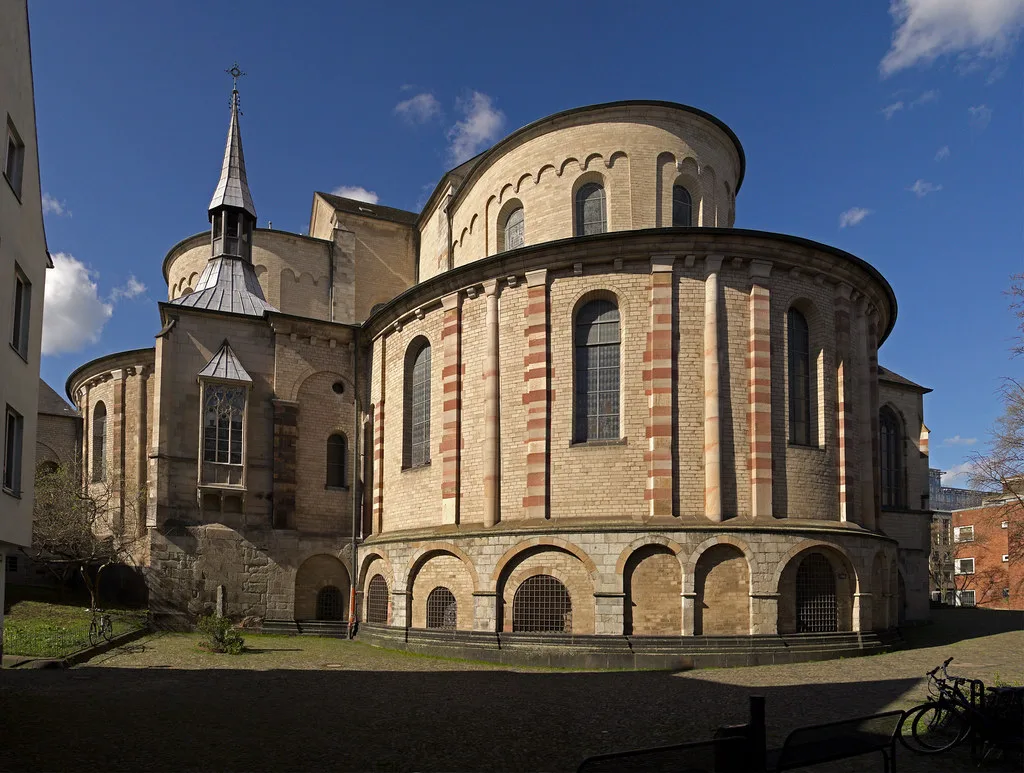
The silhouette of Great St. Martin is one of the most recognizable features of the Old Town. This Romanesque church was built on the remains of a Roman warehouse between the 12th and 13th centuries. Its massive clover-leaf choir and soaring central tower represent a masterpiece of medieval architectural design. The church suffered significant damage during World War II but was meticulously restored in the following decades.
Visitors can explore the excavations beneath the church to see the original Roman foundations and walls. This underground tour provides a fascinating look at how the city has been built in layers. The interior of the church is notably minimalist, offering a peaceful escape from the busy streets outside. It serves as a functioning monastery for the Monastic Fraternities of Jerusalem today.
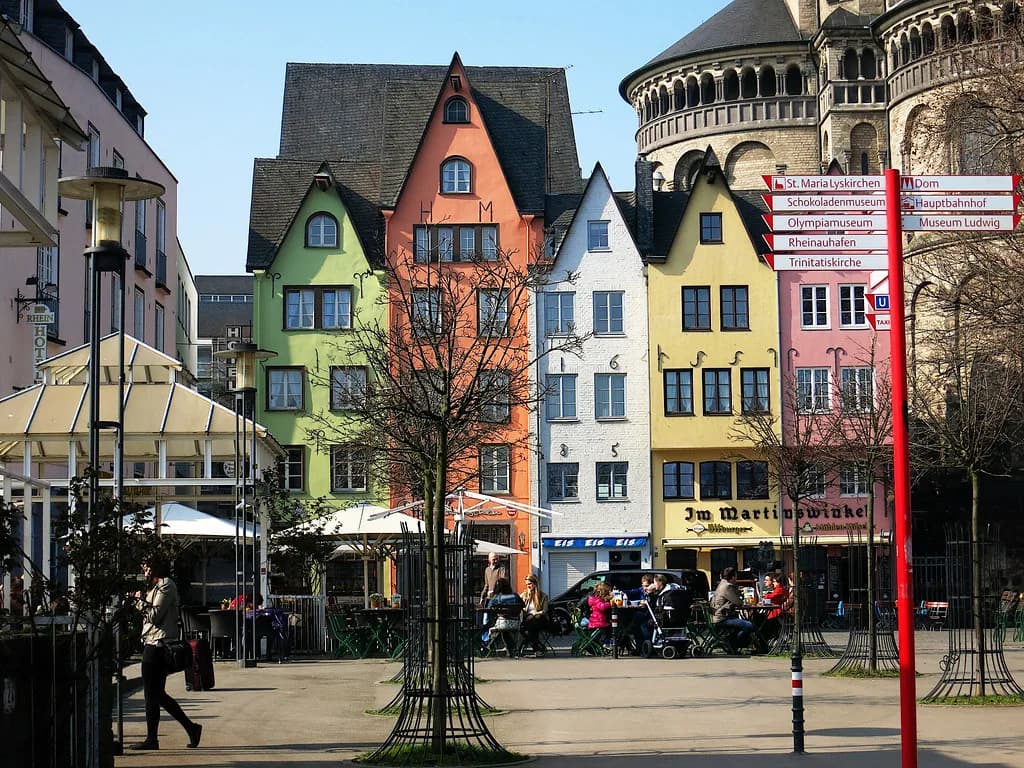
The surrounding Fish Market area features colorful houses that provide the perfect foreground for photos. Many postcards of Cologne feature this specific view of the church rising above the riverfront buildings. The square in front of the church often hosts small art markets or seasonal craft stalls. Take a moment to sit on the stone steps and enjoy the atmosphere of this historic corner.
The church is usually open to the public during the day, except during private services. The acoustics inside are exceptional, making it a popular venue for choral performances and organ recitals. It offers a stark contrast to the overwhelming scale and detail of the nearby cathedral. Walking around the exterior allows you to appreciate the different stone textures used during various eras.
Germany’s Oldest Town Hall (Rathaus)
The Cologne City Hall stands as the oldest town hall in Germany with a history spanning 800 years. The building features a stunning Renaissance loggia that serves as a beautiful backdrop for official ceremonies. Over 100 stone statues of famous citizens and historical figures decorate the impressive Hansa Tower. The Rathaus remains the seat of the Lord Mayor and the center of local government today.
Daily carillon performances ring out from the tower, playing traditional melodies that echo through the square. The bells play four times a day, attracting crowds who gather to hear the historic chimes. The complex also sits directly above the remains of the Roman Praetorium, the governor's palace. Tours of the historic council chambers are sometimes available if you book them in advance.
The building reflects a mix of architectural styles from the Gothic period to modern post-war additions. The Spanischer Bau across the street is another part of the administrative complex worth seeing. The Rathaus is a popular spot for local weddings, so you might see festive celebrations on weekends. Its central location makes it an easy stop while walking between the major market squares.
History buffs will appreciate the detailed carvings that depict scenes from the city's long political life. The tower was one of the first secular buildings in the city to rival the height of churches. It represents the power and independence of the medieval merchant class who built this wealthy city. The Rathaus is a must-see for anyone interested in the civic development of Northern Europe.
Historic Squares: Alter Markt and Heumarkt
The Alter Markt and Heumarkt are the twin hearts of social life in the Cologne Altstadt. These large open spaces have hosted markets, tournaments, and public gatherings for nearly a thousand years. The Alter Markt is known for its narrow, tall houses and the fountain dedicated to Jan von Werth. It is the primary location for the city's world-famous Carnival celebrations every November and February.
The Heumarkt is slightly larger and features an impressive equestrian statue of King Frederick William IV. During the winter months, this square transforms into a magical wonderland with a massive outdoor ice rink. Both squares are lined with traditional restaurants and cafes that offer plenty of outdoor seating. Choosing where to stay in Cologne often leads travelers to hotels overlooking these lively areas.
The atmosphere changes significantly depending on the time of day and the current season. Mornings are usually quiet and perfect for a coffee while watching the city wake up. Evenings bring a festive mood as locals and tourists gather for dinner and glasses of Kölsch. The squares are entirely pedestrianized, making them safe and comfortable for families with children.
The architecture around the squares shows the careful efforts to rebuild the city after the war. Look for the small brass plaques in the ground that tell stories of the buildings' former inhabitants. The connection between the two squares is a short walk filled with interesting shops and galleries. These spaces remain the best places to experience the famous hospitality of the Rhineland people.
Local Breweries Serving Kölsch
The beer culture in Cologne is unique and strictly protected by the Kölsch Konvention of 1986. Kölsch is a light, top-fermented beer that must be brewed within the city to carry the name. It is traditionally served in a small, 0.2-liter cylindrical glass known as a Stange. A comprehensive Cologne brewhouses and Kölsch beer guide is essential for understanding the local etiquette.
The servers, known as Köbes, are famous for their direct and sometimes cheeky Rhenish attitude. They will continue to bring you fresh beers until you place a coaster on top of your glass. The Köbes marks each beer on your coaster with a pencil to keep track of the total. This system ensures that your beer is always cold and fresh from the wooden barrel.
The Köbes will keep bringing fresh 0.2-liter Kölsch until you place a coaster on top of your glass. Don't ask for a large beer — Kölsch is only served in the small Stange.
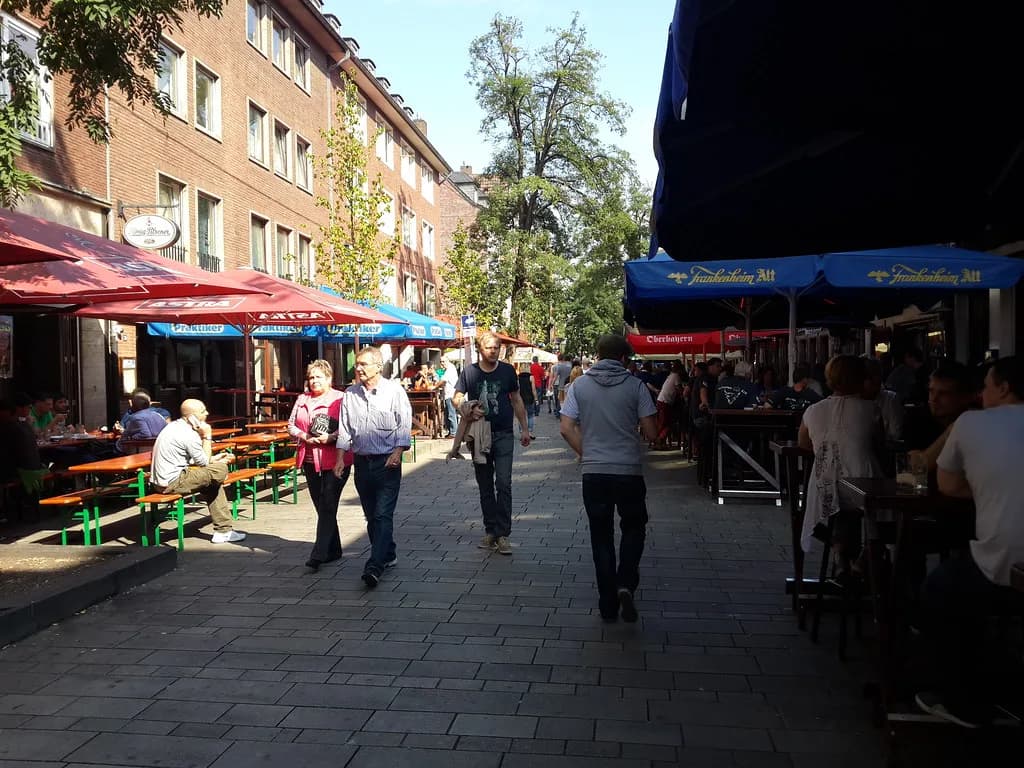
Früh am Dom is one of the most famous breweries, located right next to the cathedral. Peters Brauhaus and Brauhaus Sion are also highly recommended for their historic interiors and traditional food. Try local specialties like Himmel un Ääd or a simple Halve Hahn to accompany your drink. The atmosphere inside these brewhouses is loud, social, and welcoming to everyone.
Many of these establishments have deep cellars where the beer was traditionally cooled with ice. The long wooden tables are often shared, encouraging conversations between strangers and locals alike. Visiting at least one brewery is a vital part of the Cologne Old Town experience. The prices are generally very reasonable, making it an affordable way to enjoy local culture.
Sites of Roman Ruins
Cologne was founded as a Roman colony called Colonia Claudia Ara Agrippinensium nearly 2,000 years ago. Traces of this ancient past are visible throughout the Old Town if you know where to look. The Römisch-Germanisches Museum houses the famous Dionysus Mosaic, which was discovered during the construction of a bunker. You can also see the remains of the massive Roman north gate standing right outside the cathedral.
The Praetorium excavations under the Town Hall show the foundations of the Roman governor's palace. Walking through the ancient sewer system provides a unique and slightly damp perspective on Roman engineering. The Ubier Monument is the oldest stone monument in Germany and dates back to the early 1st century. Consider visiting the Cologne museums to see more artifacts from this era.
The city is currently working on a massive Archaeological Zone to better showcase these underground treasures. Many modern buildings have glass floors or windows that reveal Roman walls in their basements. The Roman tower near the Zeughaus is one of the best-preserved parts of the original city wall. These sites offer a tangible connection to the origins of European urban civilization.
Guided history tours often focus on these Roman elements to explain the city's strategic importance. The layout of many modern streets still follows the original Roman grid system. Learning about the Roman history adds a layer of depth to your exploration of the Altstadt. The preservation of these ruins remains a top priority for the city's cultural heritage department.
Hohenzollern Bridge
The Hohenzollern Bridge is the most famous railway bridge in Germany and a symbol of the city. It connects the Old Town with the district of Deutz on the opposite bank of the Rhine. The bridge is famous for the hundreds of thousands of love locks attached to its pedestrian fences. Couples from all over the world come here to lock their padlocks and throw the keys into the river.
Walking across the bridge offers some of the best photographic views of the Cathedral and Old Town. The structure features four massive equestrian statues of Prussian kings and German emperors. It is a busy thoroughfare for trains, with over 1,200 crossings occurring every single day. The pedestrian paths are wide enough for both walkers and cyclists to enjoy the river breeze.
For the best experience, cross the bridge at sunset when the city lights begin to twinkle. The view from the Deutz side, specifically the Rheinboulevard, is the classic postcard shot of Cologne. The bridge is easily accessible from the stairs located directly behind the Cathedral choir. The weight of the love locks is estimated to be over 40 tonnes, requiring regular structural checks.
The bridge has been rebuilt several times, most notably after its destruction during the Second World War. It remains a vital link for the European rail network and a favorite spot for tourists. The sound of the trains rumbling overhead adds a rhythmic industrial charm to the walk. The bridge is open 24 hours a day and is completely free to visit at any time.
Guided Tours of Old Town Cologne
Joining a guided tour is an excellent way to discover the hidden stories of the Altstadt. Local experts can point out details that are easily missed when exploring on your own. The Cathedral + Old Town walking tour is a popular choice for first-time visitors. These tours often include a tasting of local Kölsch beer to introduce the city's social culture.
Free walking tours operate daily and usually depart from the area around the cathedral steps. Night watchman tours offer a more theatrical experience, focusing on legends and ghost stories from the past. Brewery tours are perfect for those who want to dive deeper into the history of Rhenish beer. The guides are usually very knowledgeable and can provide great recommendations for local restaurants.
Boat tours on the Rhine provide a different perspective of the Old Town's colorful waterfront. Most cruises last about an hour and offer commentary in both German and English. The view of Great St. Martin and the Cathedral from the water is truly unforgettable. These tours are especially pleasant during the warm summer months when the river breeze is cooling.
Private tours can be customized to focus on specific interests like Roman history or modern architecture. Booking in advance is recommended, especially during the busy summer season and Christmas market period. The walking tours are generally easy, but be prepared for some uneven cobblestone surfaces. The guides often share personal anecdotes that make the history feel more relatable and alive.
Frequently Asked Questions
How much time should you plan for the Cologne Old Town?
You should plan for at least 4 to 6 hours to see the main highlights. This allows time for a cathedral visit, a walk through the squares, and a traditional brewery lunch. If you follow a one day in Cologne itinerary, you can see much more.
Is the Cologne Old Town accessible for people with mobility issues?
The area is mostly flat but features many historic cobblestone streets which can be bumpy. Most major attractions like the Cathedral and the riverside promenade are fully accessible. Modern ramps and elevators have been added to many historic buildings to improve access for all visitors.
What should travelers avoid when visiting the Altstadt?
Avoid ordering a large beer in a traditional brewhouse, as Kölsch is only served in small glasses. Do not forget to place your coaster on top of your glass when you are finished. Also, try to avoid the main tourist thoroughfares during the peak of Saturday afternoon shopping crowds.
Are there public toilets available in the Old Town?
Yes, there are several public toilet facilities located near the Cathedral and the major market squares. Many large department stores and the central station also offer clean, paid restroom facilities. It is common to pay a small fee of 50 cents to 1 euro for maintenance.
The Cologne Old Town is a resilient and vibrant district that captures the spirit of the Rhineland. Every corner tells a story of Roman origins, medieval wealth, and modern reconstruction efforts. The combination of historic architecture and the friendly Kölsch culture creates a unique travel experience. Visitors often find themselves returning to the Altstadt for its welcoming atmosphere and scenic river views.
The best time to visit Cologne often depends on whether you prefer summer festivals or winter markets. Regardless of the season, the heart of the city remains a captivating place to explore on foot. The mix of ancient ruins and lively brewhouses ensures there is something for every type of traveler. The city's history is not just in museums but is lived every day in the local squares.
The Altstadt serves as a perfect introduction to the history and character of Western Germany. The memories of the towering cathedral and the taste of fresh Kölsch will stay with you long after. The friendly locals and the walkable streets make it one of the most accessible historic centers in Europe. Plan your visit today and discover the timeless charm of this remarkable riverside city.
You might also like
Continue reading
More guides you'll find useful